UNDER CONSTRUCTION

NOISE SHOUTER - an extensive dive
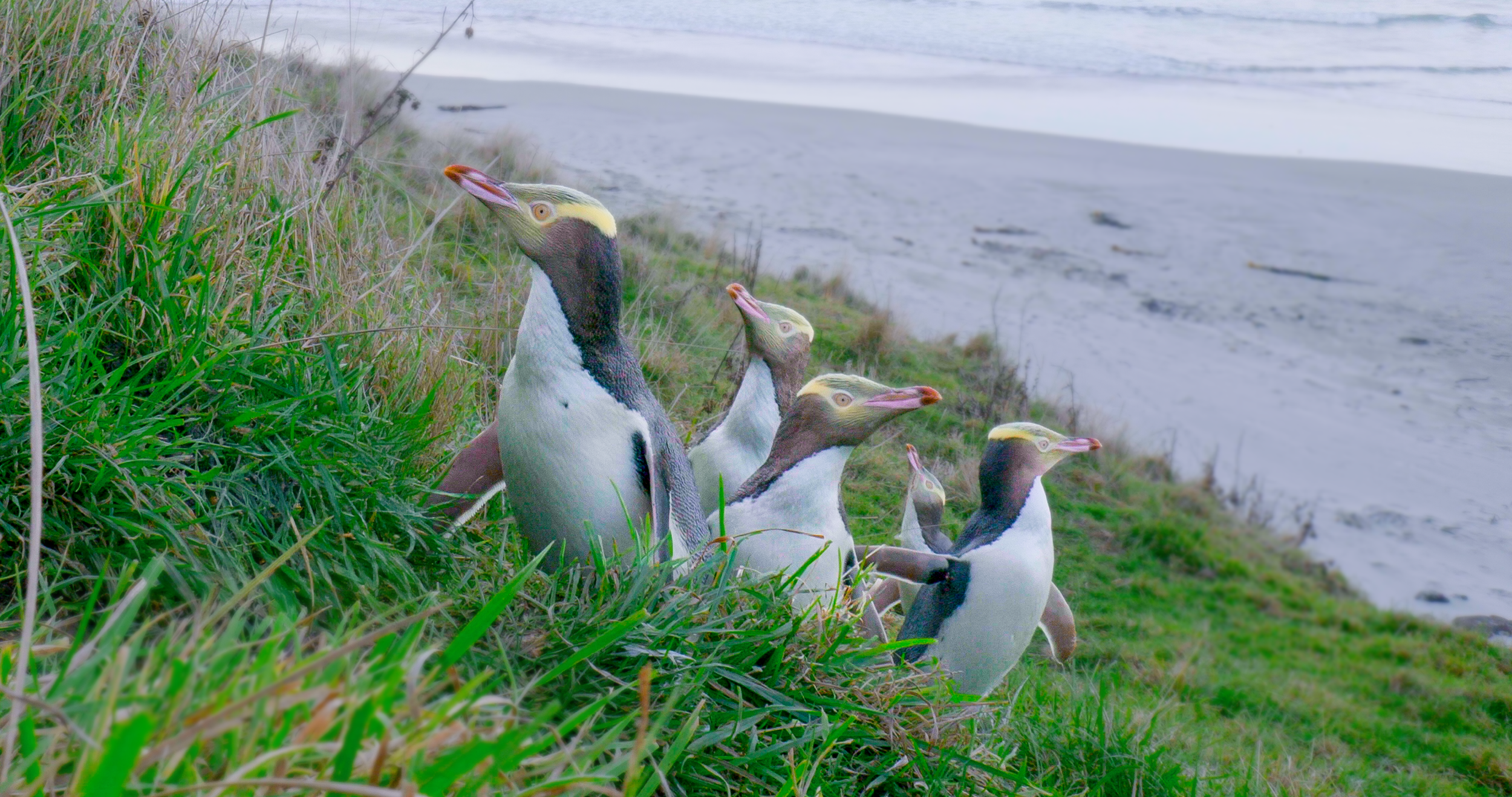
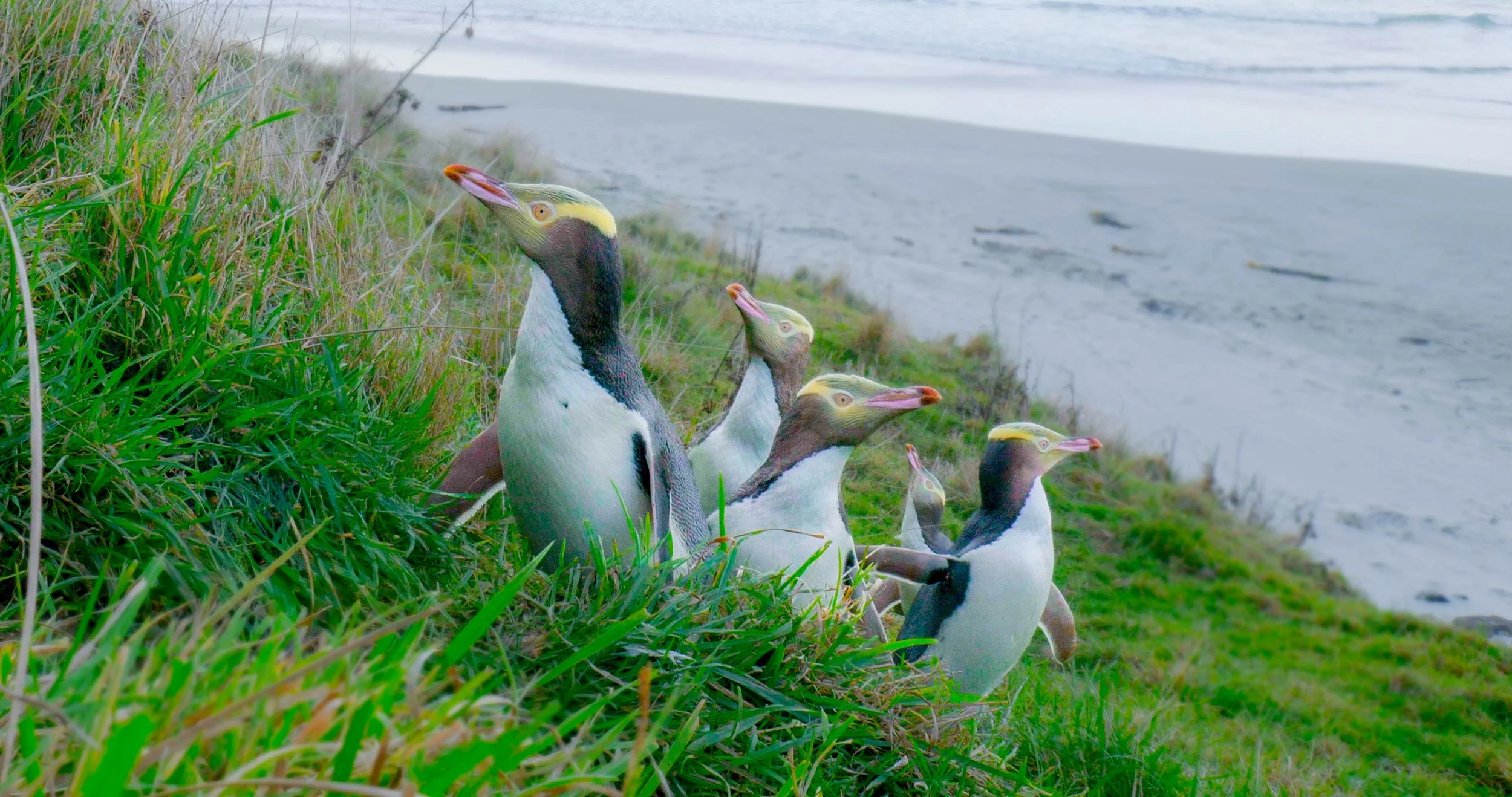
Noise Shouter is a feature-length documentary showcasing the world’s rarest and most elusive penguin, the endemic New Zealand Yellow-Eyed penguin (Hoiho). Noise Shouter explores the foundations of the Yellow-Eyed penguin’s life on a much deeper and intimate level, particularly their life on land as a bush-dwelling penguin.
With a plummeting population and fewer than 150 known nests on mainland New Zealand, the Yellow-Eyed Penguin faces a perilous demise. Noise Shouter examines the various people, places and operations that are working to hold onto the fleeting lives of the Yellow-Eyed Penguins.
STILT is still in its production stages; release date - approx. AUGUST 2026

A BROADER PICTURE
At least 7 core organisations and a broader collective of over 20 groups are actively involved in working with, protecting, and rehabilitating yellow-eyed penguins in the Dunedin/Otago Peninsula area.
With all these different groups, all with different ideas, beliefs, land rights and environmental morals, all trying to do the same thing, but in their own way. This begs the question: Should it be like this? Should multiple different organisations, businesses, charities and tour operators have their own way of protecting the Yellow-eyed, or should there be a grand scheme shared by all, in a way that is scientifically proven to reverse the effects of Hoiho extinction? Here is a look at each group involved in the Noise Shouter documentary and what they are doing.
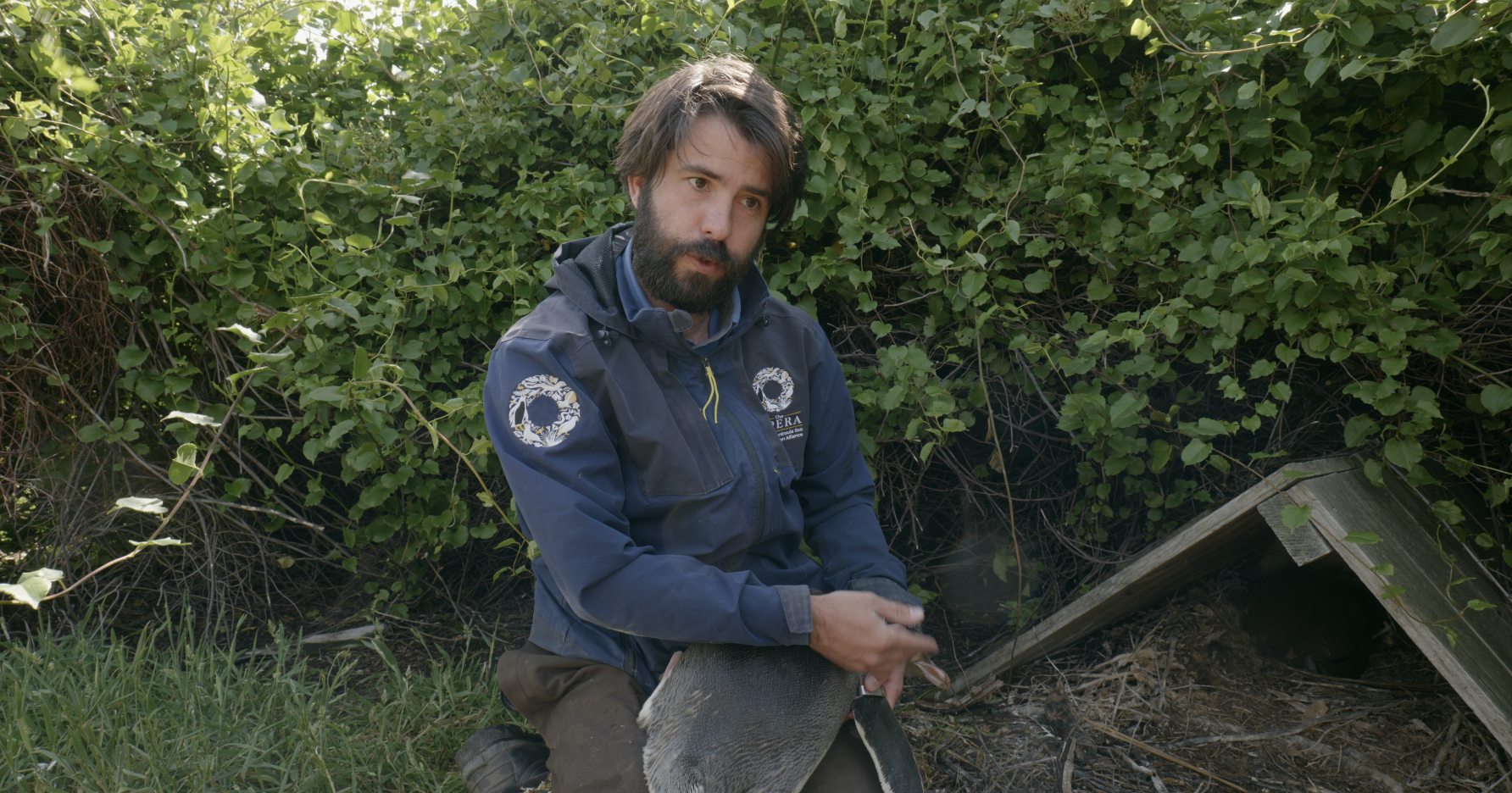
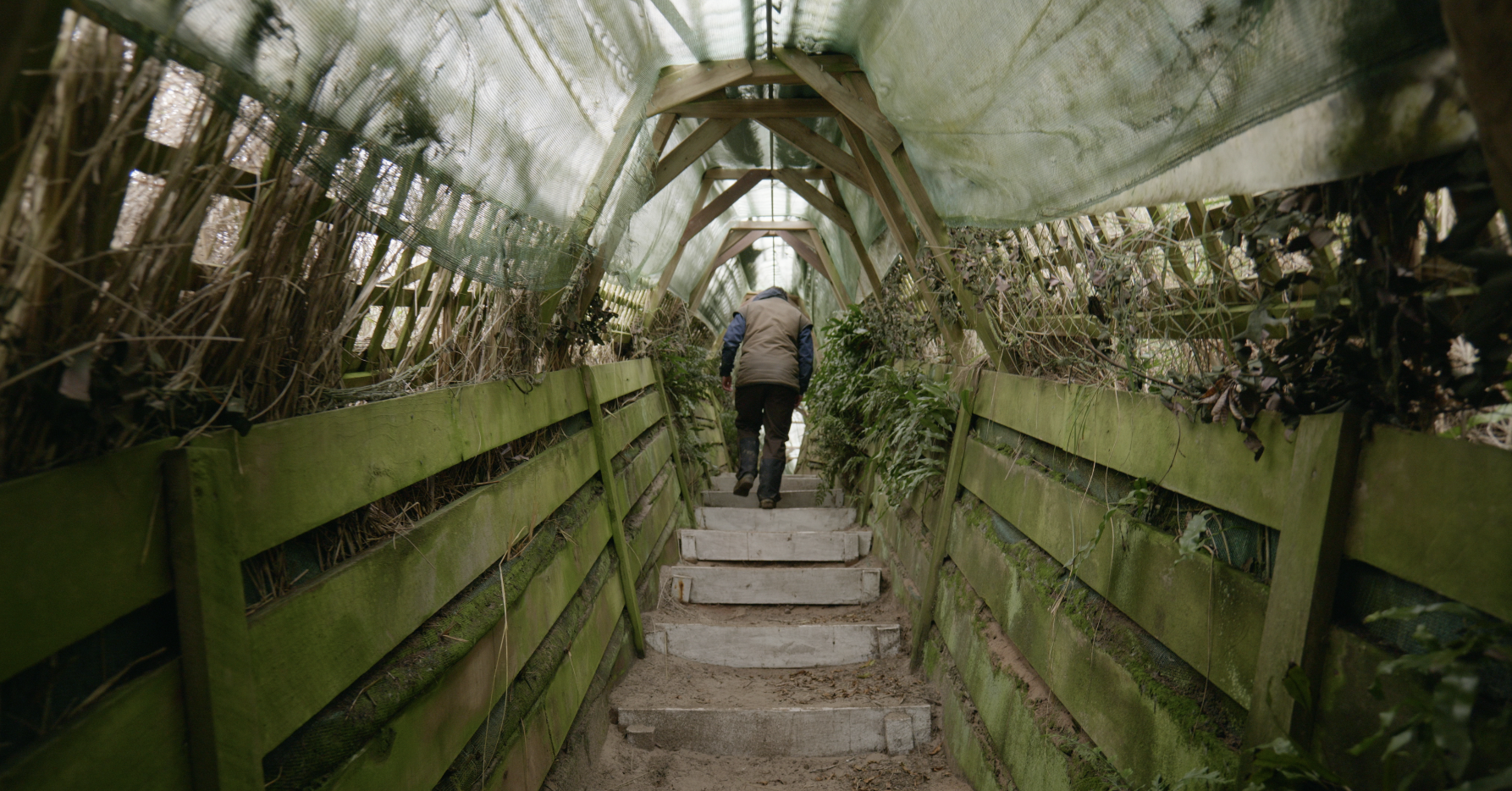
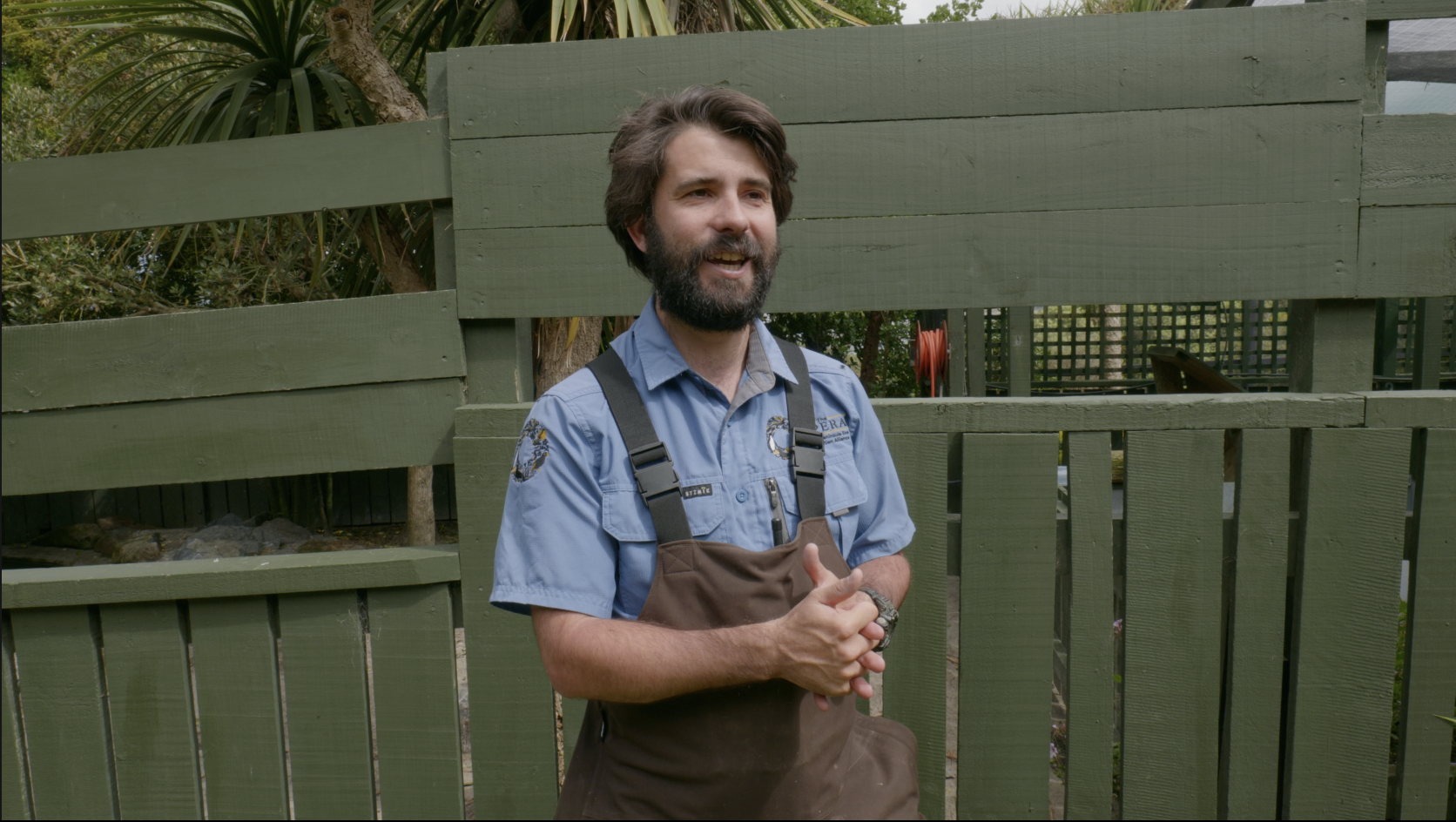
The OPERA (Otago Peninsula Eco Restoration Alliance), formally known as Penguin Place, works on habitat restoration and penguin rehabilitation, with an on-site rehab centre. They are located towards the end of the Otago Peninsula, and have quite the large area of land, along with two beaches. OPERA also run wildlife tours, and rather than letting the tourists roam free on the beach, OPERA built an expansive network of trenches that let visitors view the penguins at ground/eye level. This was interesting to see, as no other tourism operator in Otago has built such vast camouflaged trenches, and it certainly cost them millions. Jason at OPERA says that the tours they run have virtually zero impact on wildlife, as visitors are hidden from view and are told to stay quiet. Jason told me that the penguins are often seen climbing on top of the trenches, totally unaware of the multiple Chinese, German, French and Australian tourists who are watching their every step.
In terms of eco restoration, OPERA says that it will take over 100 years for the ex-pasture land to regrow into native forest, but they are constantly putting efforts into tree planting and predator trapping.
Things are looking bleak for the penguins at OPERA with the latest season being their worst, according to Jason. The yellow-eyed chicks are dying due to disease and malnutrition, with currently only two breeding pairs on the OPERA property. Jason goes out into the field every 2 days to perform mouth health checks and weigh the chicks. A recent disease shows that baby yellow-eyed penguins are developing sores and welts in their mouths, preventing them from eating. The two chicks at OPERA are currently healthy, but I can’t imagine for much longer. According to Jason, human contact, such as weighing and tagging, has little to no impact on the penguins, and the same goes with injured or malnourished penguins in the rehab, where they are fed and kept in pens. Jason says that this has been scientifically proven and that they “become feral again almost instantly” when let back into the wild.
Filming at OPERA has allowed me to see what great tourism management looks like and the dedication to penguin rehabilitation and monitoring. They are a respected company that has been in operation since 1985, but with the current decline of the yellow eyes, they may need to start thinking about new ways to advertise wildlife tours.
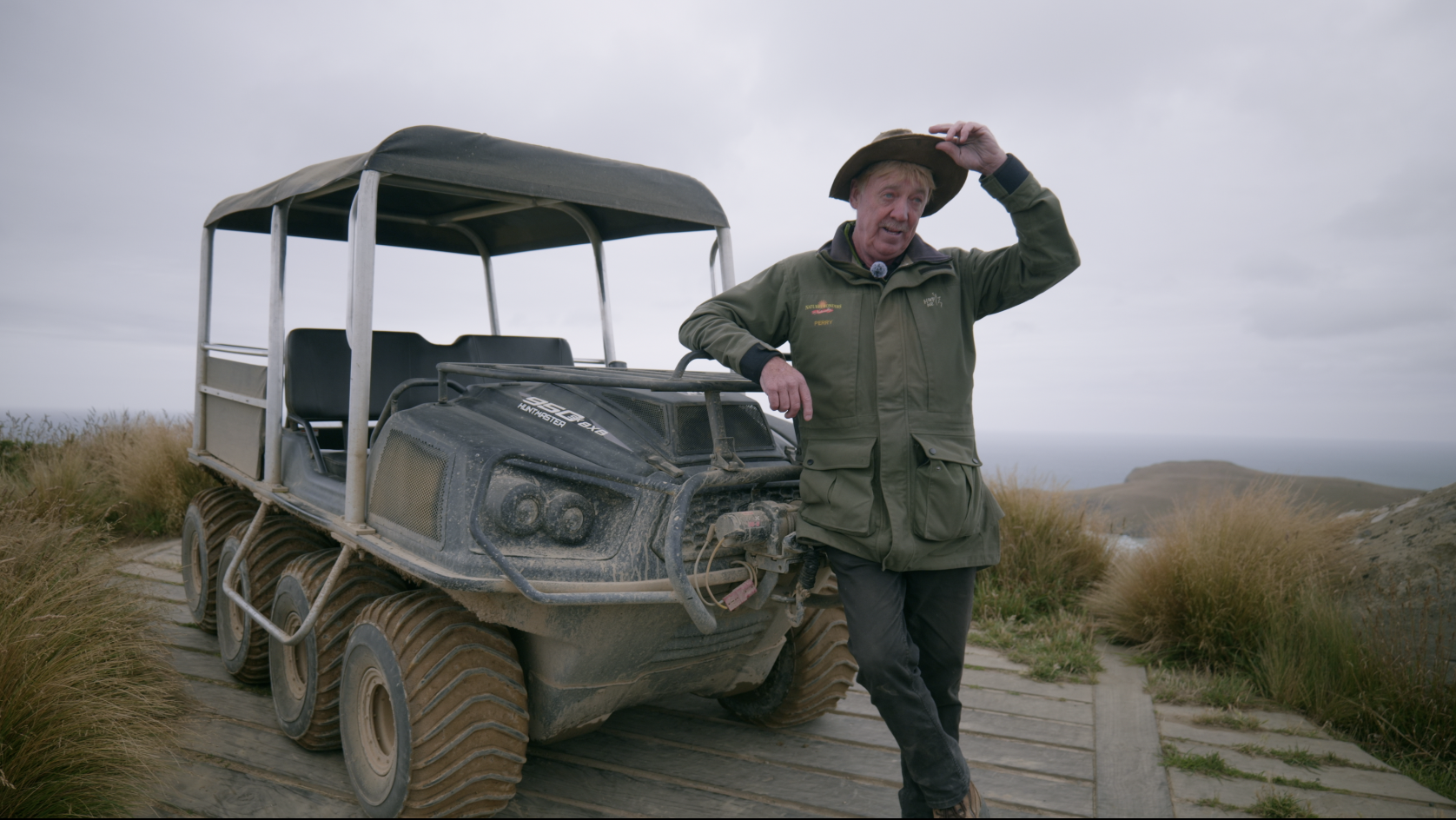
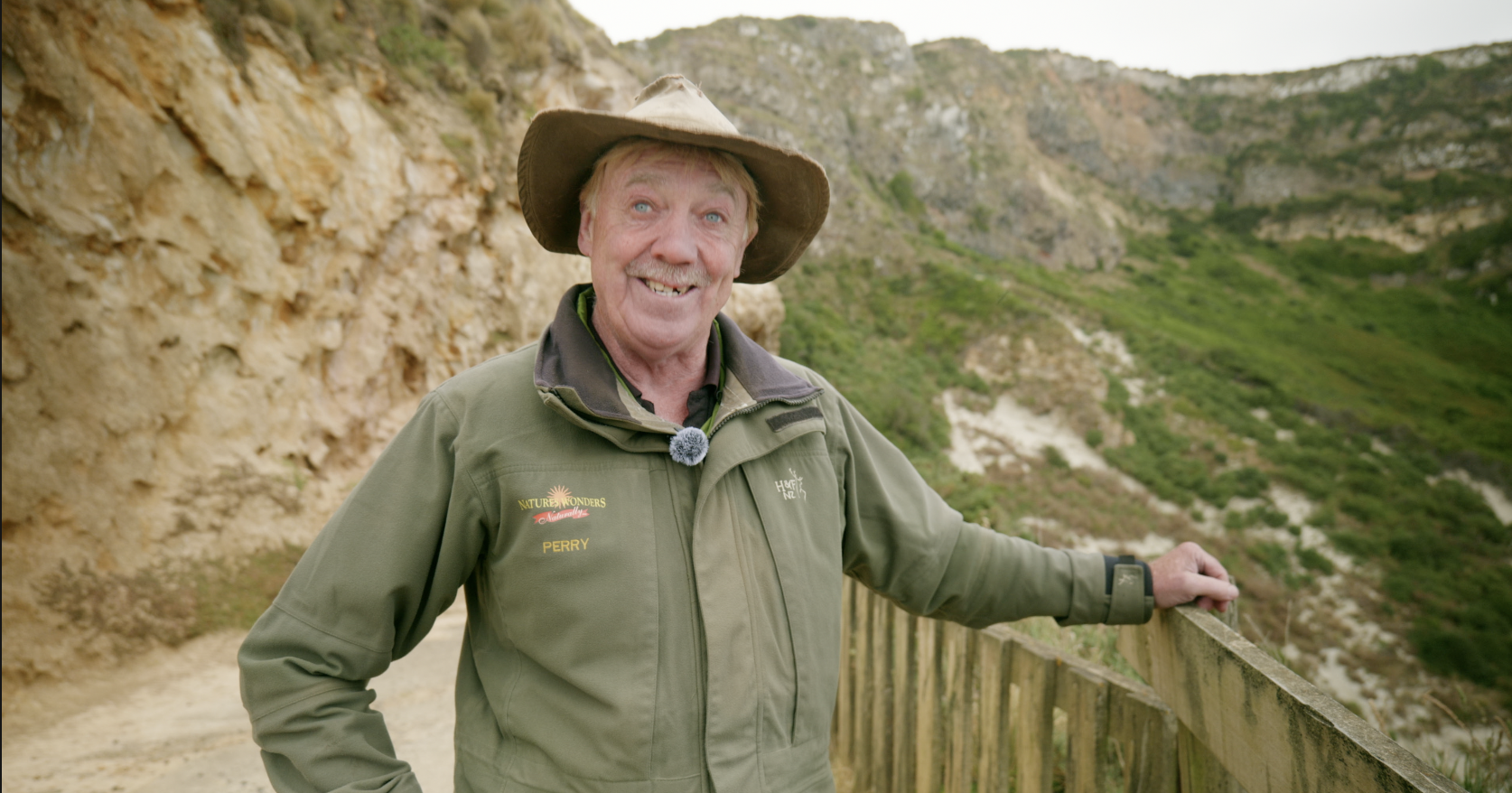
Natures Wonders, owned and operated by Perry and Tracey Reid, have an interesting approach to how they are managing yellow-eyed penguins on their land. Natures Wonders is the very last bit of land at the end of the Otago Peninsula, next to the albatross colony. I spent a few hours there with Perry, riding around in the argo. Perry was incredibly passionate and eager to show me why he thinks Nature’s Wonders is different from any other place in Dunedin or even New Zealand, he said.
Perry explained to me that they have taken a completely hands off approach to handling nature. They do not touch, weigh, monitor or revive, so to speak, any penguins or wildlife on their property. And in the 60 years of operation, Perry has been there to see it flourish.
Personally, growing up on Stewart Island my whole life, I have always been surrounded by raw nature, and seeing this property reminded me of this raw nature. The wildlife wasn’t scared of Perry and I and the birdcall was louder than most places I had seen.
I like the hands off appraoch that Perry and his family have taken, he says in the 60 years he has been there, nobody has touched a single animal, and it actually shows. Perry thinks they have also killed the last possum on the property as a dung-smelling dog could not pick up the scent of the one that was previously there, which was impressive to hear.
In saying all this, the problem with a hands-off method is exactly how it seems. Yes, the environment is dealt with by Mother Nature, but in a world run by humans. The wildlife may seem more relaxed and curious, and the numbers may be flourishing higher than in other places in New Zealand, but without some kind of monitoring on disease and livelihood, it’s hard to say what the health of the wildlife is really in at Natures Wonders.
I’m all for Perry’s approach and I think its the best way to do things, but first we need to deal with how we treat the ocean and our planet before letting a diseased mother take care of her Earth.
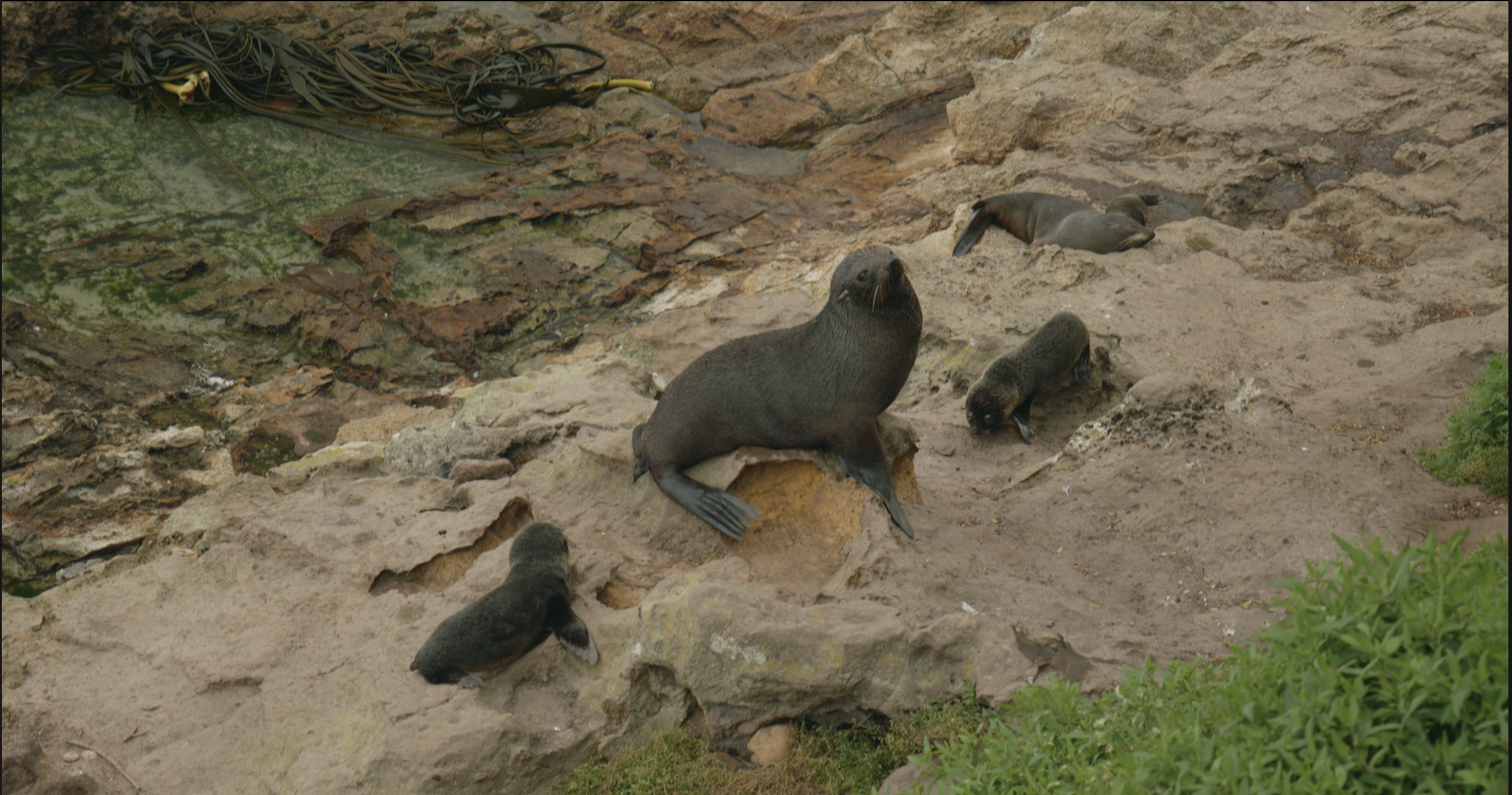
Dozens of curious newborn seal and sea-lion pups hanging around on the rocks. They were unbothered by our presence and were even coming in for a closer look.
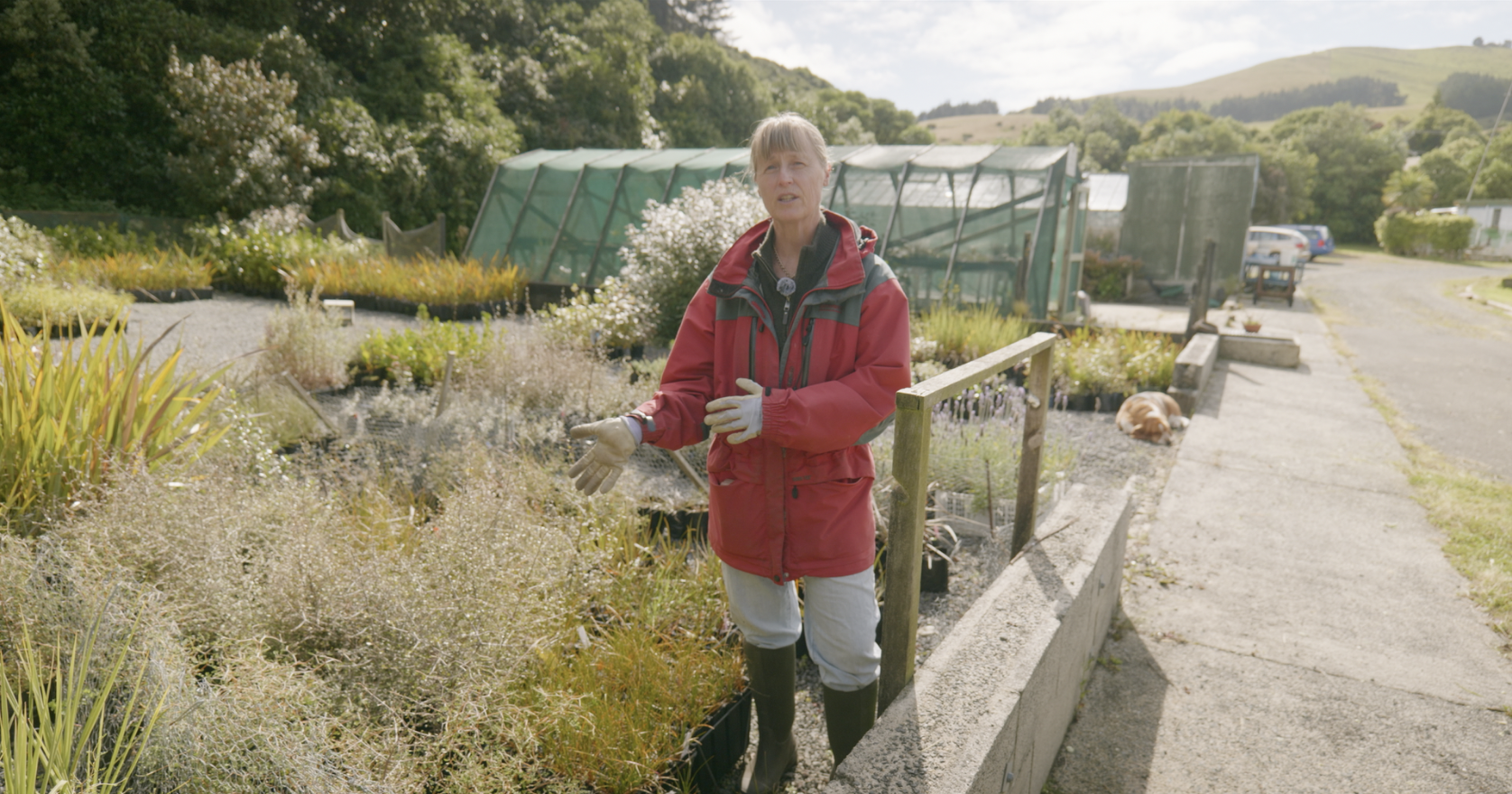
The Yellow Eyed Penguin Trust (YEPT) is a non-government-owned charity that has been in operation since 1987 and was started by concerned Dunedin residents. They are dedicated to the conservation of the yellow-eyed penguin and are focused on habitat protection, predator control, and rehabilitation, having established a nursery around 1990 that has planted over 140,000 trees so far. The nursery used to be a surage outlet, known locally as the “poofarm”, before getting a peppercorn lease to transform it into a plant nursery.
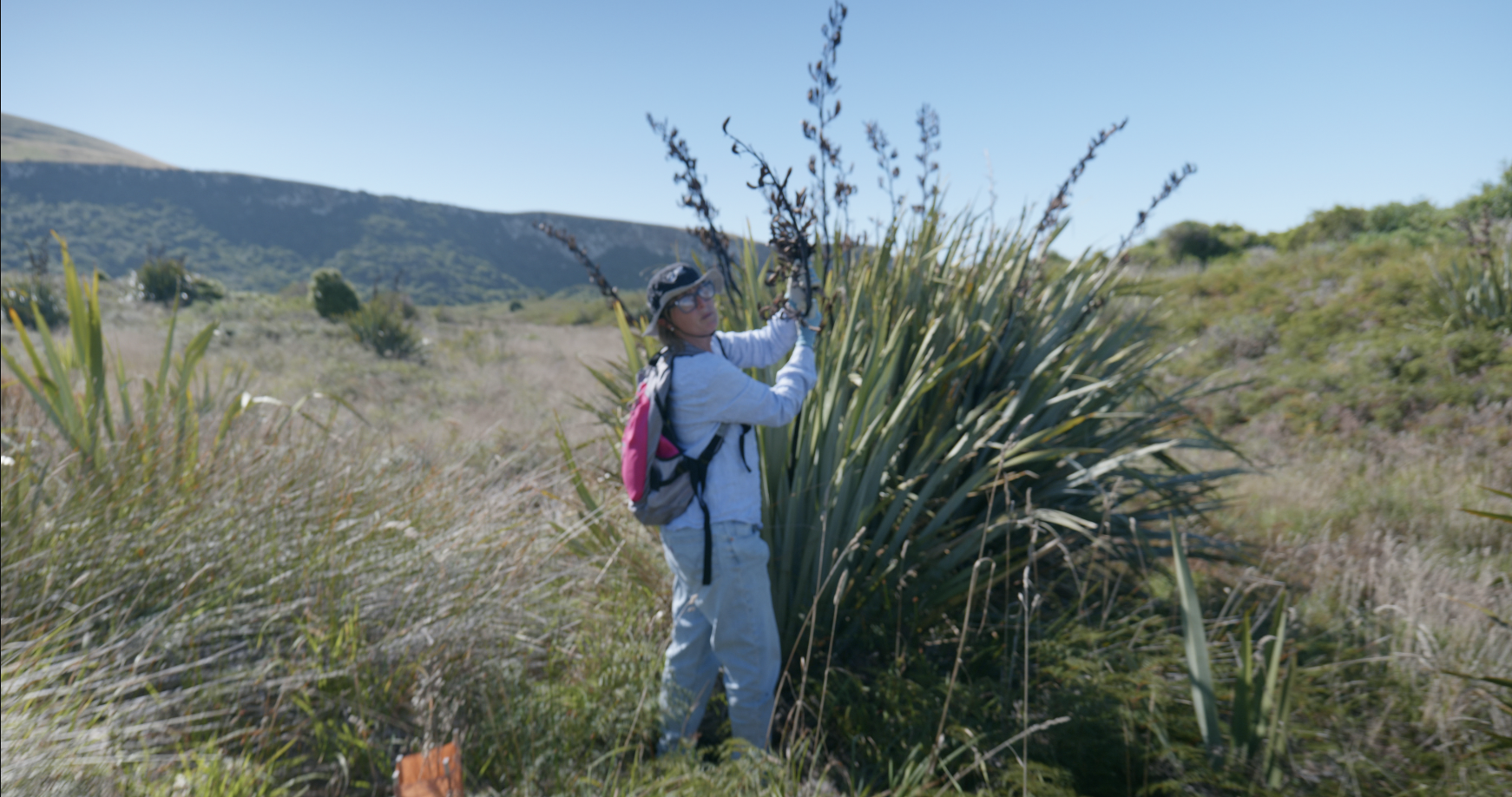
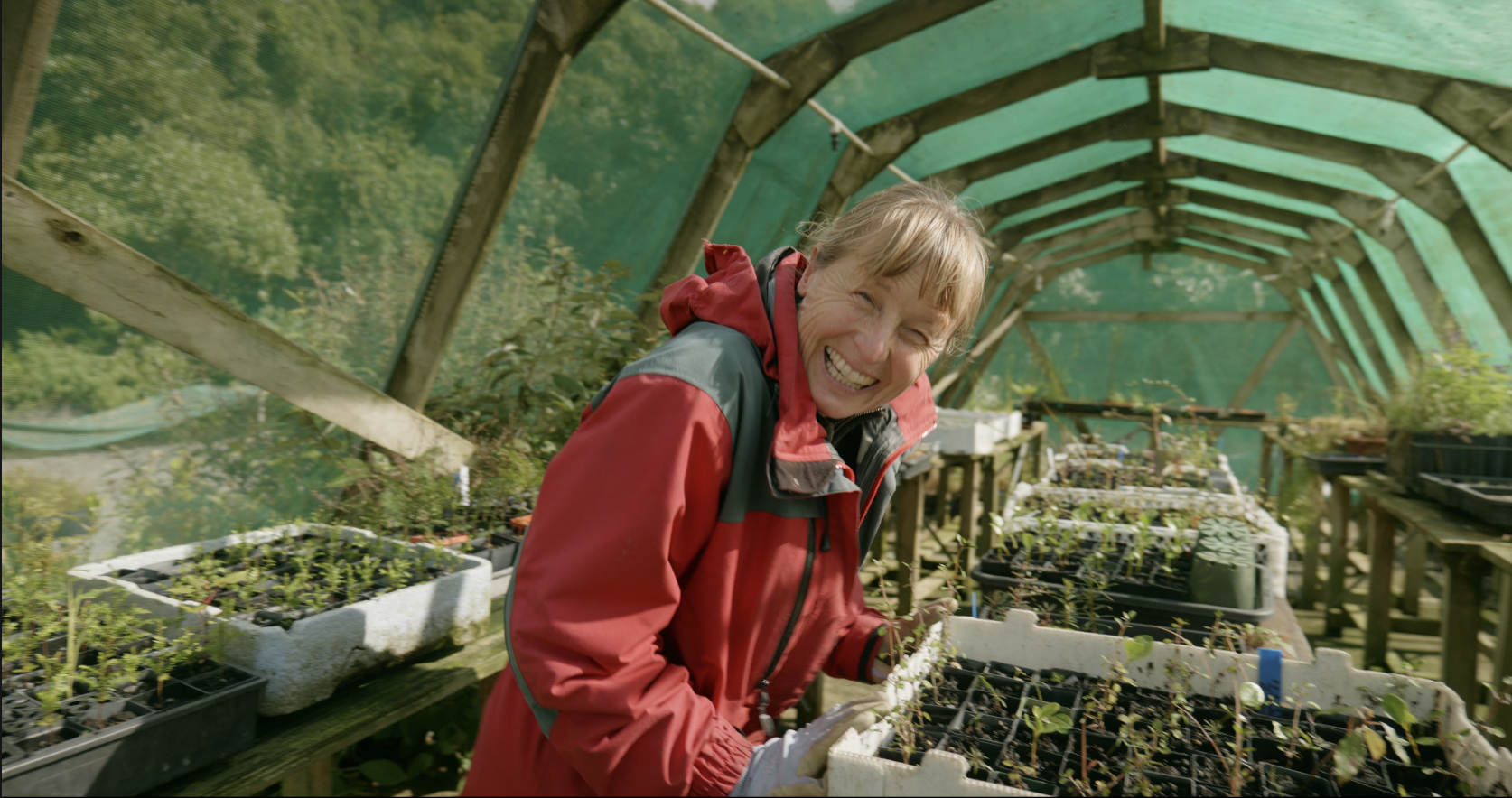
I went to visit Louise Ashton, the nursery supervisor at YEPT, at her nursery and got to know about the types of plants that are being grown and why they are important to grow. Louise is a great character, and we had a riot together, laughing about all sorts to do with penguins, plants and everything in between. The nursery is mainly run by her, but she has a good group of oldie volunteers that come in weekly to help pot, weed and water the plants. She says she can get more done in 3 hours than she can alone in a week with her volunteers. The YEPT nursery grow a lot of different key coastal plants, shrubs and trees, with what is called the tight five species, consisting of things like griselinia and totora. The YEPT started off growing around 15,000 plants a year and are unfortunately down to 5000 now.
Most of the plant seeds are eco-sourced, meaning seeds are taken from the plants themselves. With eco-sourcing seeds, a virtually unlimited supply of new plants can be grown, but without proper funding, the nursery becomes smaller and smaller. Louise told me that their previous government funding was cut off as the nursery and the YEPT weren't seen as an important entity to give money to. So yet again, the struggles push against everything and everyone involved in penguins.
Louise was a radiographer at Waikato Hospital and didn’t have a background in zoology or botany. She has been working for the YEPT nursery for 10 years, so a lot can be learnt in that time. Speaking to Louise was great as she has some really interesting things to say about the politics around penguins, coming from a person not involved in that area, it’s great to see what the public thinks about the whole lucrative operation.
I thought the nursery was great and it’s run by people who are actually passionate and interested in plants and penguins.
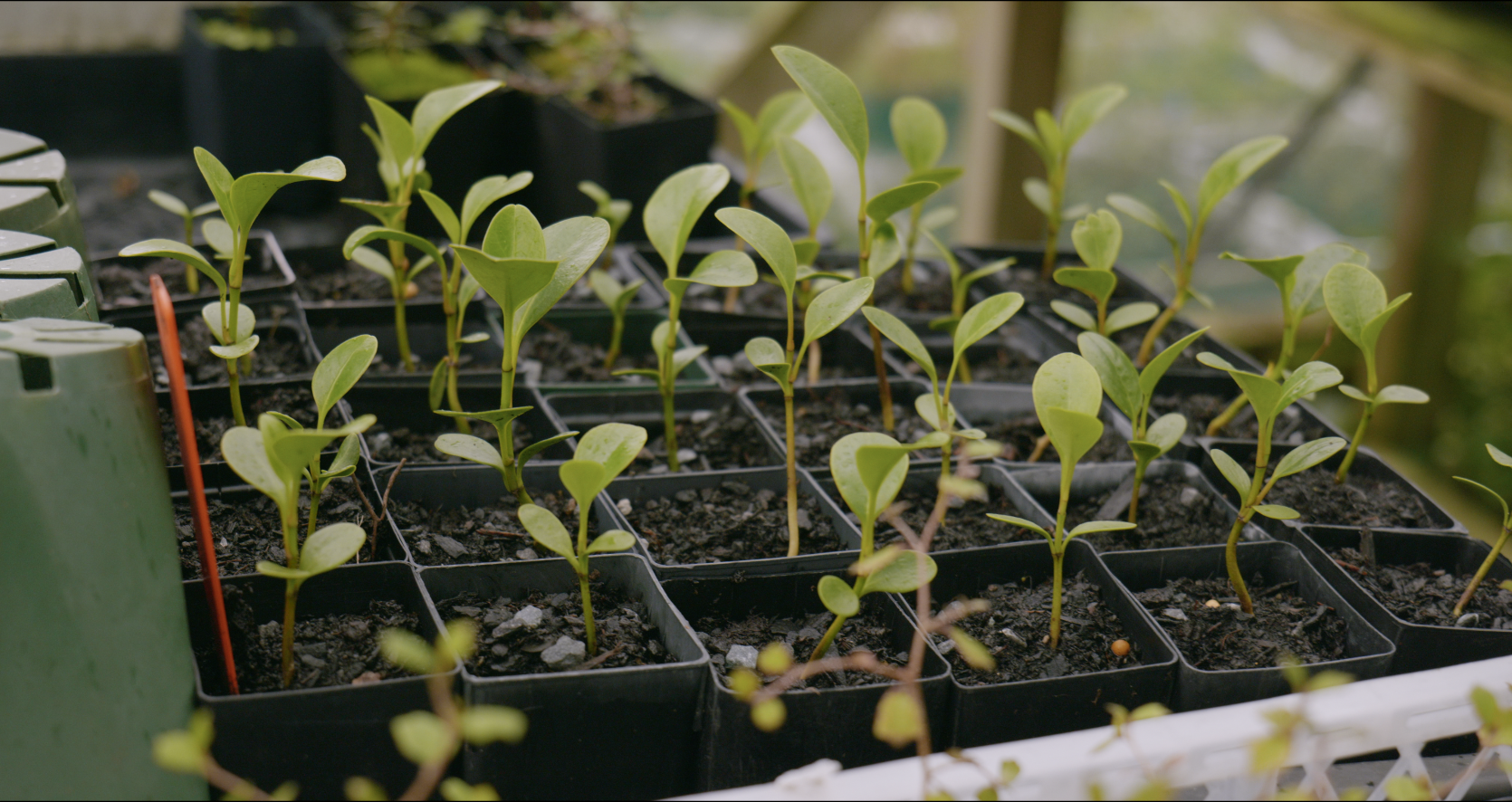
Griselinia, or Kapuka/New Zealand Broadleaf, a hardy native shrub used for coastal screening. It's very tolerant of wind, salt spray, and frost.
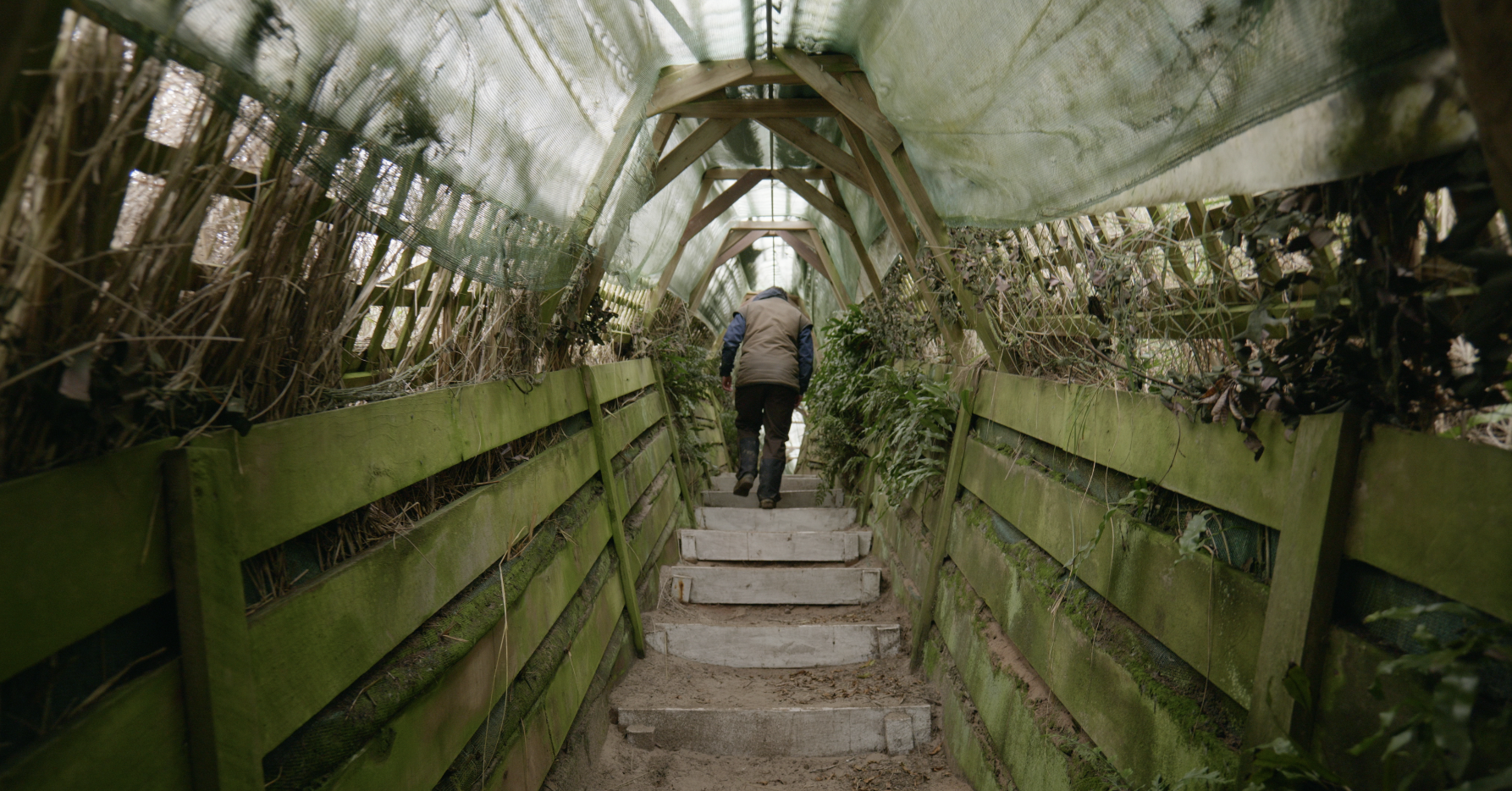
OPERA’s great camo trenches. They have around 700 meters worth of facisnating trenches that open up into semi-underground hides which allows visitors to see the beach and wildlife.

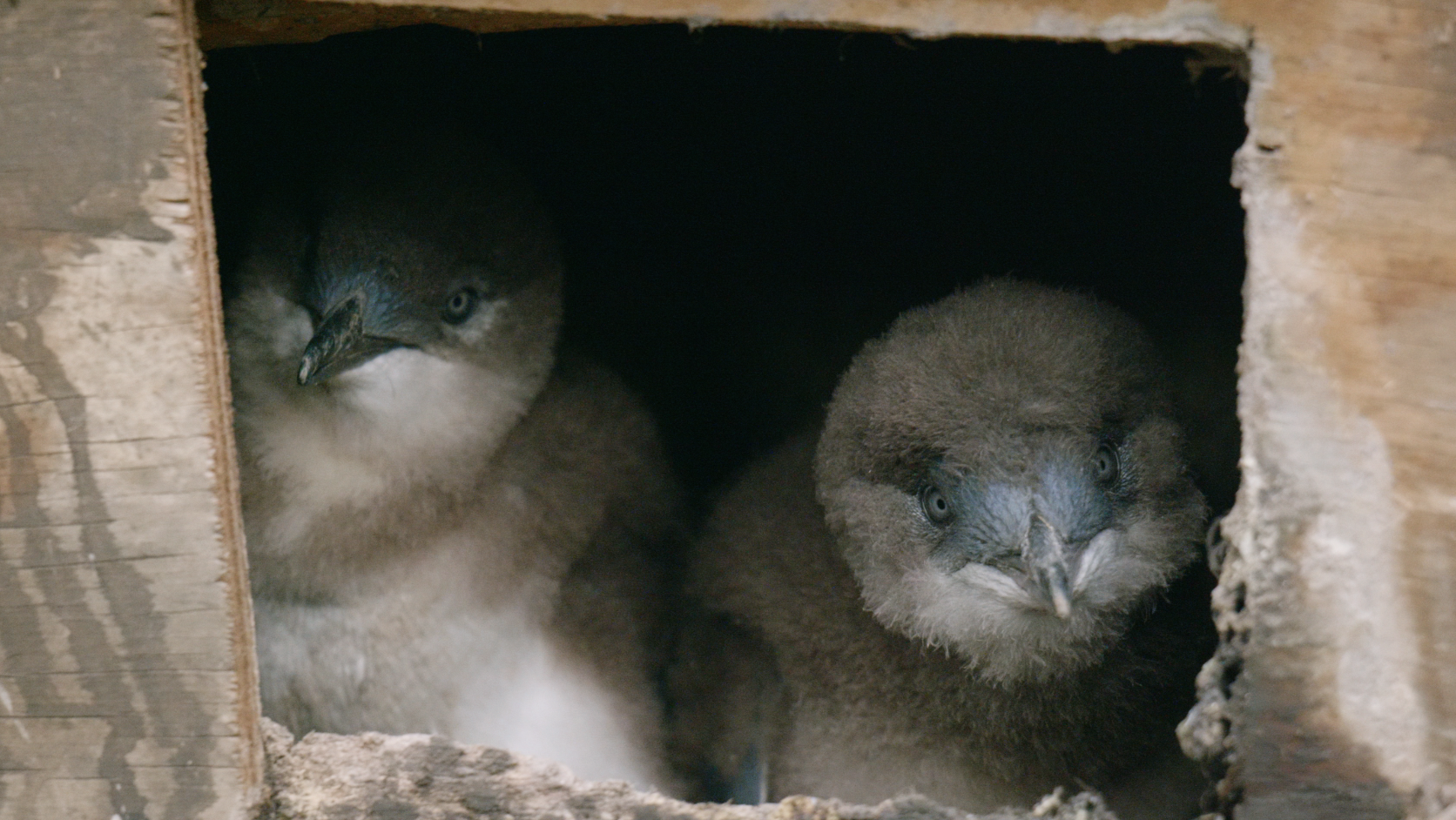
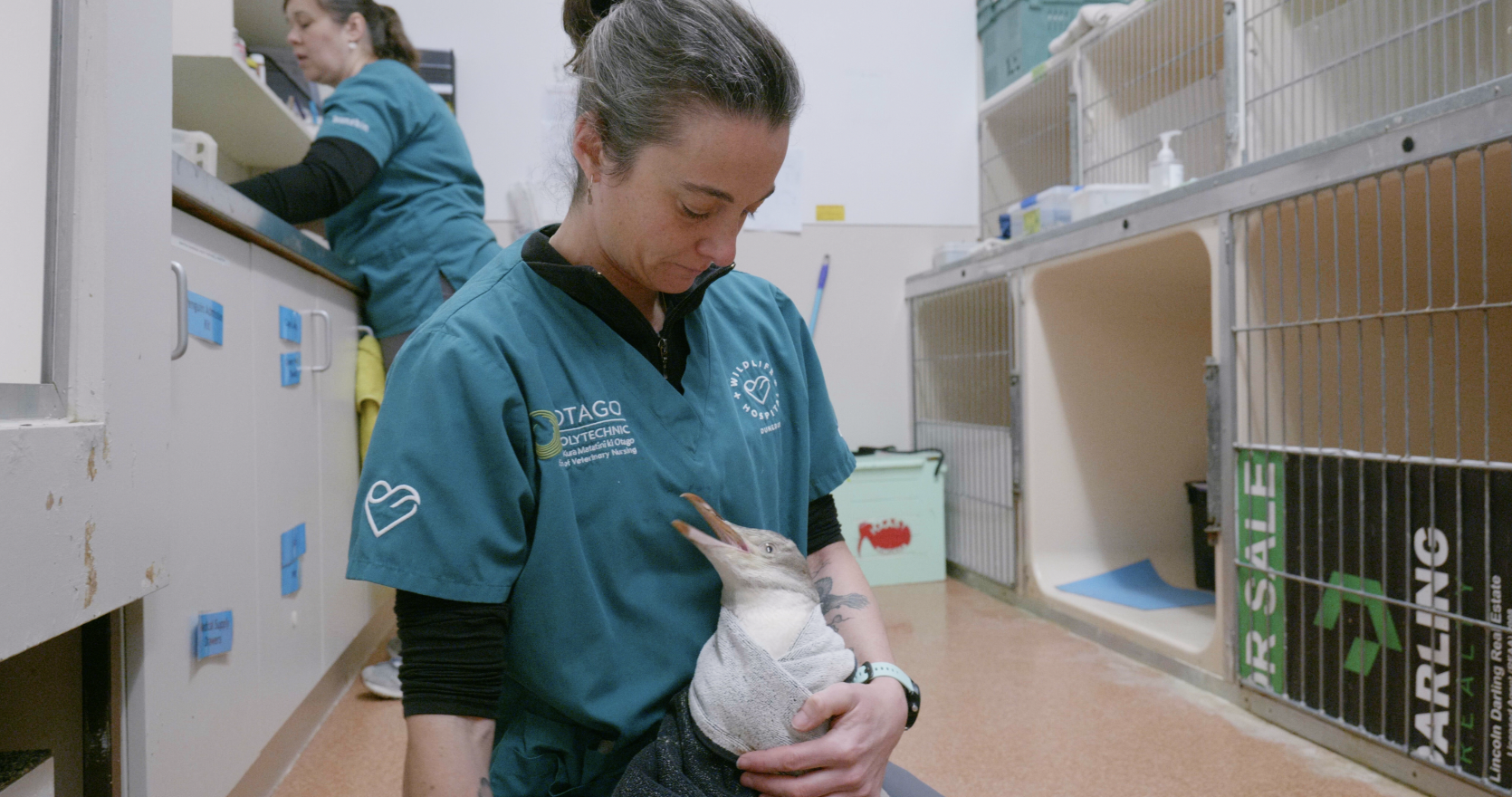
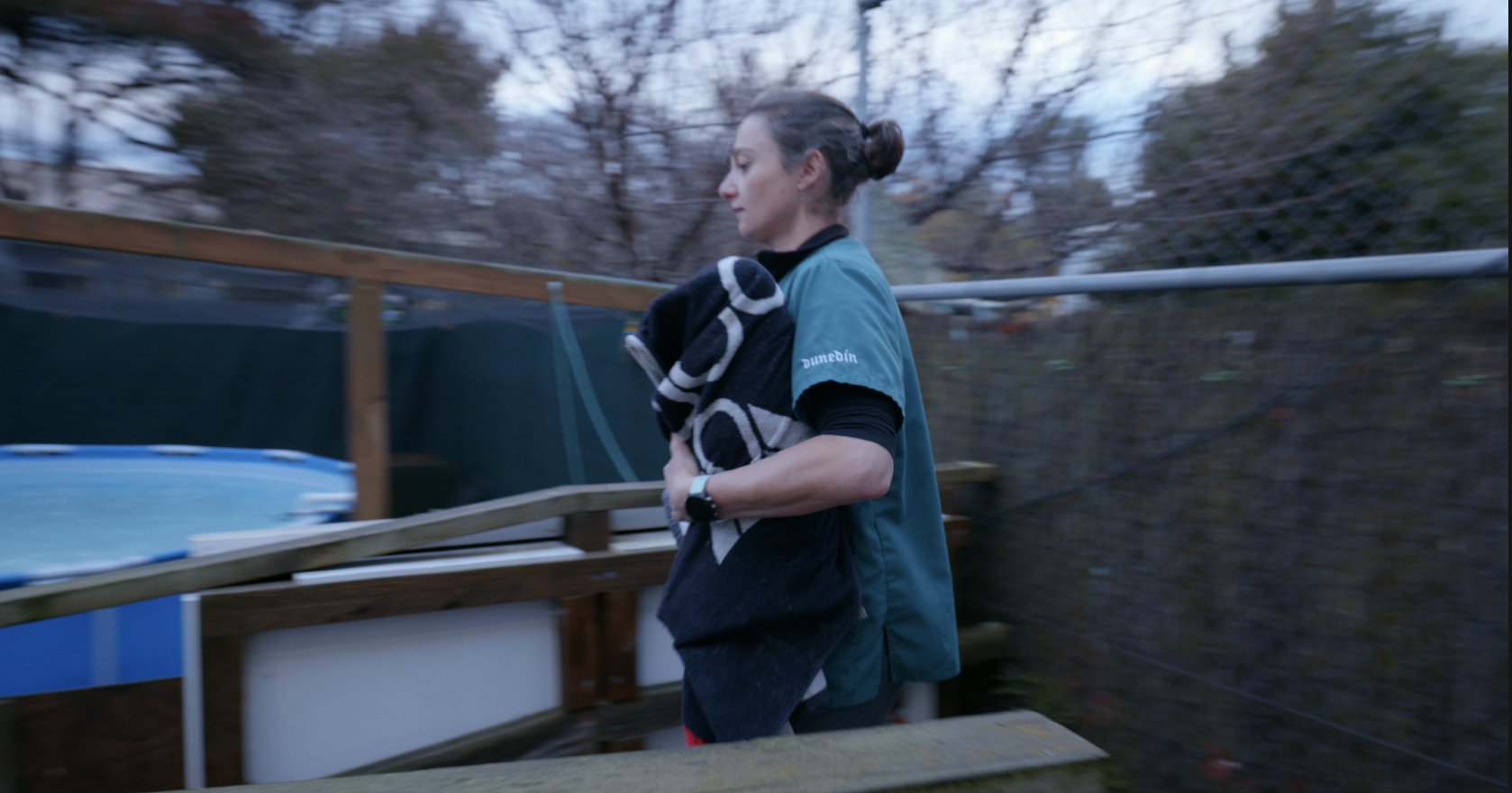
The Dunedin Wildlife Hospital is a really interesting place, opened in 2018 by Dr. Lisa Argilla in the Dunedin School of Art building complex, the hospital is designed to provide critical, year-round veterinary care for native South Island species. Before the hospital existed, injured wildlife would have to be treated by a combination of local vet clinics, the Department of Conservation (DOC), or often flown to the North Island for specialised treatment. So this Dunedin wildlife hospital reduces transport times for injured wildlife in the South Island and creates a dedicated veterinary space for endangered animals. The hospital has treated over 3,500 patients so far, with the most visited patient being, you guessed it, the yellow-eyed penguin.
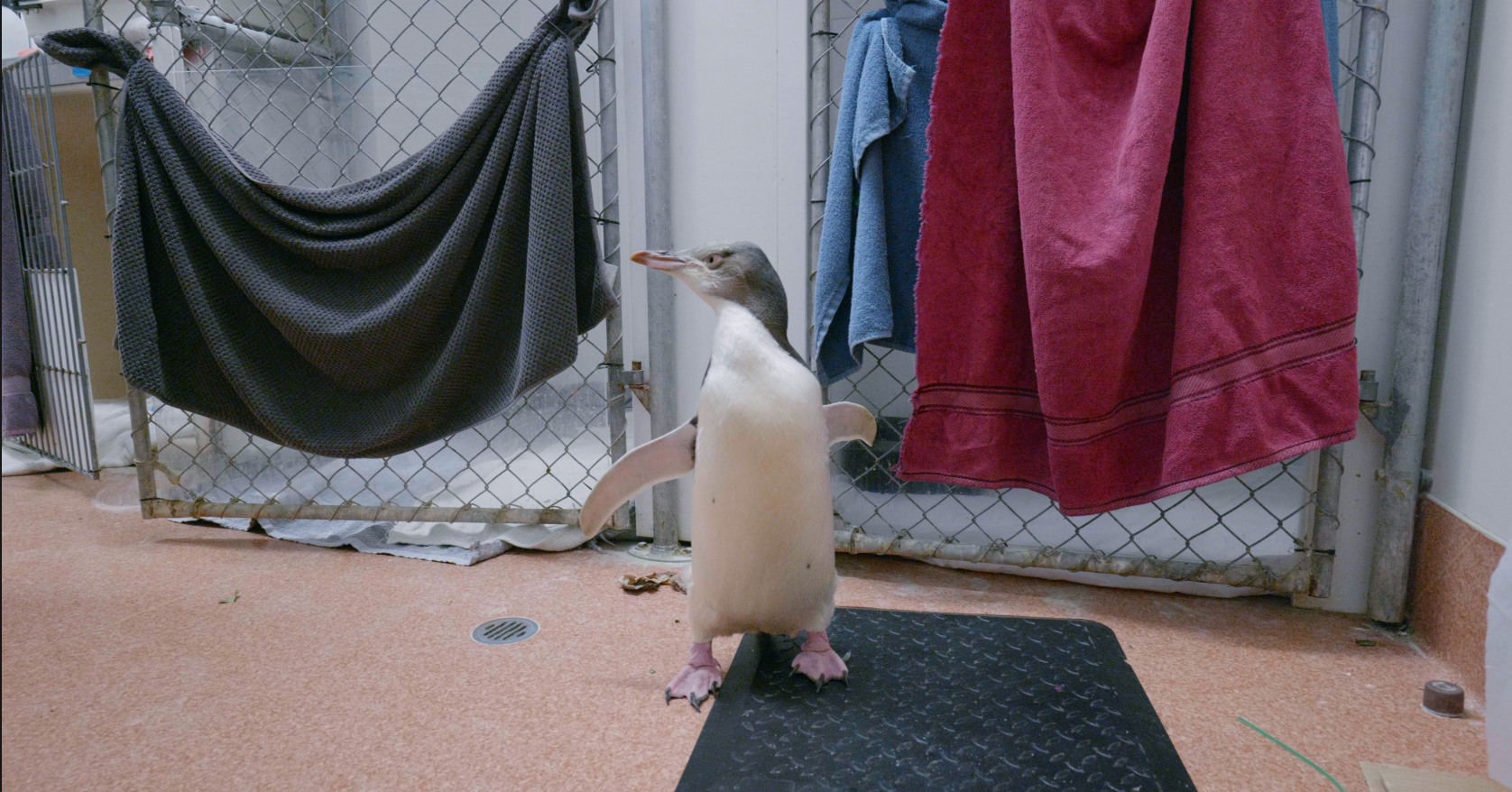
I visited the hospital a few times to film a penguin that had a fractured leg, likely from a shark or sea lion bite. Dr. Elizabeth Thomas, a wildlife veterinarian who has been at the hospital since 2019, spoke to me about the treatments and care they provide to penguins. This specific penguin I filmed needed a surgery to put pins in its leg. It’s quite the operation, with many penguins coming in needing various treatments, surguries and health assessments. The hospital also has a big pool out the back where they let penguins and other seabirds feel as natural as possible when they are healthy enough to be outside. Elizabeth says that the penguins “generally tolerate human contact reasonably well” with some of them getting comfortable enough to hand feed. The vets don’t let any visitors come and see the penguins as constantly seeing humans is very stressful for the penguins. I was very lucky to be able to go in and film this treatment.
When I was there, Elizabeth and Angelina Martelli, the senior vet nurse, fed and gave fluids to a penguin. Fish was forced down the throat by hand, and fluids were given by a large syringe that was attached to a tube and put into the stomach. It was a bit gruesome to watch, but the penguin seemed to handle it well. I’m not sure how affected the penguins can be from something like this. If they are monitored on land and show no signs of distress, then this only gives researchers half a result as we have no control of what the penguins are like back at sea. Since opening, the wildlife hospital has treated over 1,300 yellow-eyed penguins (as of early 2025).
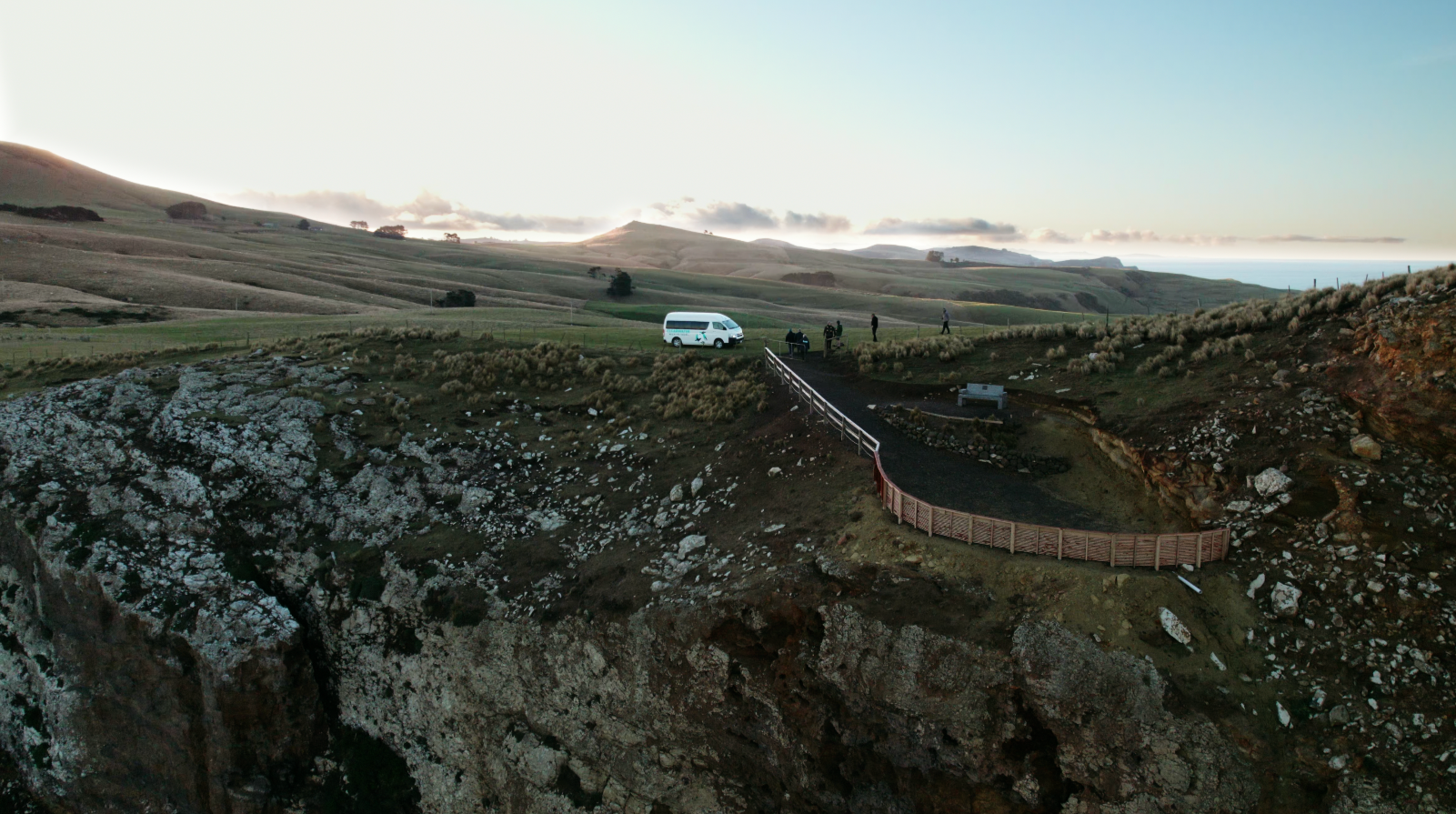
Clearwater Wildlife Tours is a family business that has been owned by the Clearwater family since 1838, when early European settlers were coming to Dunedin. Clearwater slowly evolved from a bed and breakfast in 1996 to providing guided wildlife tours on their property. I was given a tour of Clearwater by one of the local guides at the very beginning of my journey in creating the STILT documentary. It’s a great wee tour, starting in town and driving through the landscape before heading onto the Clearwater farm and walking down to the beach and into their wooden hide.
I went back myself a few days later to get special access with one of the workers, Ben, who allowed me to walk past the hide and set up my camera traps on the hill where the penguins walk up each evening. I ended up getting some fantastic footage, capturing a somewhat penguin renaissance. At the time of filming at Clearwater in July 2025, there were 22 yellow-eyed penguins, and after speaking to the owner, Rachel, again, now in August 2026 there are ————— penguins.
Clearwater doesn’t perform health checks or have a rehab, but they do supply small nest boxes for the penguins, which they can choose whether or not they want to nest in. The larger population of penguins at Clearwater is a great sign, but again, without some kind of penguin monitoring, it’s hard to say how healthy they are.
Similar to OPERA, a nice wooden hide is built where you can see the wildlife from a safe distance. The hide isn’t accompanied by trenches or underground walkways and isn’t built down into the ground. It’s more of a wooden hut, with a thin slit enough for your head to poke out of. It’s a cool thing to have, but I think it acts more as weather protection and a barrier against seals & sea lions who like to lean up against the wood when it gets warm and sunny.
Clearwater also re-plant native trees to expand their private conservation area. However, as an active sheep farm, the property does look quite bare, with the only vegetation being near the beach, and I’m not sure how the planting is managed, as they didn’t give any information about volunteer planting or gardeners on the property. It seems Clearwater is mostly a sheep farm, where I assume most of their revenue comes from, and with a lucky draw of land location, they are able to do wildlife tours for extra cash. I don’t think the yellow-eyed penguins are the main concern of Clearwater, but I was very pleased to see the biggest group of penguins come ashore at once.
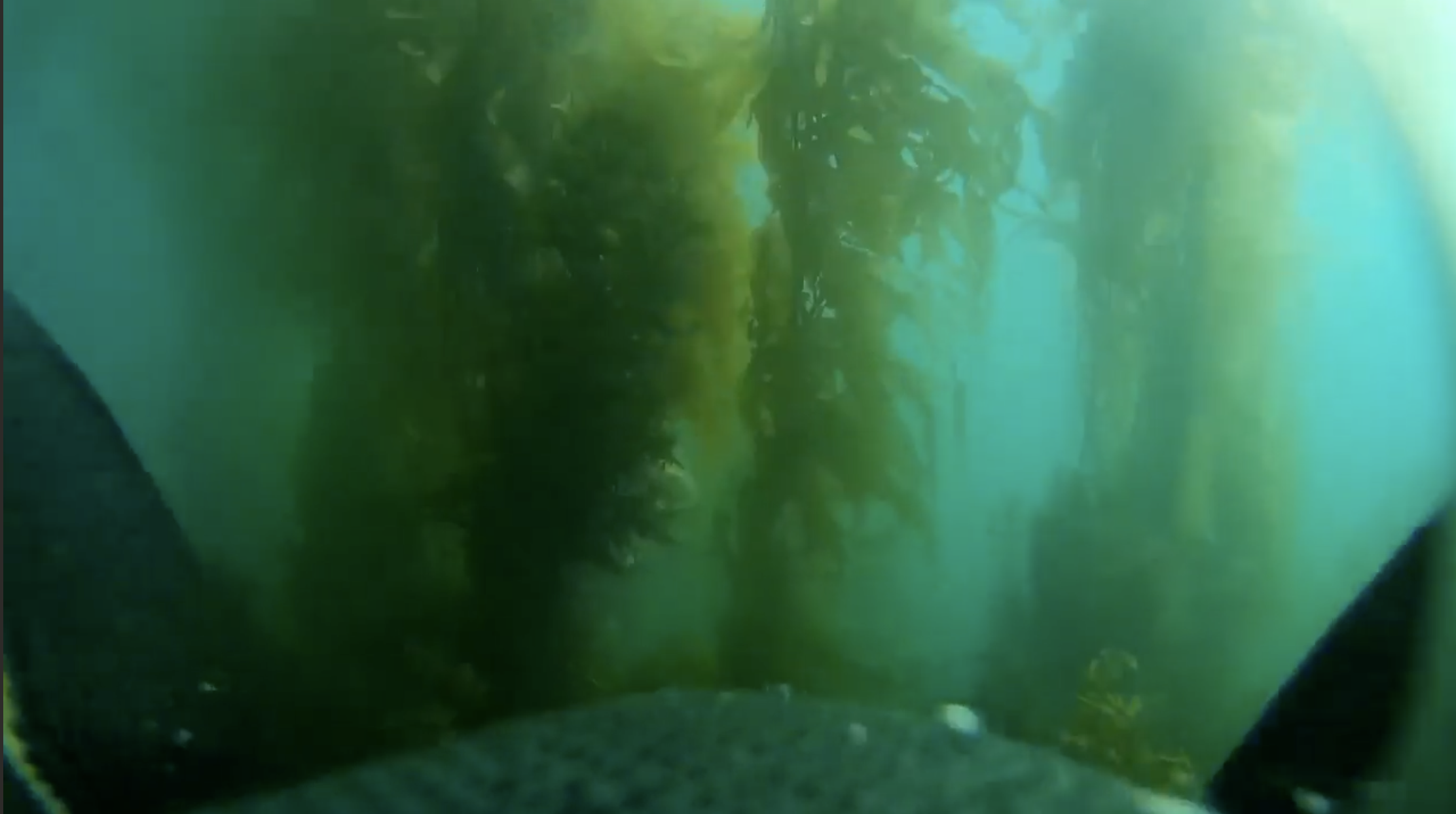
An image from the PenguCAM footage captured of a Hoiho diving through the kelp forests in Halfmoon Bay, Stewart Island.
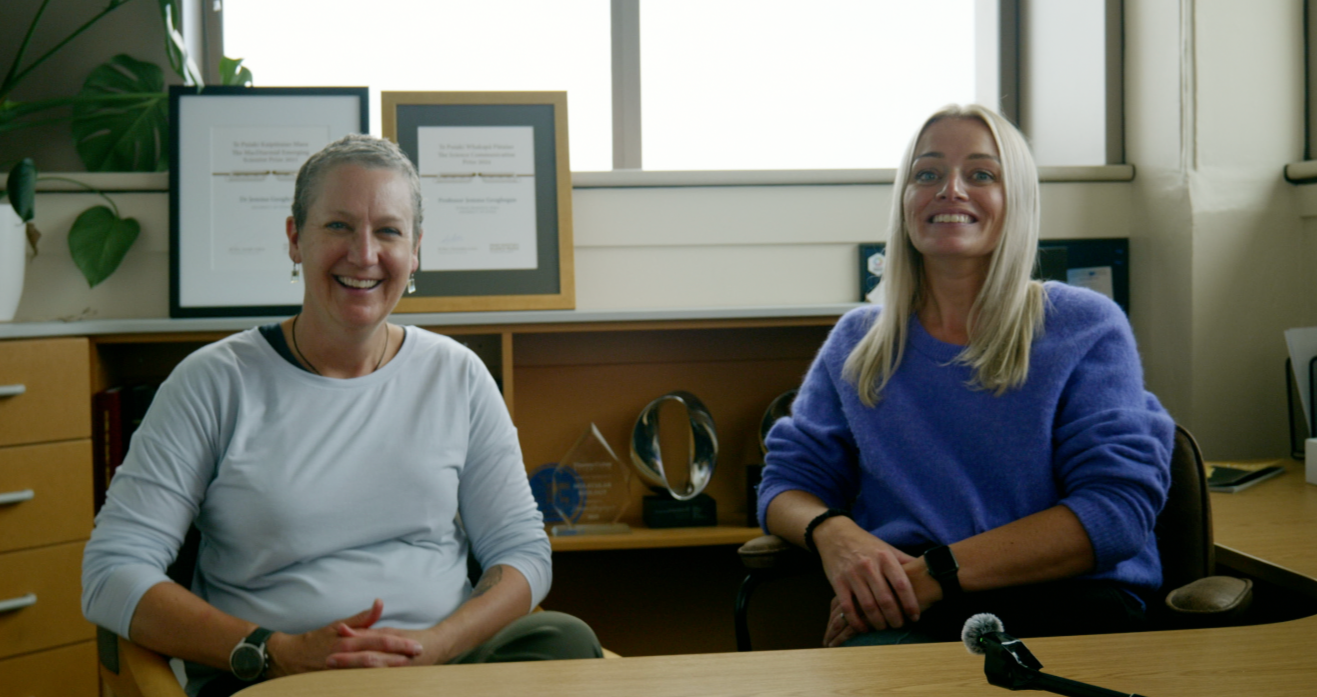
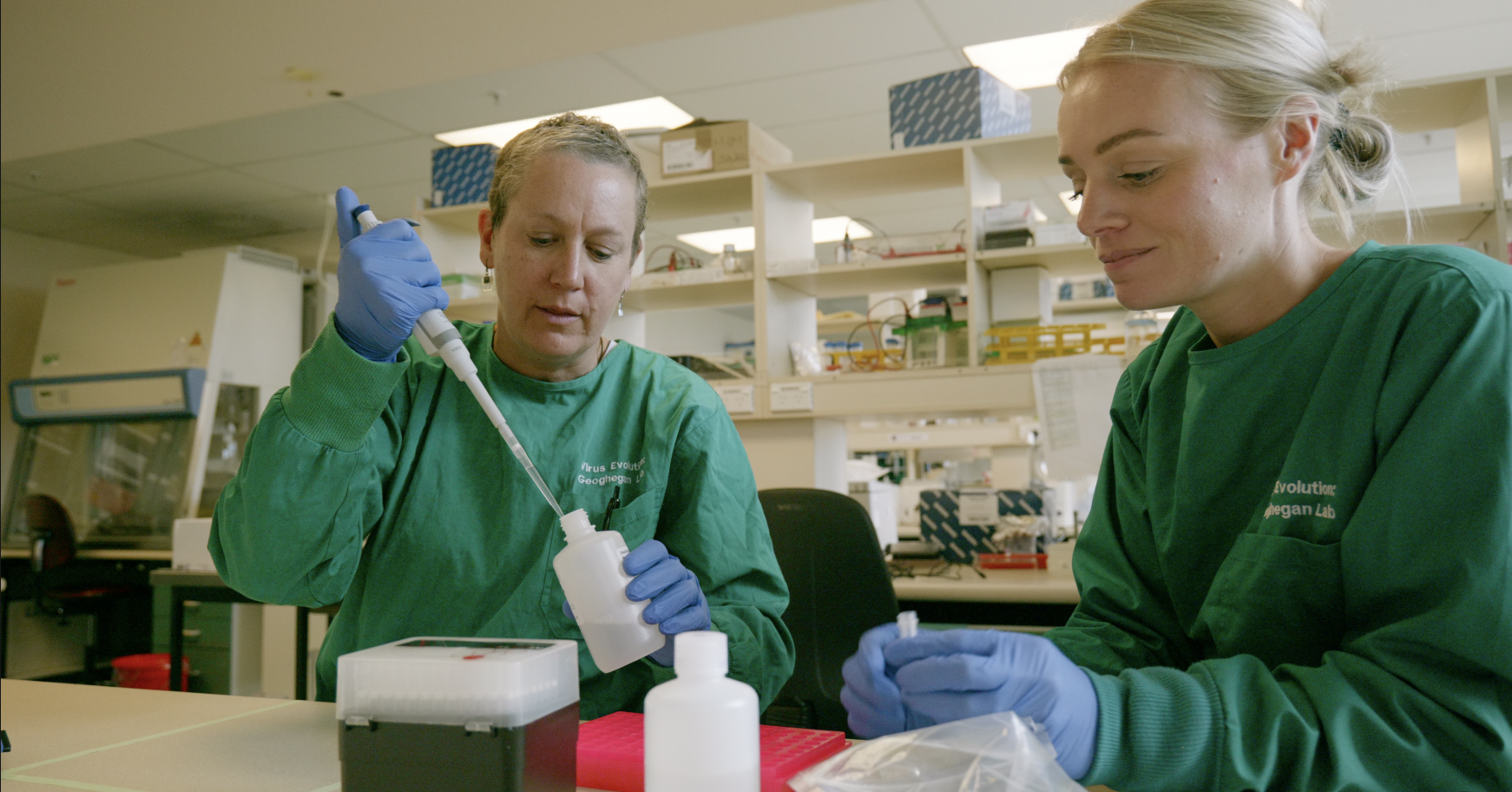
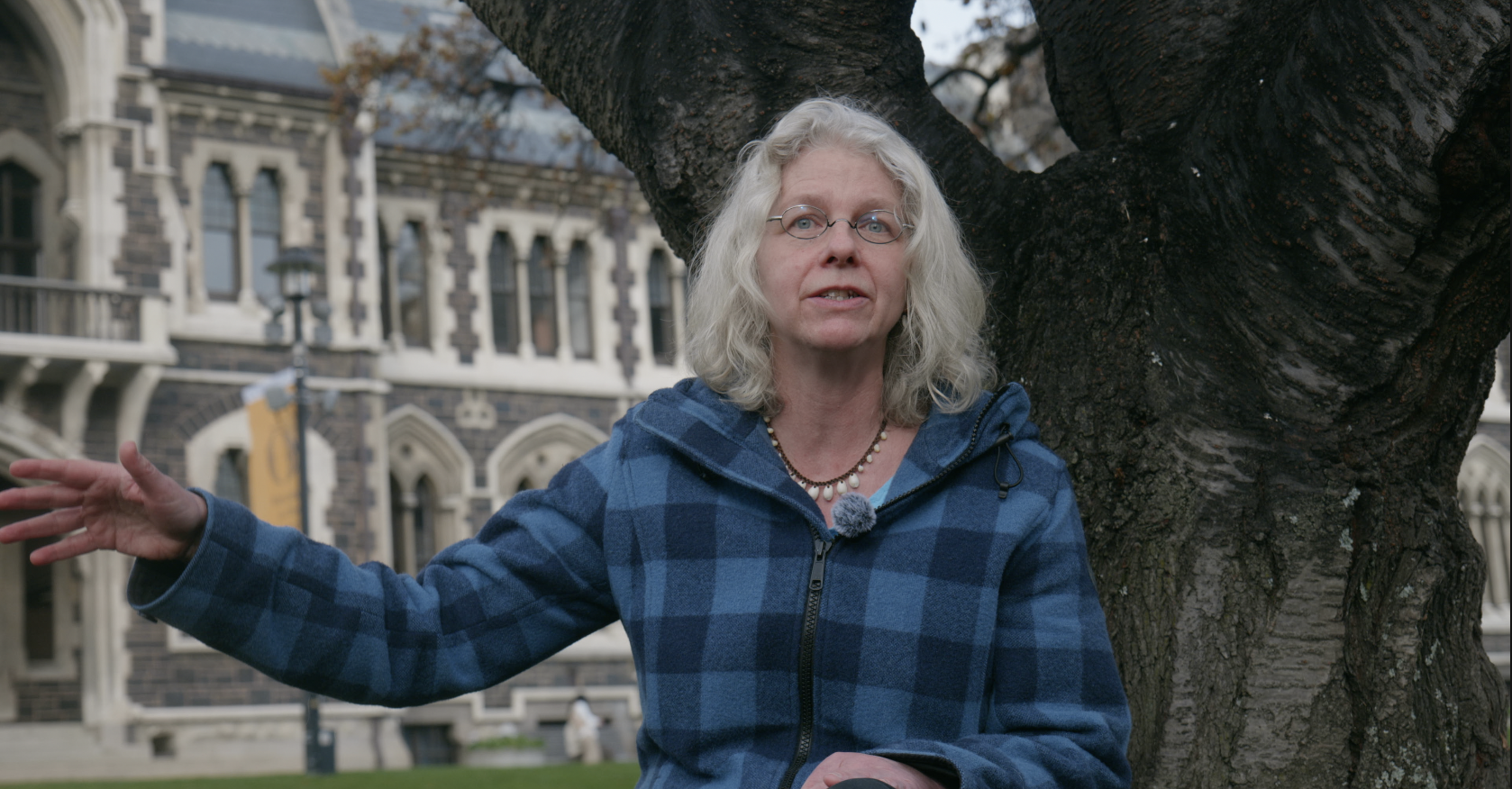
I spoke with Professor Jemma Geoghegan (right), an Evolutionary Virologist and Dr Janelle R. Wierenga (left), a veterinarian in the Department of Microbiology and Immunology at the University of Otago. Jemma and Janelle sequenced the genome of Hoiho to see if they are genetically predisposed to getting a new respiratory virus called girovisus, which kills penguin chicks. What they found was a discovery, in that the Northern Hoiho population was genetically different from their Southern counterparts, meaning a translocation of species will not be liable anymore if the Northern population become extinct.
After the interview, many articles about Jemma and Janelle’s discovery and penguin-related things were posted to the Otago Daily Times newspaper and other sources. Over the following months, these articles were updated on penguin genetics, survival and other important topics that Jemma and Janelle had been working on. I needed to be up to date with all this new information and incorporate it into the script for Noise Shouter.
It seems that Jemma and Janelle’s constant and rapid change in their studies is difficult to keep up with, especially with a lack of funding in their department. Jemma specialises in researching emerging infectious diseases and the use of metagenomics to trace the evolution of viruses. As a leader in several government-funded research projects, Jemma became the public face of genomic sequencing during New Zealand's response to COVID-19. Her research has contributed to the discussion about the likely cause of COVID-19 and the challenges around predicting pandemics.
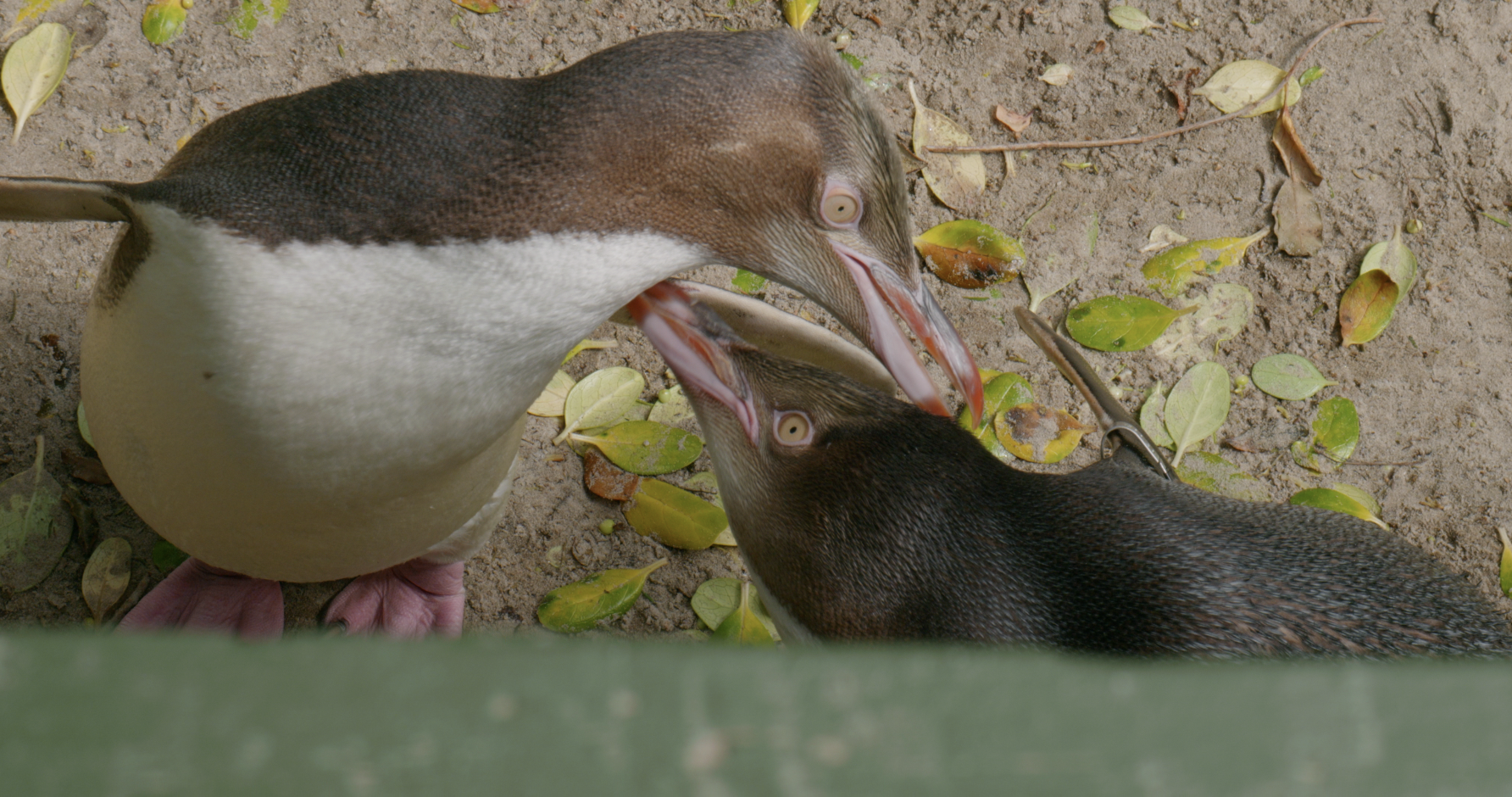
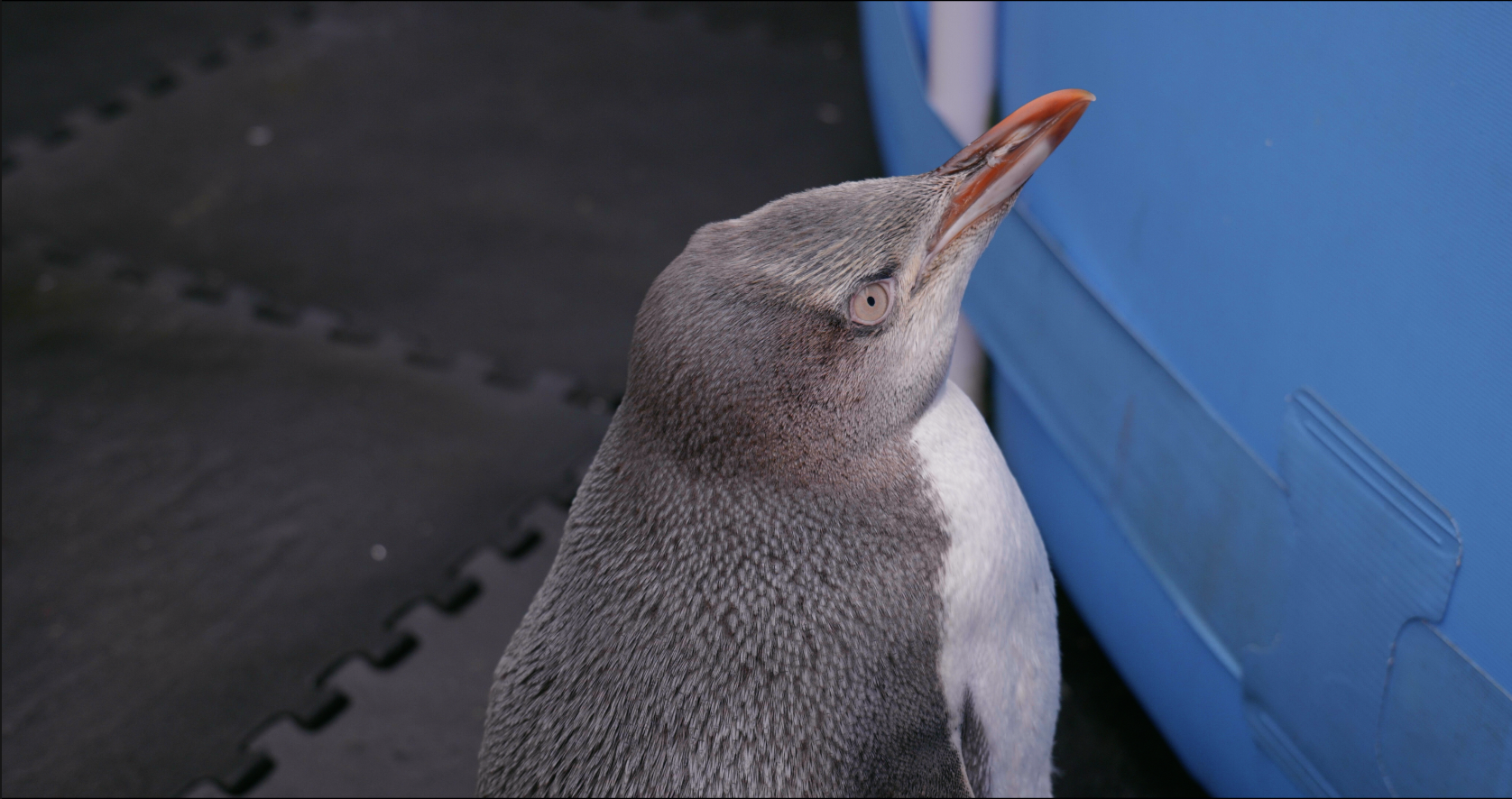
This yellow eye next to its grandiose paddle pool. It didn’t look afraid or stressed out by me and was being hand fed by Elizabeth, meaning it had obviously gotten quite used to humans.
I spoke with Anna Campbell, a researcher at the University of Otago, who is working on her doctoral thesis on the extinction of the yellow-eyed penguin. Anna was also the former general manager at the Yellow Eyed Penguin Trust. She got a double degree on an exchange in France at Grenoble Ecole de Management, obtaining a certificate in global management, followed by a Master's of Entrepreneurship at Otago Uni and her current doctorate research project, titled, The Call of the Hoiho for a Sustainable Ocean: Landscape Pressures and Niche Environments in the Deep South - a Multi-Level Perspective Study"
Anna says there needs to be more innovative methods to better manage or solve environmental issues, and the work has to be done collaboratively, involving the various stakeholders. What the Yellow Eyed Penguin Trust did on land was very important in terms of rehab and reforestation, but there is still a huge job to be done at sea, and Anna thinks the social science aspect is missing.
One of Anna’s quotes from a recent interview with Otago Daily Times Newspaper article is, "Sometimes people say good things take time, or change doesn't happen overnight. I... like to challenge that and say, actually, we're seeing Bills fast-tracked left, right and centre — why can't we fast-track things for good? Just because something's taken 30 or 40 years to destroy an environment, it doesn't mean it's going to take 40 years to recover it. We can begin today."
Anna really opened my eyes to how much politics surrounds the penguins, and I think she was a vital part of the documentary. It’s young people with new ideas and energy that will make any change, and Anna is the perfect example.
At the presentation of her alumna award in 2025, Anna pitched a proposal to buy out commercial fishing to reduce bycatch to zero, which I thought was a revolutionary idea, similar to how environmentalists will buy out a plot of land from a farmer and turn pasture land into forests again, working WITH the farmers, rather then against them. It will be interesting to see how this proposal will play out and there has been a lot of interest from different parties so far.
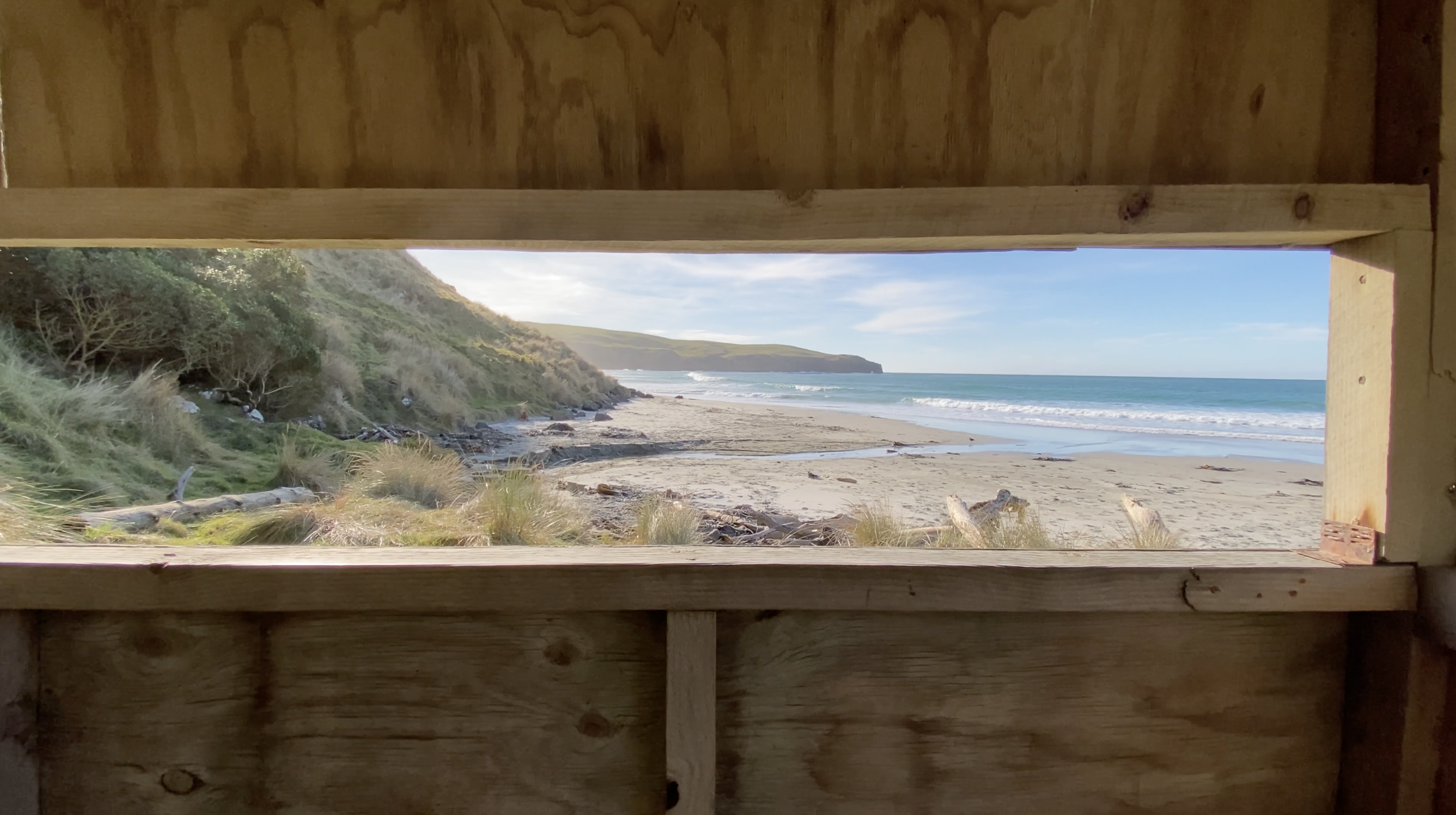
The cool wooden hide on the beach at Clearwater. Along with being a great place to hide from the weather and animals, it makes a sweet frame for the landscape.
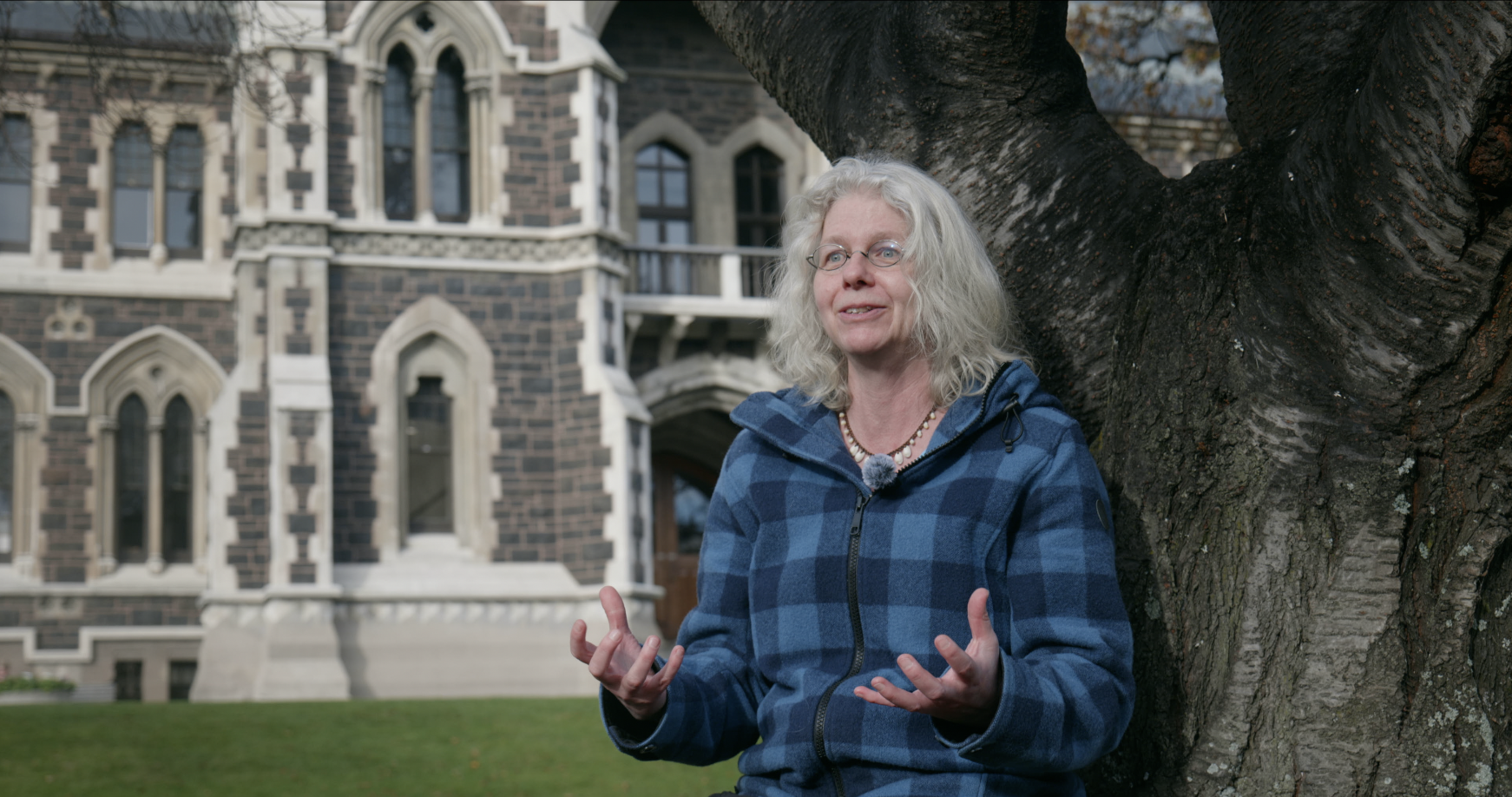
I spoke with Dr. Ursula Ellenberg about her Conservation Physiology, in which she uses physiological tools to understand and predict how penguins respond to environmental stressors to better inform the management of conservation challenges. She has more than 20 years of experience in coordinating fieldwork and leading research projects in New Zealand, Australia, Chile, Canada, Germany, the Russian and Norwegian Arctic, and is also a founding member of the Tawaki Trust. Together with her partner Thomas Mattern, she leads the Tawaki Project, a long-term study of the biology and marine ecology of Fiordland penguins/Tawaki and other crested penguins.
Ursula had some fantastic and fascinating things to tell me, such as the use of Corticosterone, a steroid hormone present in birds that regulates stress responses, and how she has measured this hormone to see how different environmental stresses affect the Hoiho. Her research shows that human interference spikes a response much higher than any other environmental factor.
Ursula has also deployed PenguCAM, an animal-borne, waterproof HD camera on Yellow-eyed, Tawaki, Erect-crested, Humboldt, Magellanic, Gentoo and King penguins. The PenguCam can take digital data and turn it into real-world measurements that provide a unique perspective for analysing diet composition and foraging behaviour, revealing previously unseen interactions that occur underwater. I was lucky enough to obtain some footage from Ursula of a Hoiho diving on Stewart Island, and it is some of the most remarkable footage I have seen.
Along with this, Ursula also shared some nasty stories about tourists picking Hoiho chicks up from nests, fisheries catching egregious amounts of penguins in their nets and scientific data that shows us the sharp downward curve of the survival of Hoiho.
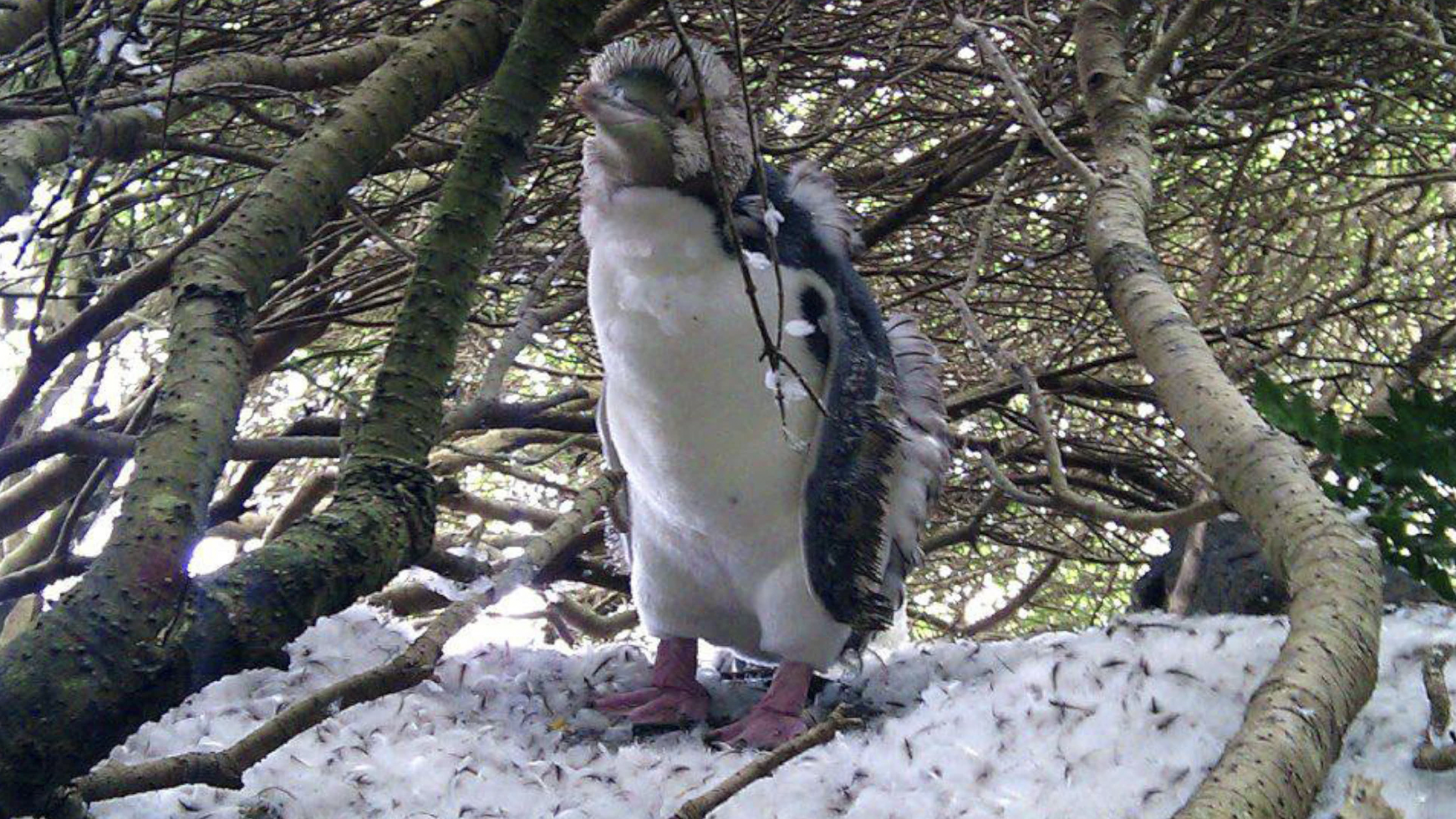
STRANGE FOREST TUNNELS

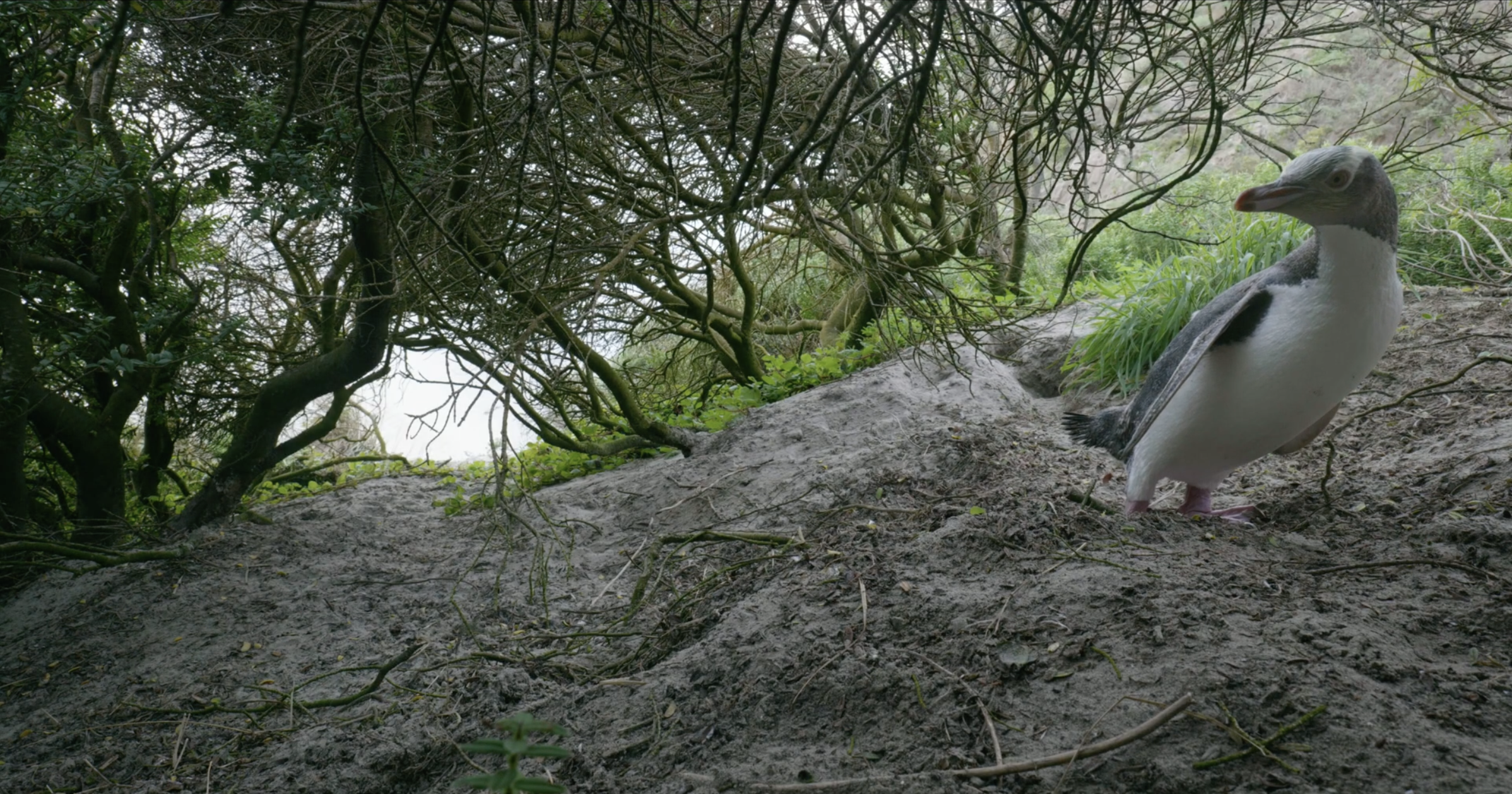
If undisturbed by human presence, the penguins follow a specific path pattern up to their nests every day. At about 3 pm, depending on the season, they waddle out of the water and straight up the middle of the dune before entering a specific patch of marram grass. They take a steep S-turn through the marram and into a shallow patch of hebe trees, leading to an exposed sandy ledge, which marks the grand entrance of their tunnel system. About 50 meters up the dune, the two penguins can be seen roosting on the edge of this sandy area, looking over the beach away from any danger. Sometimes standing and observing for up to 2 hours. Seeing the birds roost here is quite a dreamy sight, their rarity and timidness give them an almost diety spiritual feeling, as they look down on you before disappearing into the coastal forest.
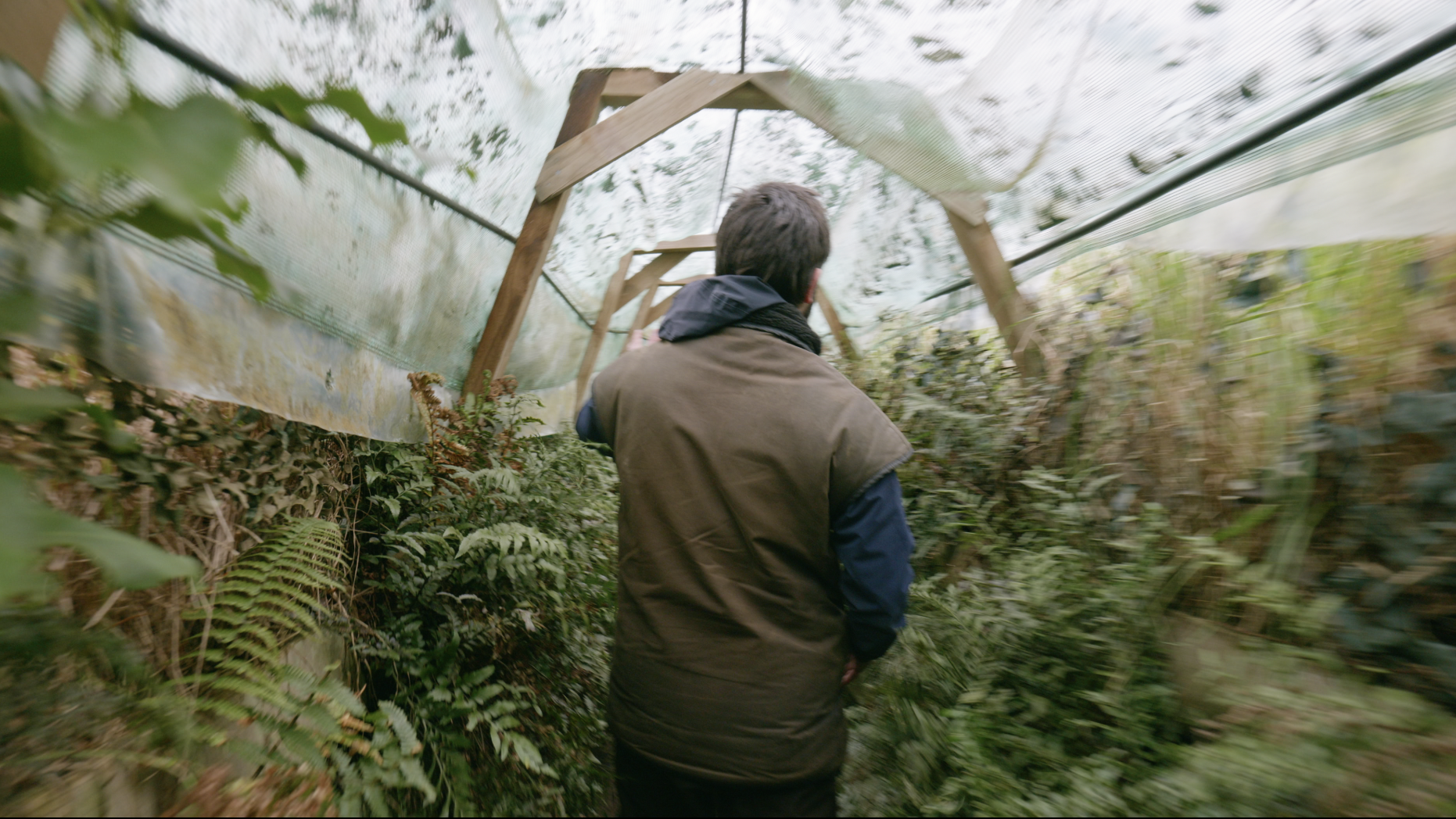
From here, the penguins have an extensive and complex neural pathway of tunnels to choose from. Unfortunately, I was unable to explore this area as the tunnels are sandy, fragile, and tightly knit, which I would damage if I got too near. There is another area about 100 meters further up the bush that can be explored. I found this by observing the penguins on the shore. As they enter the tunnel system, they disappear for a good 10 minutes or more before reappearing on a sandy exposed ledge that leads into an open area of larger native boxwood trees, Taupata (mirror bush) and bush spinach. Away from the reaches of the ragwort and tree lupin, this area seems to be somewhat of a crossroad, where one path splits into many, weaving through the hebe trees. All these paths eventually lead to the same outcrop, a rather exposed cliff edge about 50 meters further up their climb. From here, the penguins are completely out of reach from humans and without a good eye, they are very hard to spot from the beach. Now about 200 meters from the shoreline, the penguins carry on up the loose dirt and shrubs before finally disappearing into denser forest near the top of the cliff. From here, I don’t know. It’s hard to say where they nest exactly, and I would never go looking.
I’ve attached some clips to the left that correspond to what I’ve written above.
A large, steep s-shaped curve through the marram
Finishing the s-curve
a path taken daily
Straight up the middle of the dune
Into a patch of marram grass

PRODUCTION
A LOOK INTO TWO SOLO YEARS OF GUERRILLA FILMMAKING
The idea of a documentary had been in my head for years, but most of these ideas had been far too ambitious, with potentially tens of thousands of dollars of production costs, unreachable locations and too many people to coordinate for a 19 year old with no real-world wildlife documentary film experience. In October 2024, I visited Victory Beach and filmed a yellow-eyed penguin for the first time. I thought this beautiful, waddling and easily accessible animal was perfect to fixate on for a few weeks to gain some experience in wildlife filmmaking. Two years later, I couldn’t be more wrong.
The unofficial start of production for Noise Shouter, formerly “STILT”, started here. I wanted to call the project STILT as I had some great shots of a Stilt (seabird) walking past a penguin, but I think that may have been a little too symbolic. My original plan was to create a heartbreaking tone-poem with some words from OPERA and maybe the wildlife hospital. It would run for about 15-20 minutes and mostly consist of swaying waves and penguin close-ups with devastating drones and wallows of strings for music. I’ve stuck with this music throughout the docco, but I learnt quickly that a lot of people needed to be heard and shown to get the complex life of penguins across.
Eight people had their important say in my film, ranging from fieldworkers, ecologists, virologists, veterinarians, and tour operators. Filming this was easy, but correctly editing 30 minutes to 2 hours per person of talking heads down to bite-sized clips, whilst keeping the facts right, was incredibly tedious and difficult. Transforming from a sad story to a complicated political matter.
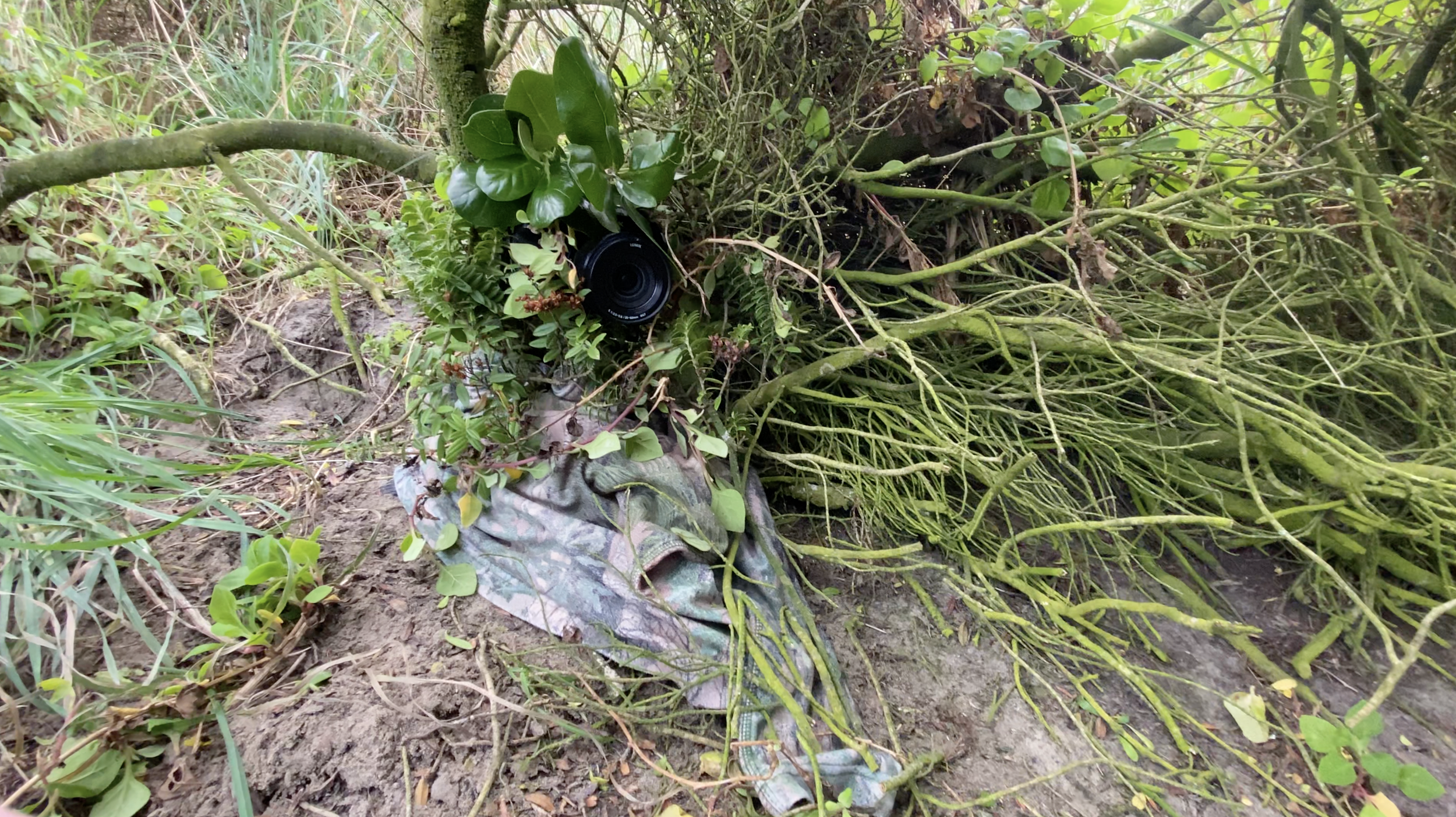
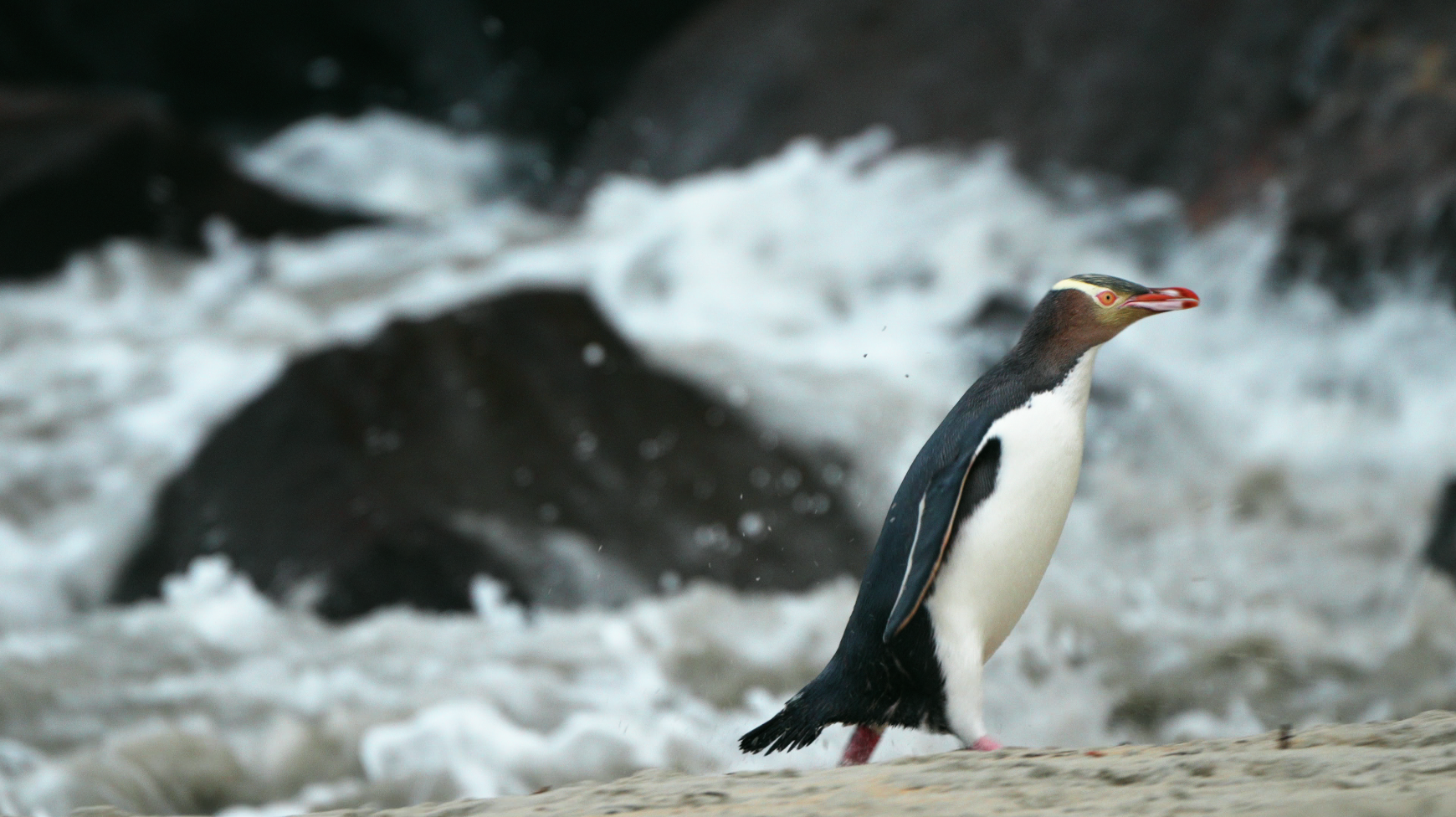
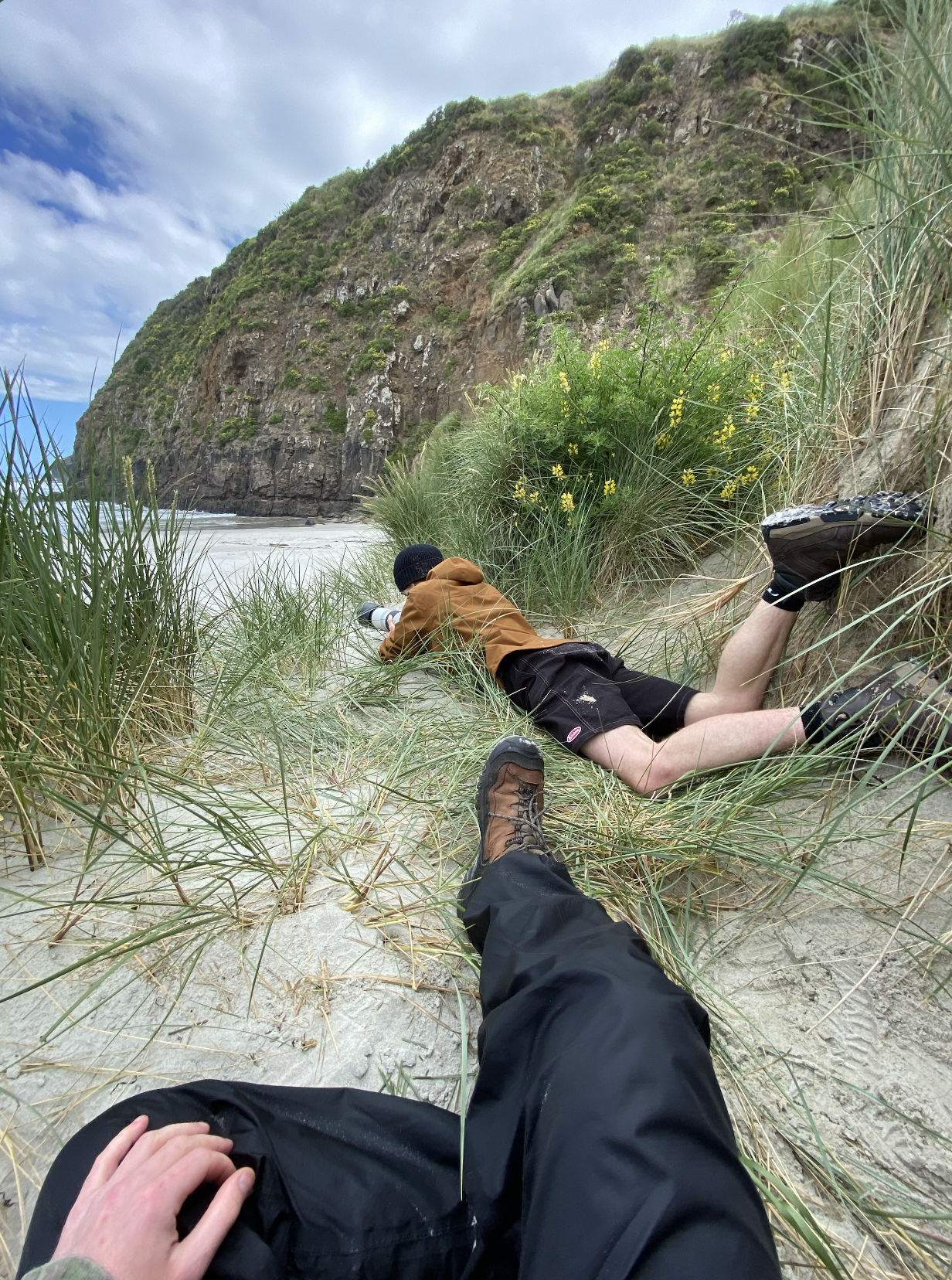
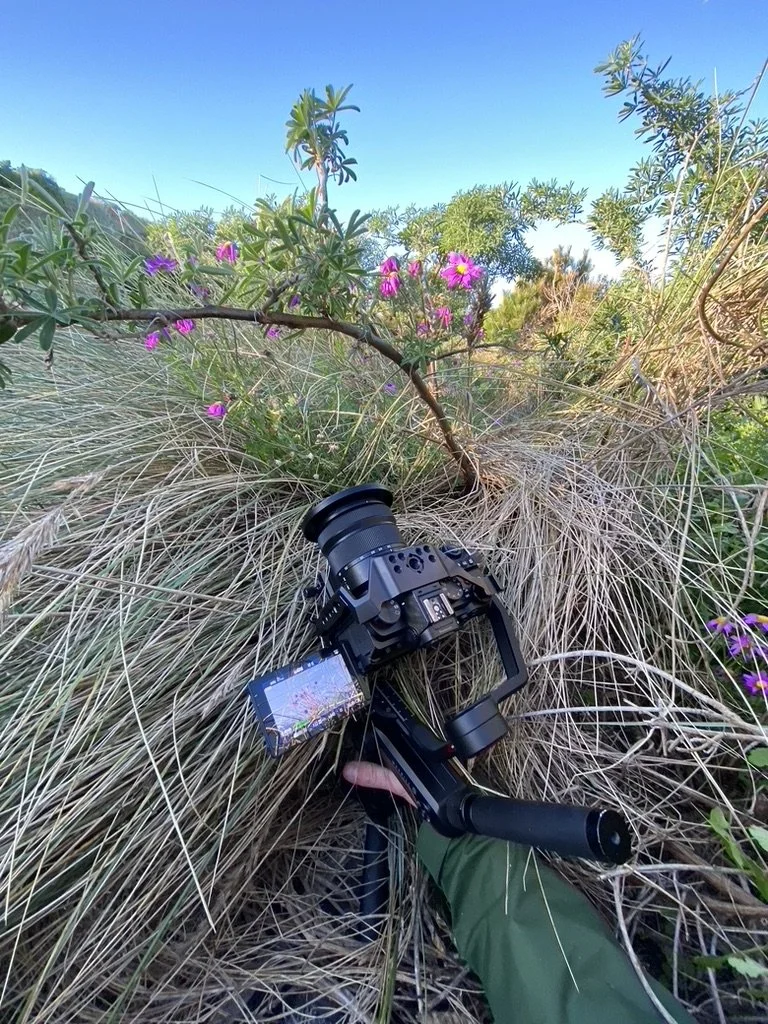
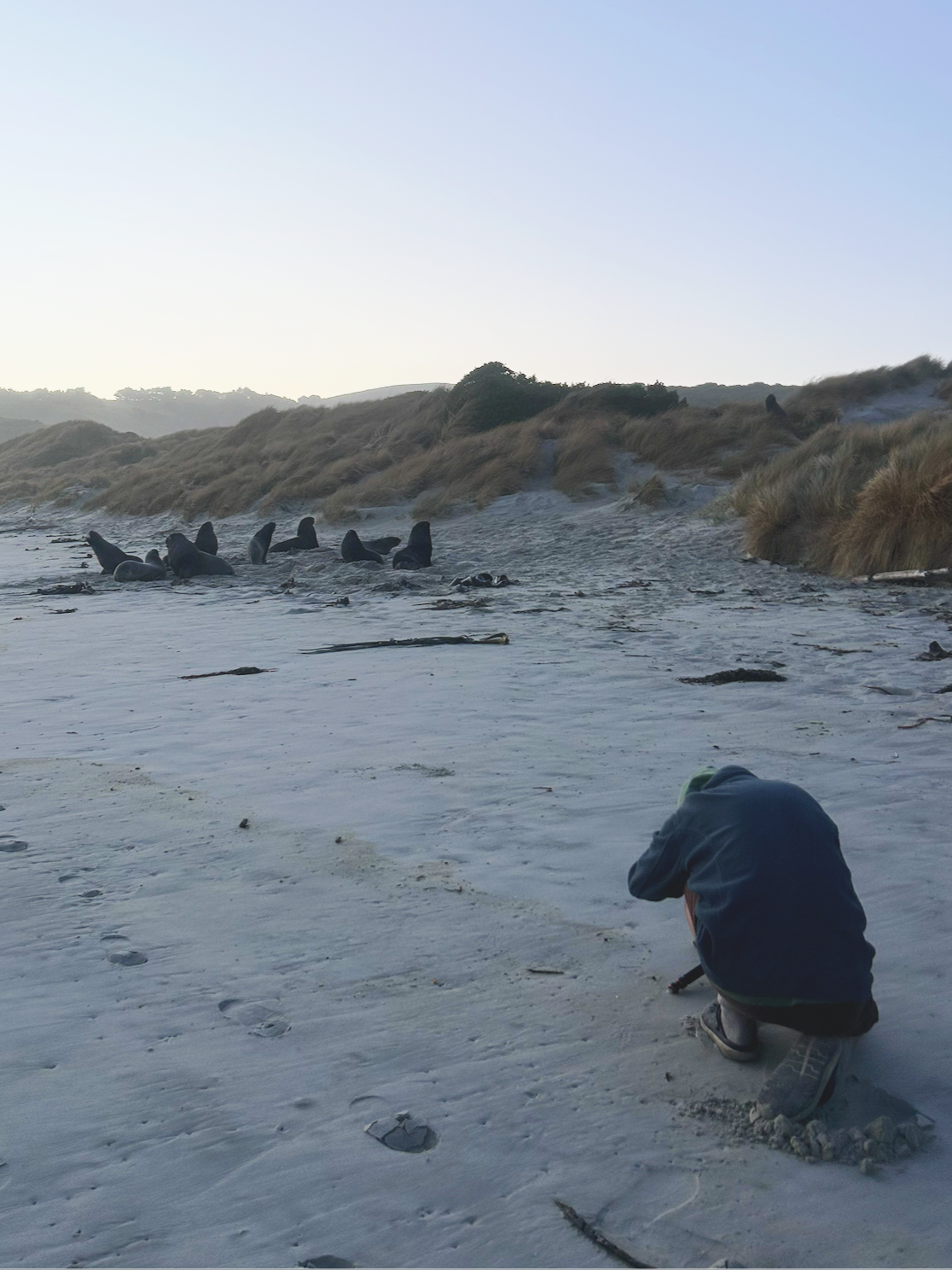
I never thought filming the Hoiho would be straightforward. But timing, weather and the furiously shy nature of the birds surprised me. I visited Victory Beach a few times, but the drive was just a bit long, and the beach was far too big. I only ever saw one penguin here. I discovered that Sandfly Bay was quite the place for penguin spotting, so I focused all my energy on visiting most days for a couple of months. Luckily, it was summer here in NZ, so the weather was mostly nice and the penguins would come out quite early. I got so good at timing that I would arrive perfectly every day for me to set up the camera traps, run away, hide and within 5-10 minutes the penguins would pop out. I say “penguins”, but in reality I only saw two come out of the water a handful of times. At the time, I had my main camera, a Lumix S5, plugged into my power bank and rubber-banded to a broken tripod that I had wrapped in my old Ridgeline camo jumper. As there were so many ways it could go to get to the nest, it took me weeks to get just one shot of the penguin walking past the camera in its tunnel. Eventually I borrowed my mate’s Lumix GH5 and dug out my old Gopro Hero 4 and invested in some cheap camo netting and fake foliage to hide the cameras. Once I did this, my luck changed, and within a few beach visits I struck gold with multiple breathtaking closeups of the Hoiho walking through its secret tunnels.
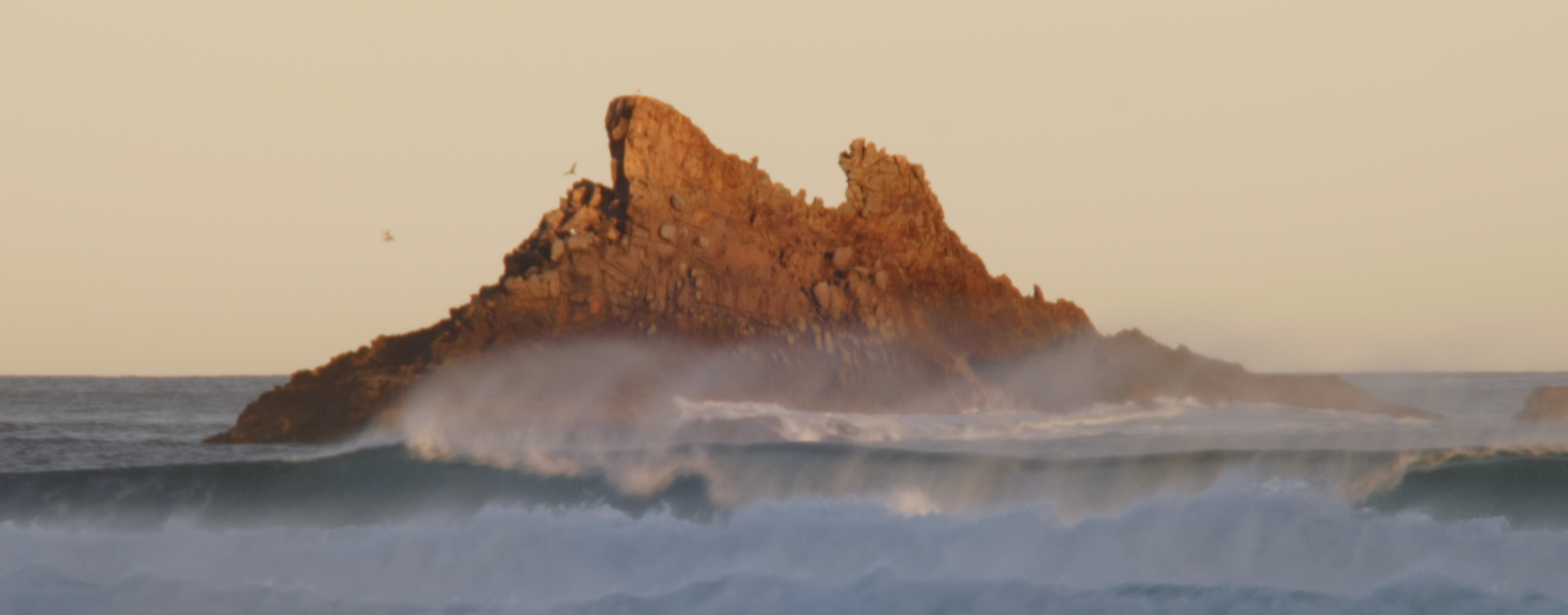
Months on the same beach never got tiring, and I saw every shape and form of weather, people and animals. I wrote before that I got great at my timing, but there were still days when I did not see the penguins. I’ve sat on the beach for up to four hours on occasions, and ended up with nothing at all. I’ve lain in trees, shrubs, sanddunes and grass for so long, I wouldn’t be surprised if I still had sand in my ears. However, the more I visited and the more I learnt, the more people I interviewed and listened to, the clearer the image got. I now know Sandfly Bay is a “sacrificed beach”, meaning it’s close to total extinction. I know that we have lost the last breeding female in Sandfly Bay. I know the beach environment is raped by constant human activity. And I know that tourists are being purposefully led to this beach for penguin viewing. Once I was doing a casual evening of filming, and a group of French tourists were down the beach, watching the single penguin. One of them came up to me and said, “Where are the rest of them?” I told the gentleman that there were only about two or three on this beach, and he looked at me in total shock and laughed in my face. I reassured him that yes, this was the truth, and he couldn't believe it. I know that whatever is being advertised to these foreign visitors is not what’s really here to see. I always knew New Zealand beaches were a bit of a pig in lipstick when it came to biodiversity and cleanliness; for example, Tomahawk Beach, only seven kilometres from Sandfly Bay, is constantly given warnings for sewage overflow and human shit in the waters. This project has helped me learn the deeper truth about what’s really happening.
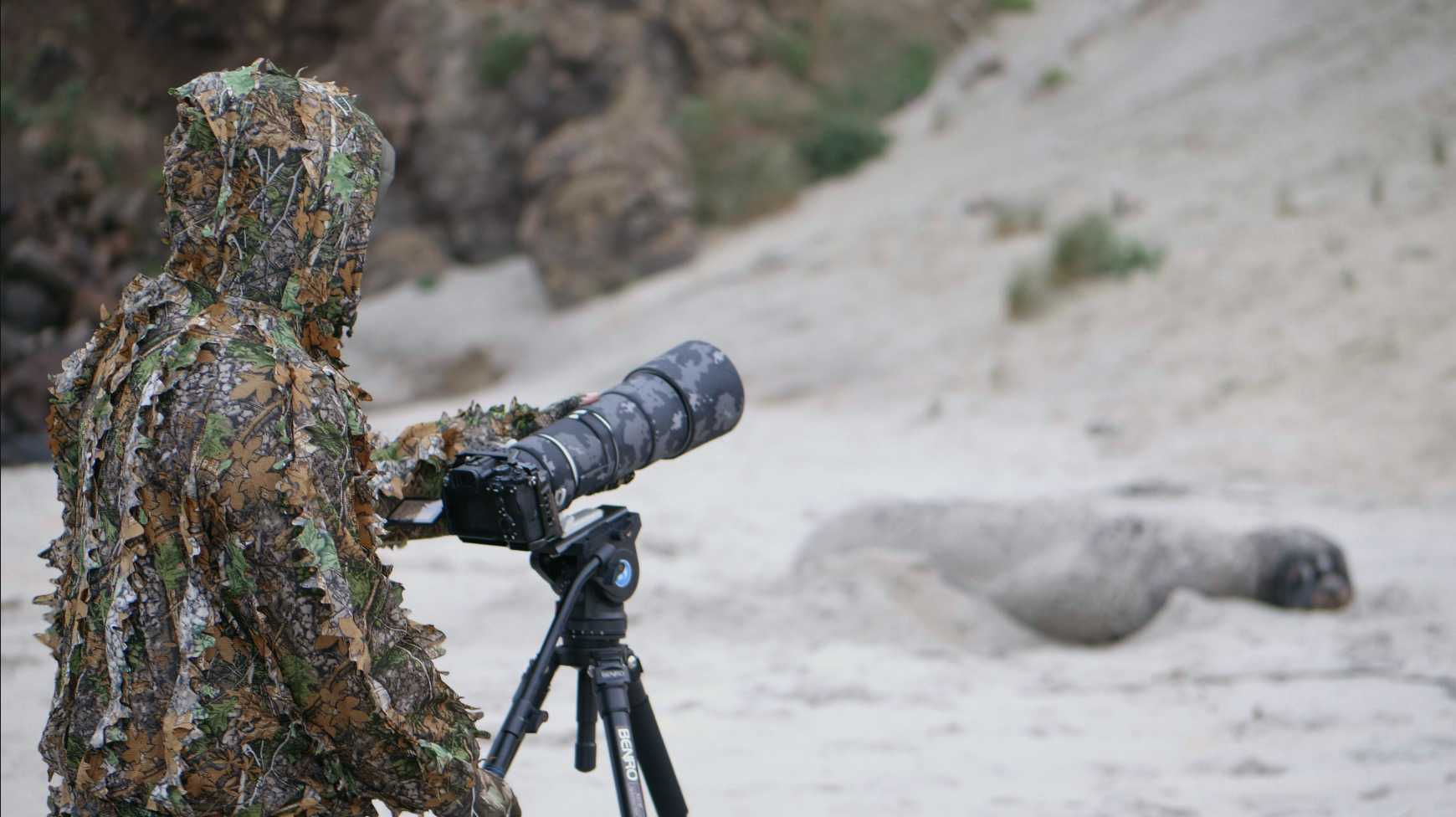
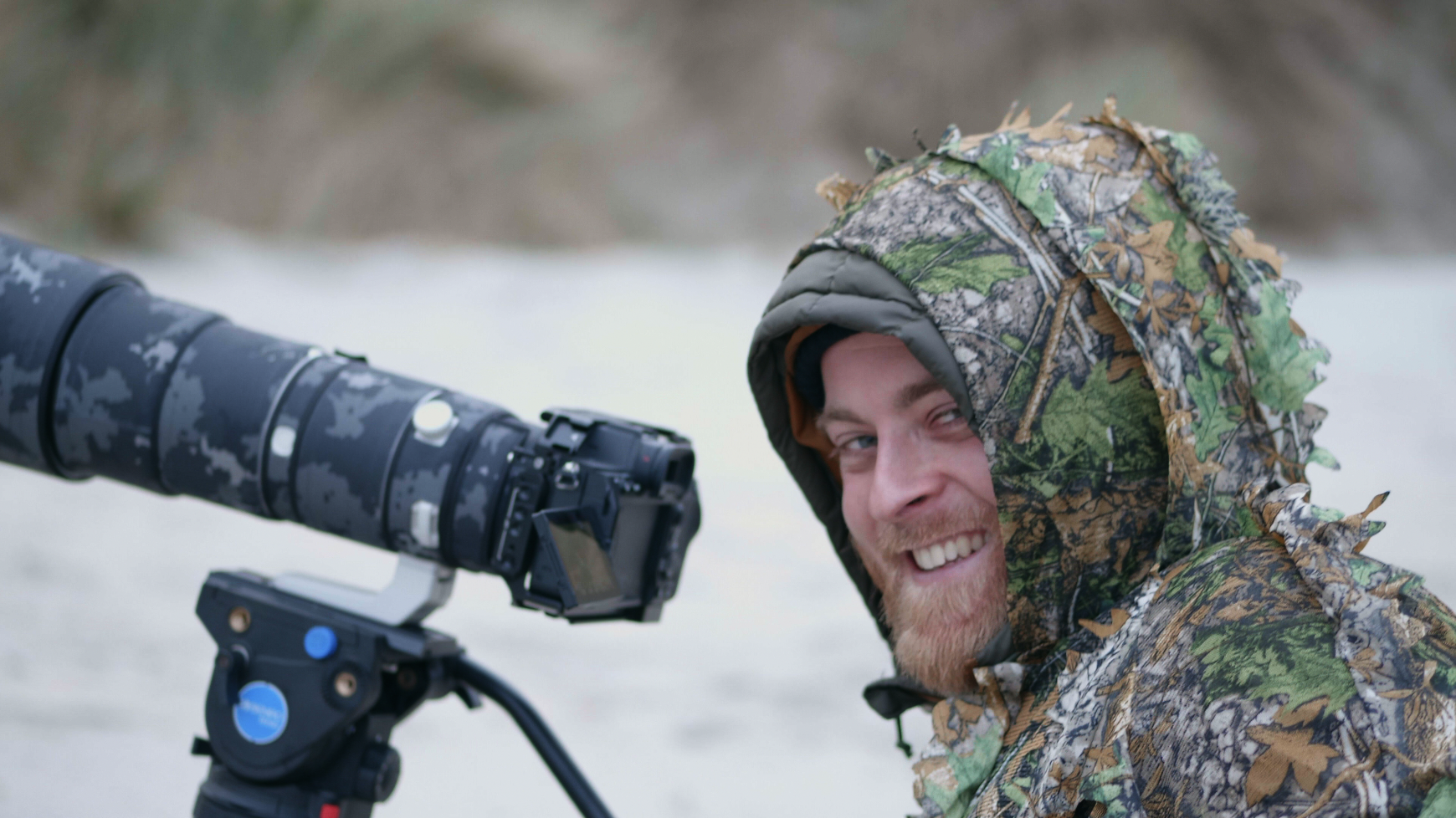
A screenshot from one of Aljosha’s shots.
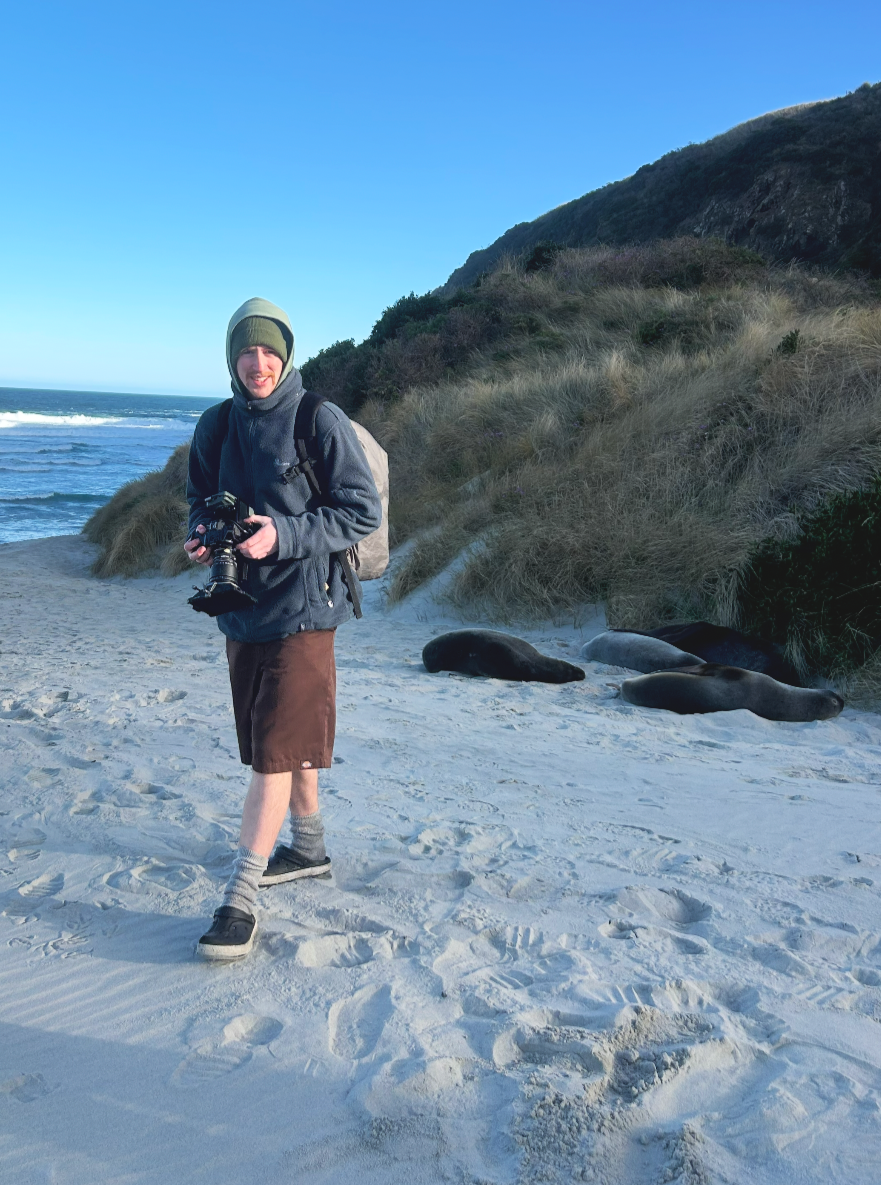
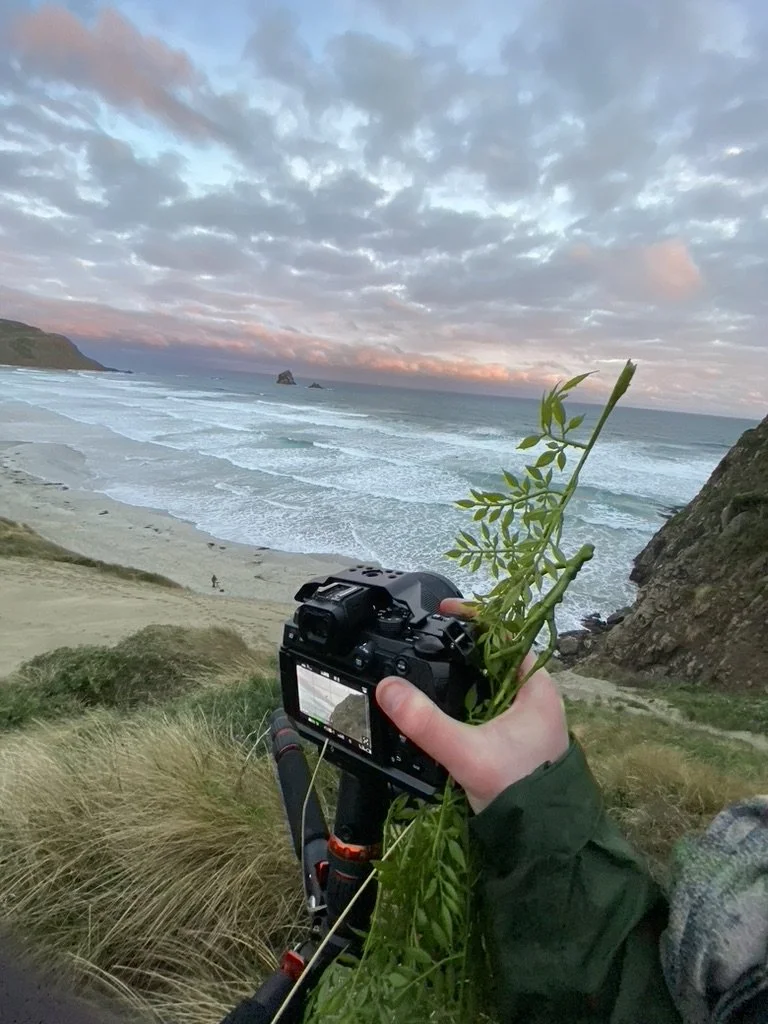
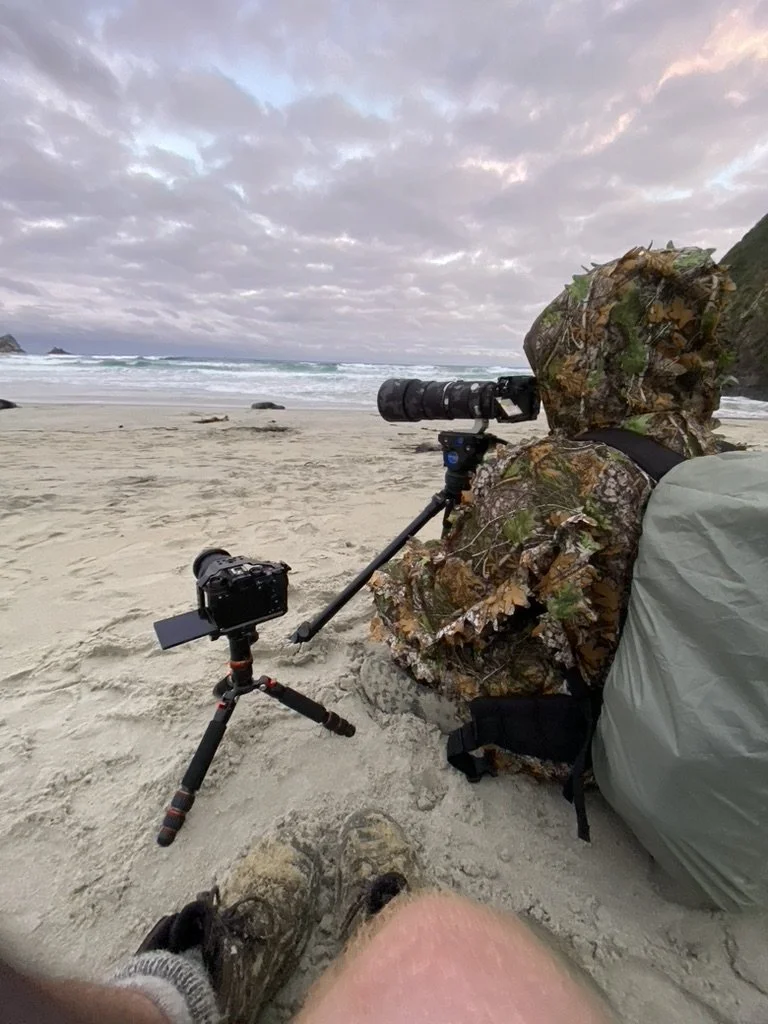
I ended up meeting a lovely German couple from Cologne (Köln) who were living in their Van and road tripping NZ. Aljosha was a photographer and offered to film some penguins for me. The next day he arrived full swank in his ghillie suit and shot a handful of really great clips. I was working with a Tamron 28-200mm from 1992 with a 2X magnification filter and a Lumix adapter, which looked great after a lot of editing and image stabilisation; it was a breath of fresh air to get some good-looking, reliable footage from Aljosha
I visited Sandfly Bay probably 50 times in the last two years. There was a spurt of daily visits when gathering my camera trap footage, and it naturally weaned off as I got closer to my quota. In that time, I calculated that I had filmed over 800 hours of camera trap footage across three cameras, which I was taken aback by. Luckily, editing this was pretty straightforward, as I could cut the section I wanted out before importing two hours of 4K 10bit footage into Final Cut Pro. Throughout this project, I got two people to help me shoot some things on the beach over two days. The remainder is shot by myself, one camera, one lens.
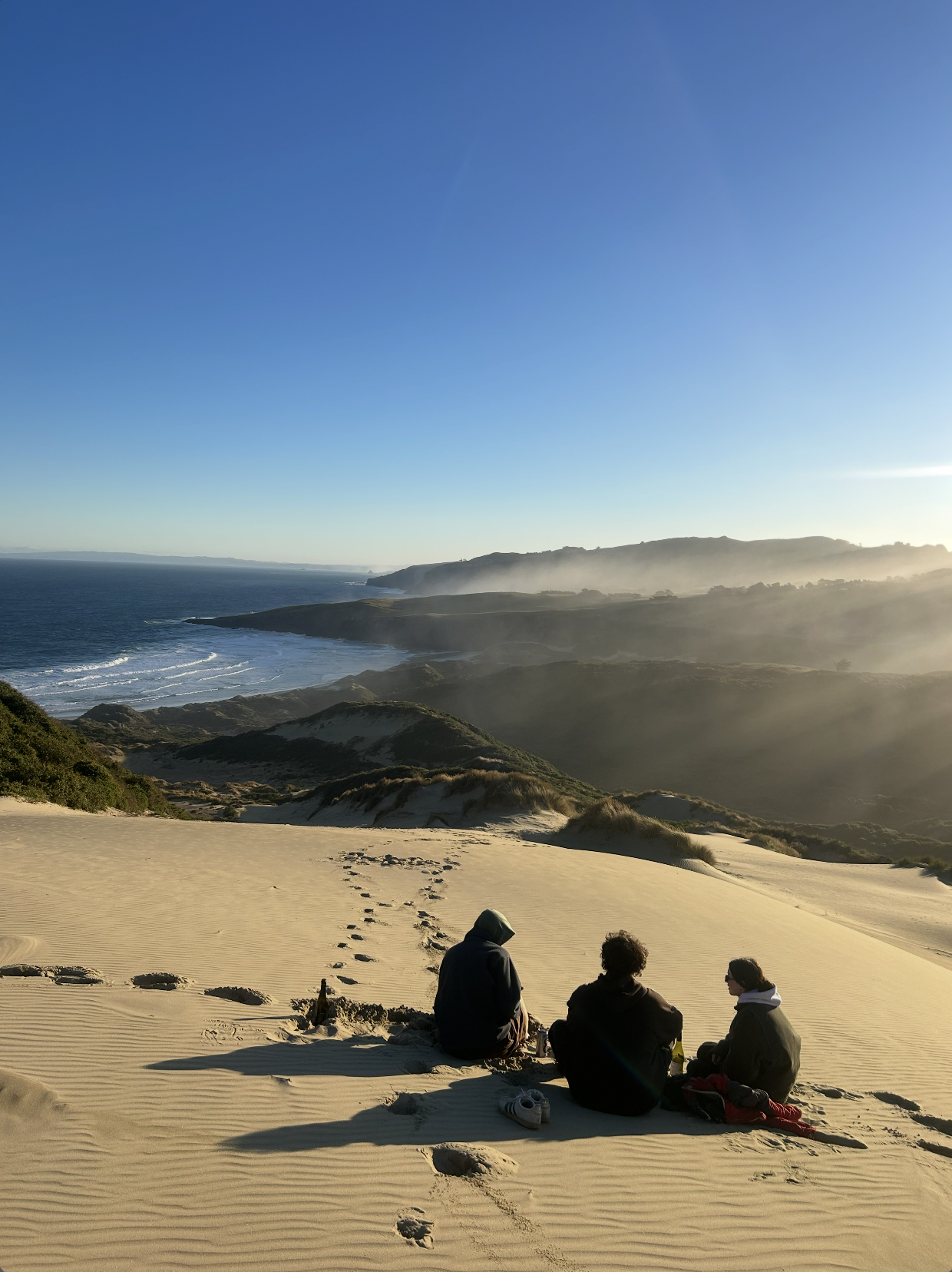
Thinking back on all this time spent at the beach, it’s easy for me to romanticise it. Sandfly Bay attained an almost sacred significance, when in reality, this poor beach is on the edge of its extinction. It’s actually very easy to mask this. DOC advertises Sandfly Bay as a haven for animal spotting. Visually, the beach is pristine, meaning very little physical rubbish or plastic is floating around in the sand. The view is vast and satisfyingly curvy to observe, and the air is fresh, but unfortunately it’s the wildlife that is struggling. Visitors are being led here with the expectation of a zoo, only to receive a dystopian dust bowl instead.
SANDFLY BAY & PENGUINS
UNDERSTANDING NATURAL LIGHT
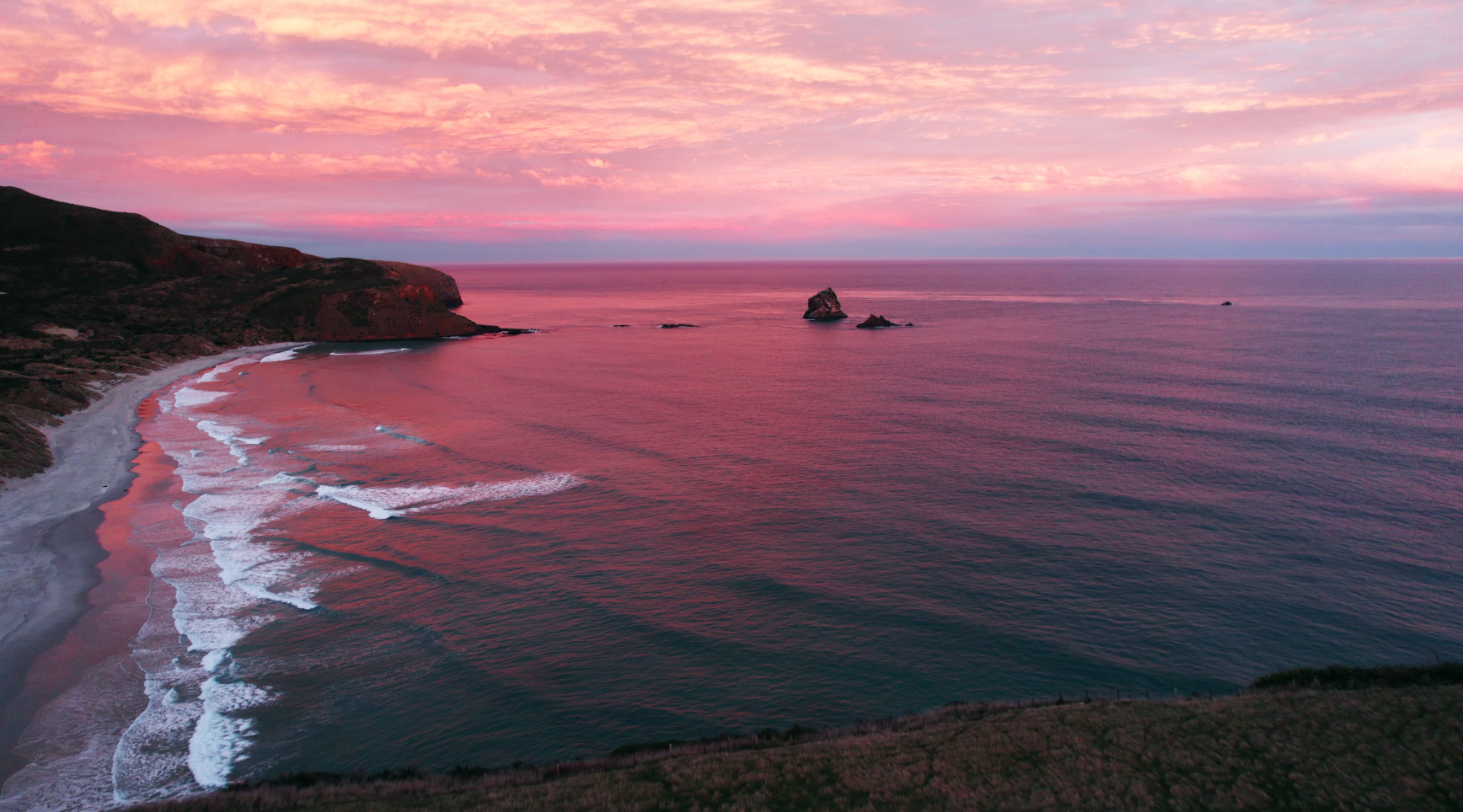
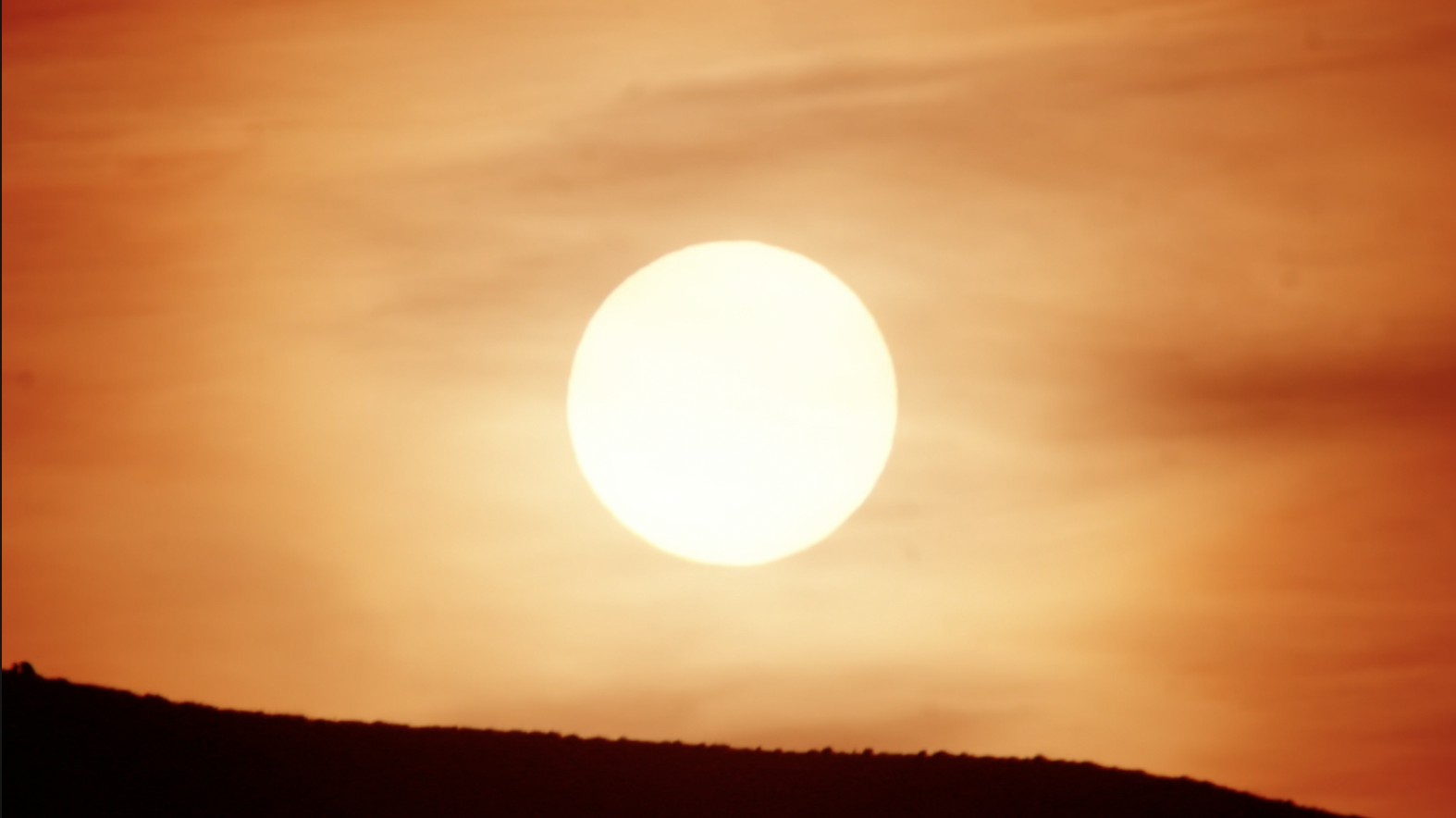
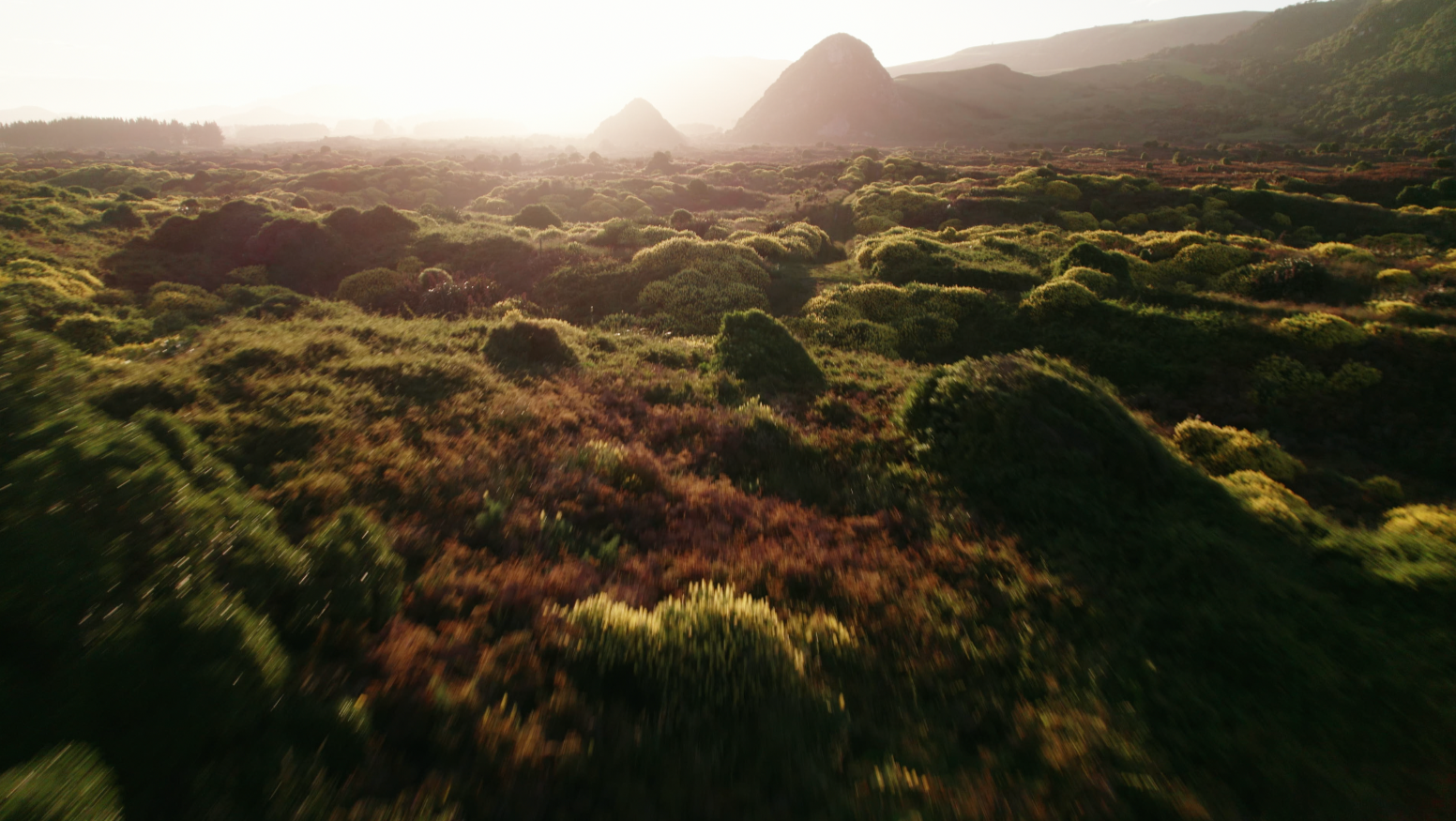
One of the reasons the production for Noise Shouter took as long as it did was natural lighting conditions. It sounds odd, but if I was going to commit years of my time to making something beautiful, I wanted everything controllable to be spectacular. This meant any shot of beaches, landscapes or inconclusive b-roll needed to be perfect. Unfortunately, towards the end of filming, I couldn’t maintain this as I would have surpassed any competition deadline of 2026. But the three-quarters came out exactly as I wanted.
A CRACK AT INTERVIEWS
FACE CARDS
Noise Shouter was my first project with mass interview material, and I can’t say I’m an expert at lighting and audio. I have 10 years of commercial and personal experience in filmmaking and photography, but this never really covered formal video content like interviews. I have been mainly contracted to shoot raves and outdoor advertisements. However, I learned some lighting when I studied photography in 2023. I was pretty determined to put what I learnt to use and create some really nice talking head content. For my outdoor interviews, such as Jason at OPERA or Perry at Natures Wonders, lighting was obviously not needed, but for my indoor interviews at the wildlife hospital and University it was. I borrowed some lighting equiptment from a friend’s studio and my old lecturer, and got my mate Adam to help with light and audio setup. Unfortunately, the rooms I filmed in were cramped with hospital equiptment and desks and had bland backgrounds or natural light that couldn’t be blocked, something I could not control. In the end, the results looked average, but at least we looked somewhat professional! I’m still happy with my results, especially any outdoor talking heads; they all look great. Next time I might organise a more controlled environment to interview in, but authenticity was one of my main goals, so no real complaints.
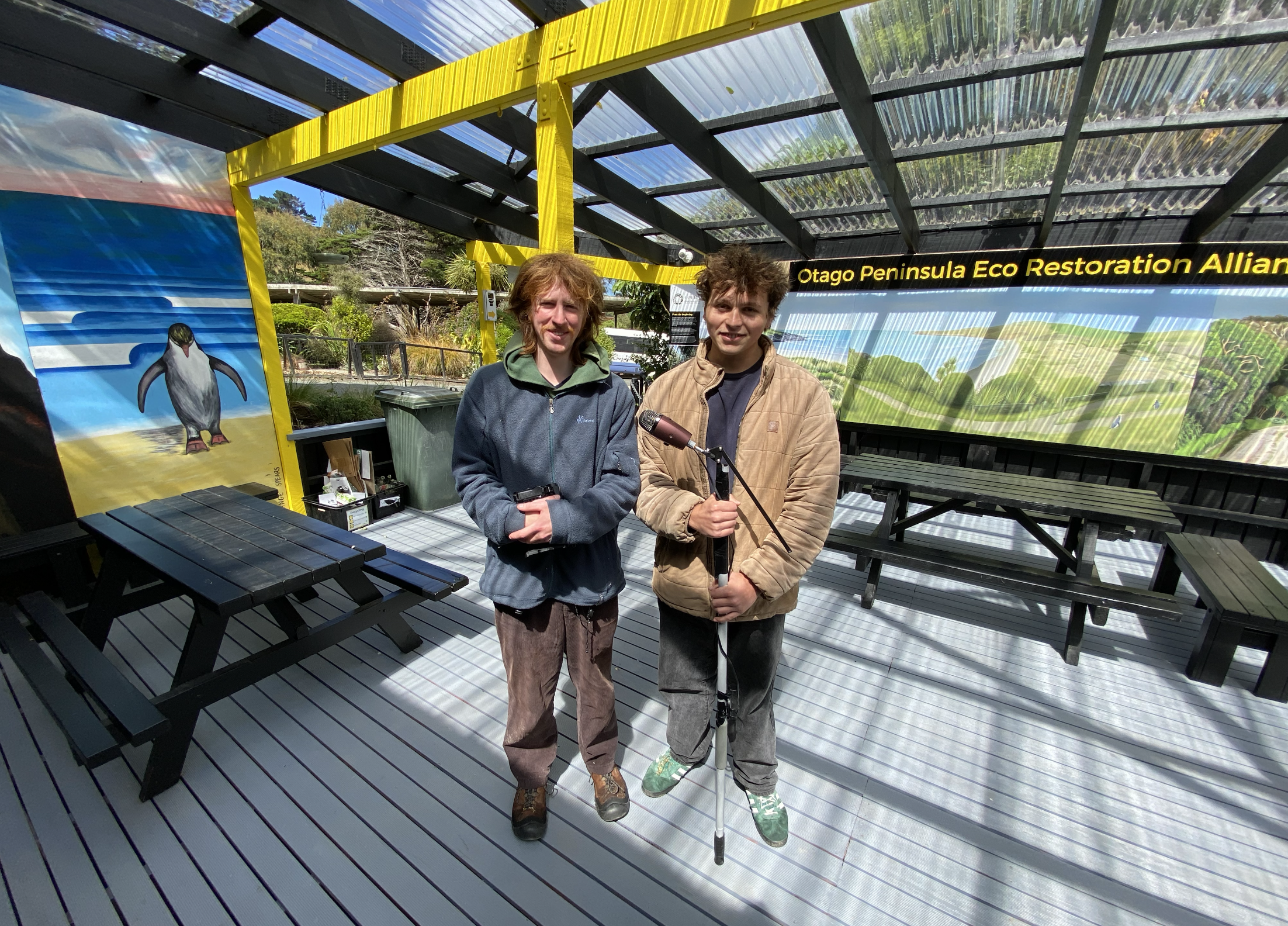
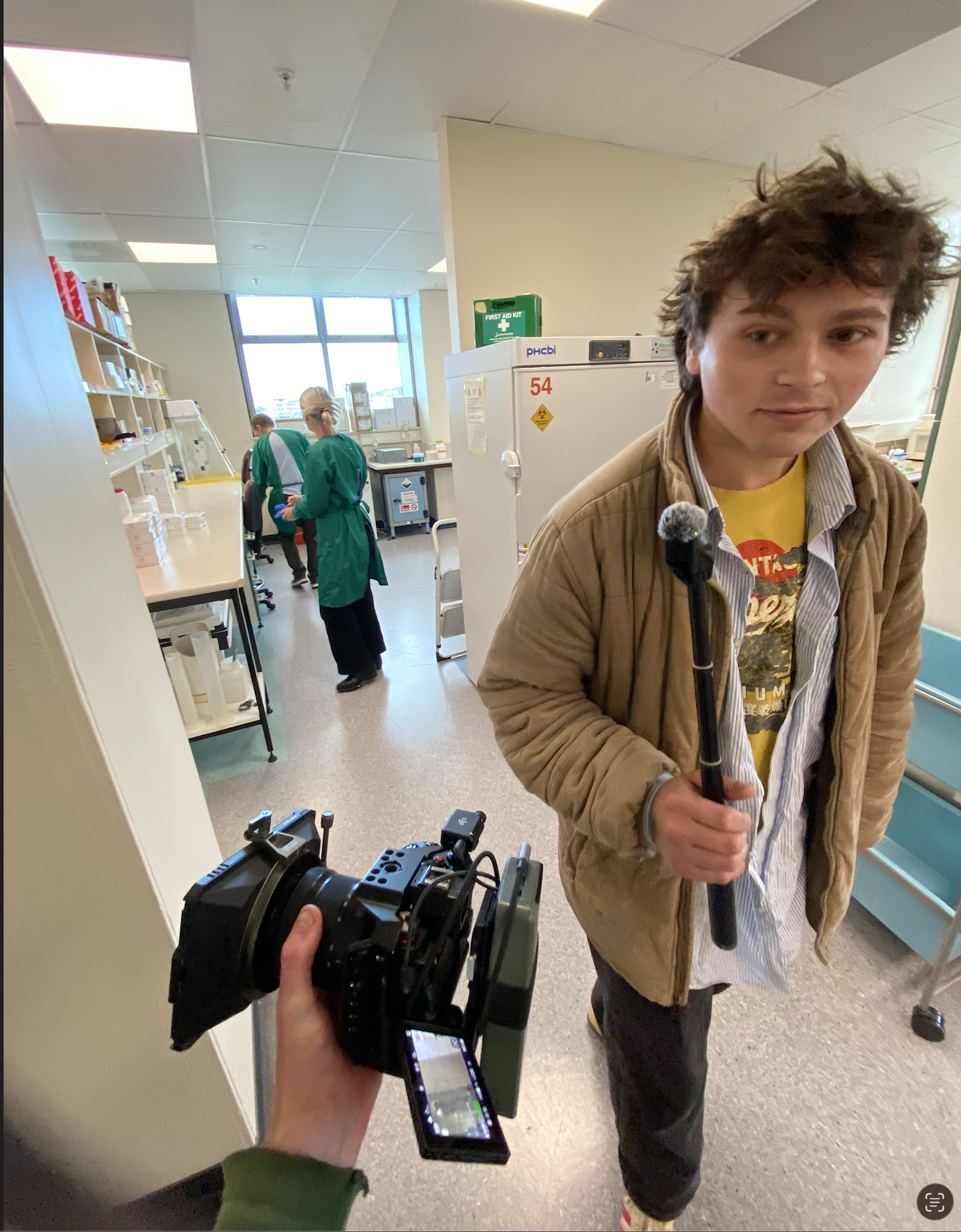
To the right, Adam and I after filming at OPERA with Jason. Adam is holding a makeshift boom-mic that I whisked up the night before. It’s constructed out of my old Blue Yeti mic and a Kmart phone holder taped to a broomstick. It actually worked a treat, although I hope Jason didn’t look too closely.
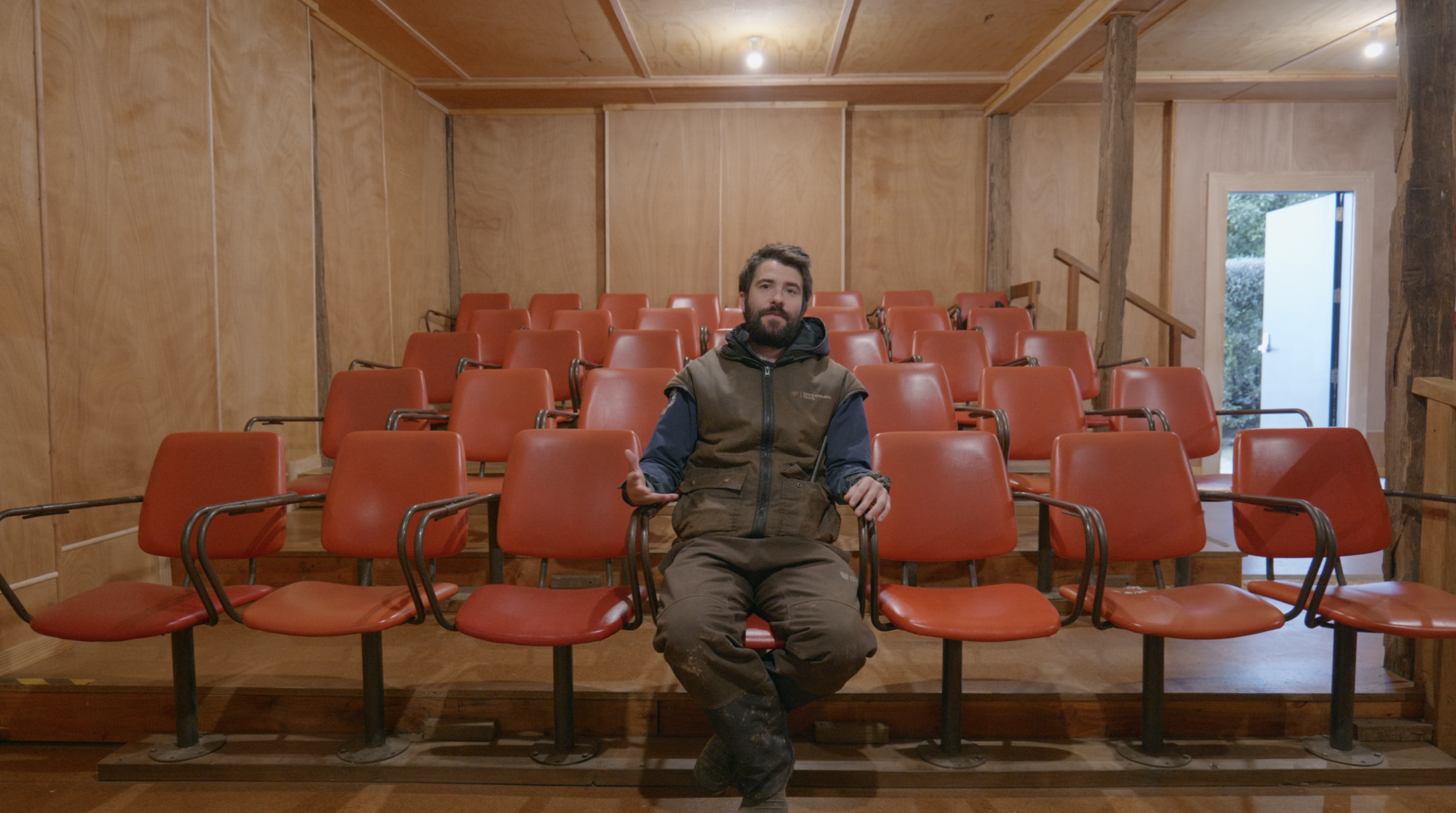
When I visited OPERA for the first time in June 2025, I had zip for audio equipment and had to use my iPhone 11’s voice memos for audio. My mate held this up to Jason’s mouth when recording, and I needed to run the audio through a background noise remover before it was usable. Fortunately, it turned out much better than expected; iPhones have surprisingly decent audio.
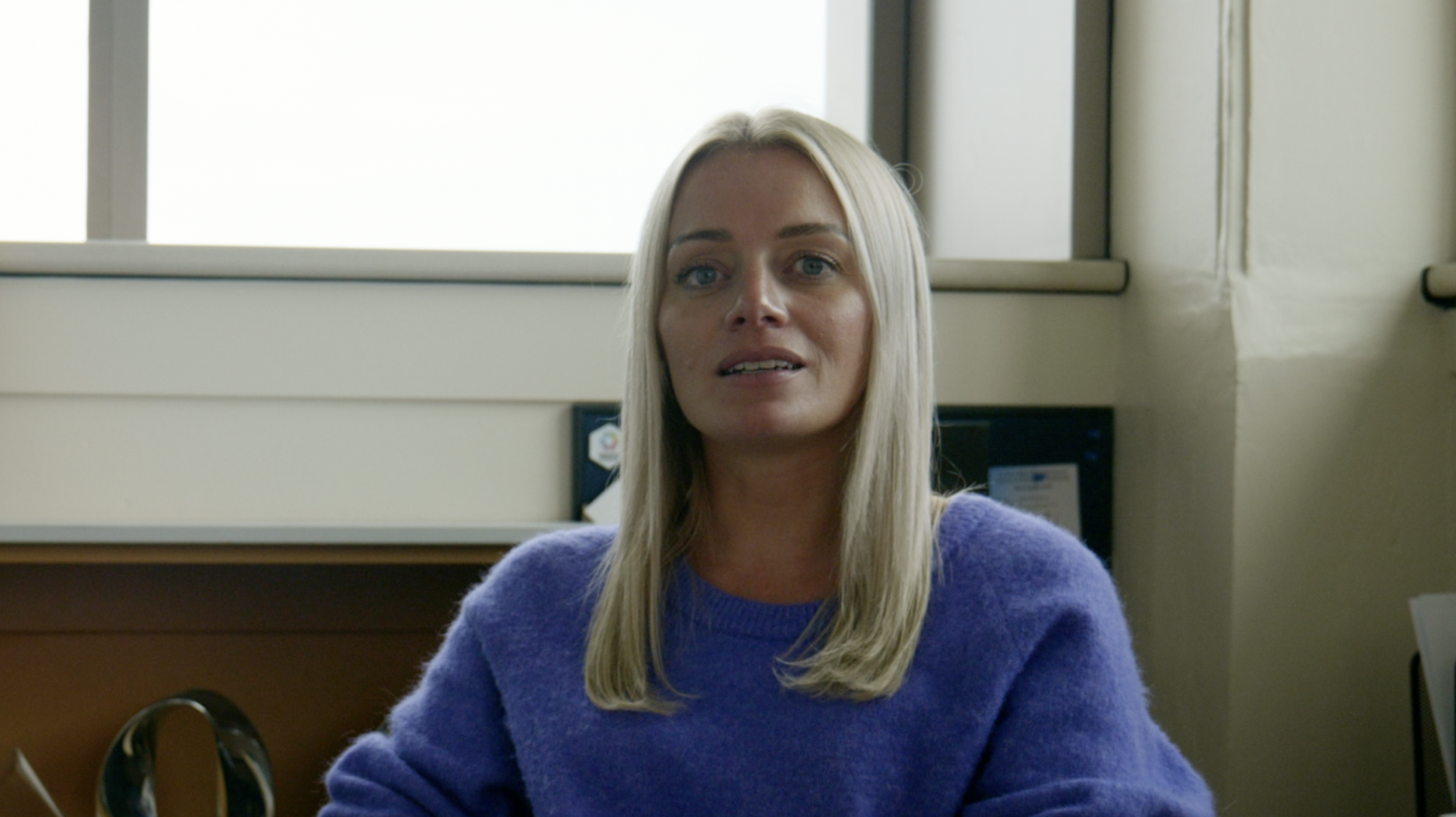
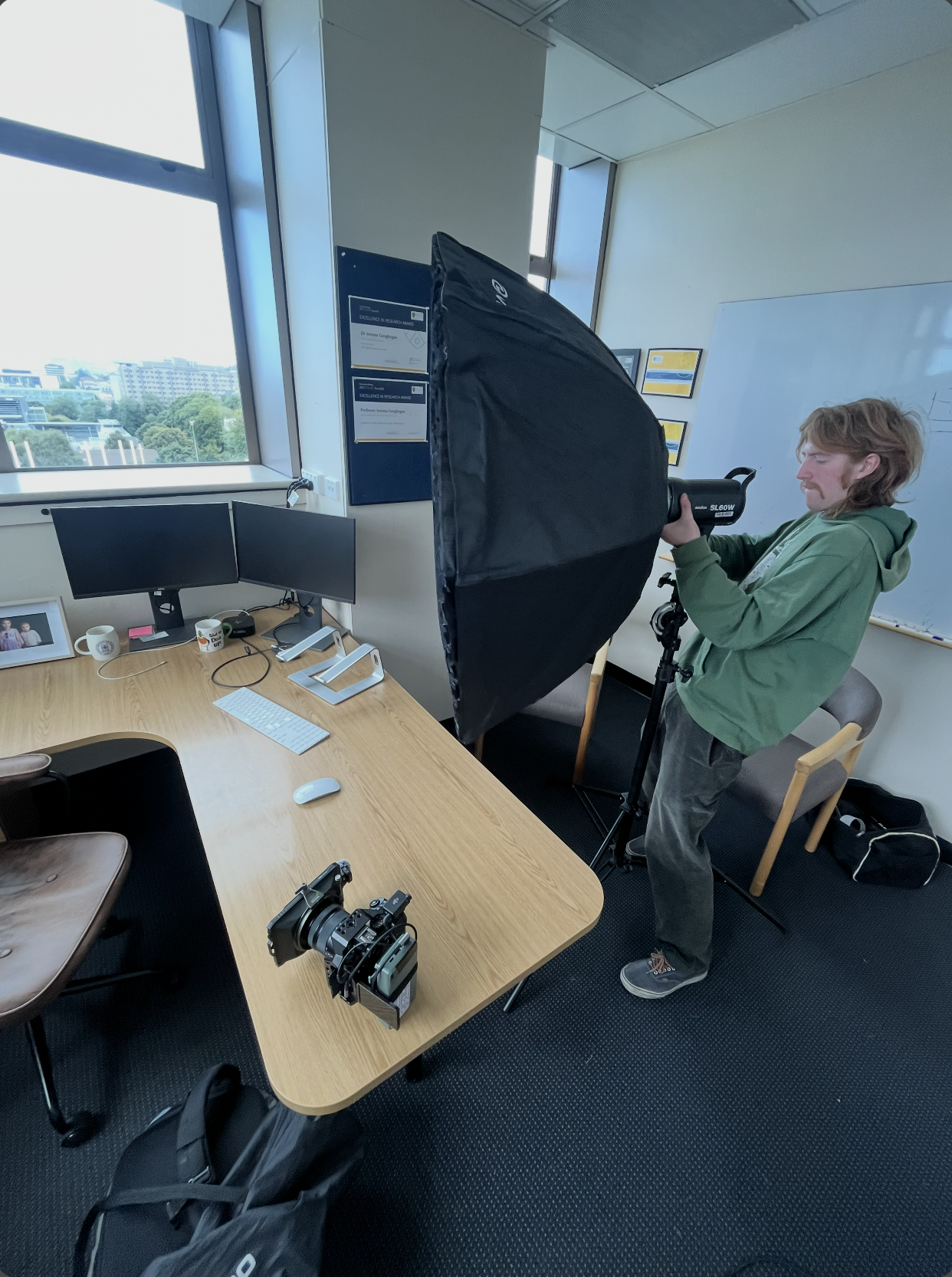
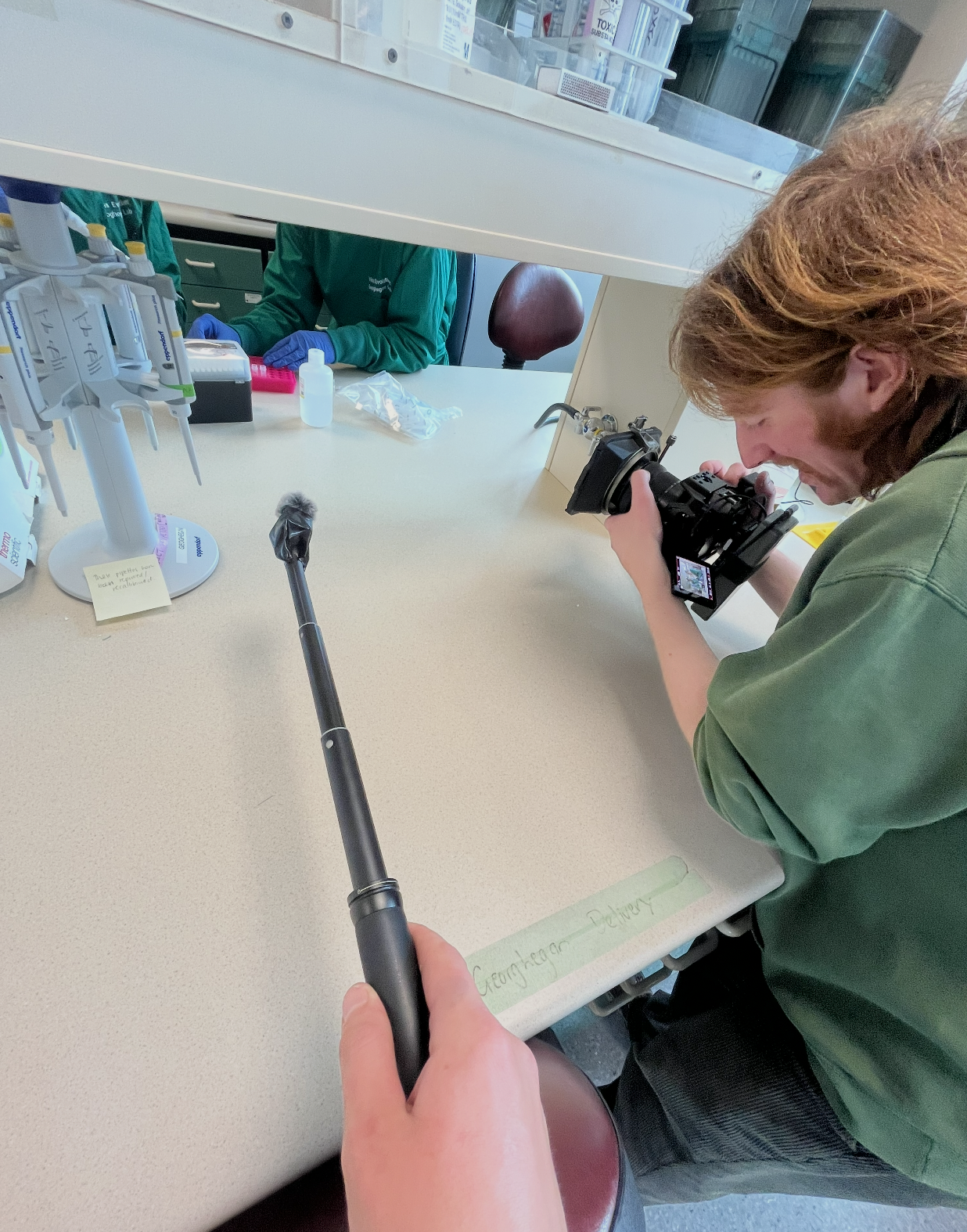
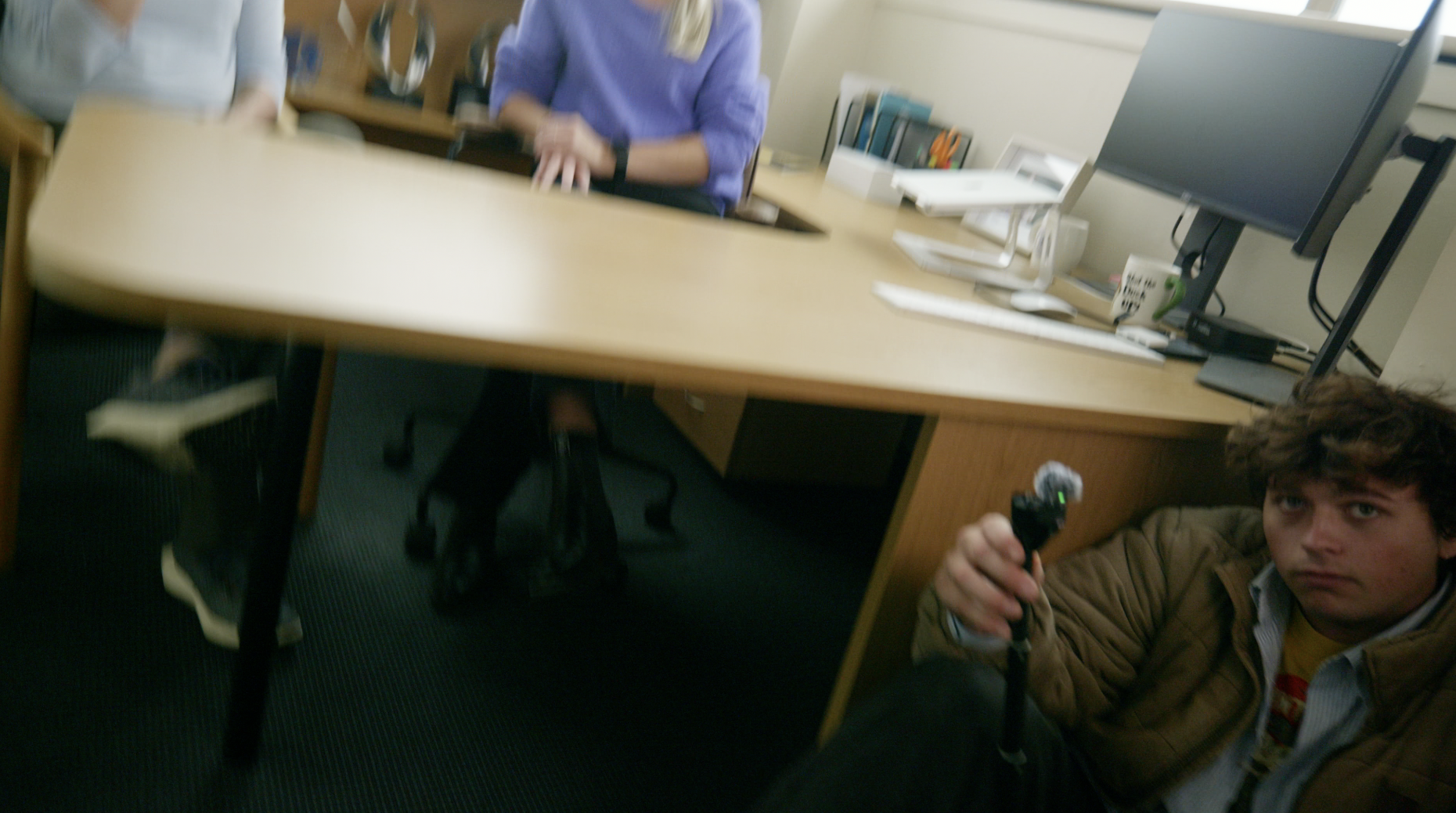
One of the most stressful moments in the documentary was when I interviewed Janelle and Jemma at Otago Uni. When I say moments, I mean 40 straight minutes. We arrived right on time, and Janelle and Jemma were waiting for us. Jemma led us to her office, a small corner room on the top floor of the microbiology building. I had brought Adam with me again, so four people in this room was a lucky squeeze, along with two studio lights, lighting stands, a huge softbox, sandbags and all of my camera and audio crap. I asked Janelle and Jemma to wait outside for 5 minutes, but we rushed around for about 15 minutes trying to place these huge lights with little to no space. I ended up scrapping one light and just using one facing forward. Meanwhile, Adam couldn’t figure out how to open the light stands, and one of the sandbags burst, leaving sand everywhere on the carpet. My computer wasn’t loading Audacity (audio recording tool), and the audio cable wasn't connecting to the mic. I quickly taped my other tiny wireless mic to a selfie stick while Adam was rubbing the sand into the carpet. Luckily, a few weeks prior I had decided to invest in a DJI mic mini - what a game changer. After this, I ushered Janelle and Jemma into the room and got my questions ready. Adam was crouched under the table by Jemma’s feet with his arm crained upwards to hold the mic-stick. At this point I was sweating so much from nerves that it was dripping onto my camera touchscreen and changing the fucking settings. But I gathered myself and asked away. My tripod wasn’t tall enough, so I needed to hand-hold the camera whilst bending over, sweat beading on my nose. Fortunately, the interview went smoothly, and Jemma and Janelle were very friendly and helpful, but they could tell I was nervous. These are both high-profile scientists. I was off my head, and rightly so! After all that, Adam told me that all he could stare at whilst holding the mic under the desk was my fucking open fly.
This just goes to show how things can go a bit pear-shaped. I was very organised for this prior, even doing lighting tests at the flat, but sometimes it is what it is.
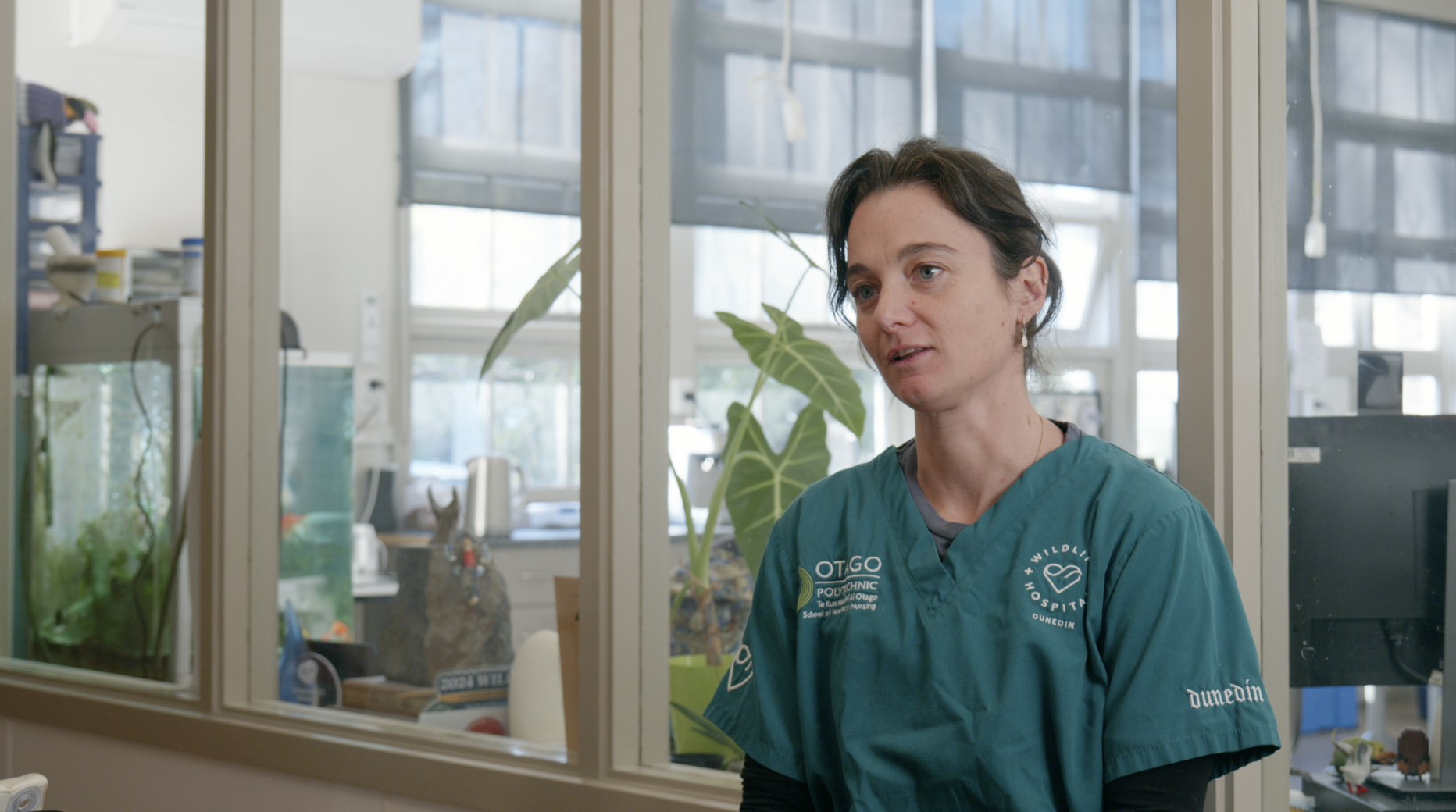
My chat with Elizabeth at the Wildlife Hospital was not nearly as chaotic, although the room we filmed in was actually the operating theatre. We didn’t have much space to set up the lights, but I ended up getting quite a nice, clean and sterile look from it. Which is fitting for the hospital theme. When Lizzy took me into the seabird ward where a couple of Hoiho were chilling, I was blown away. This was my first time coming close to a penguin. They didn't seem very curious; rather, totally dumbstruck and waddling in circles. An experience I certainly won’t forget.
EDITING
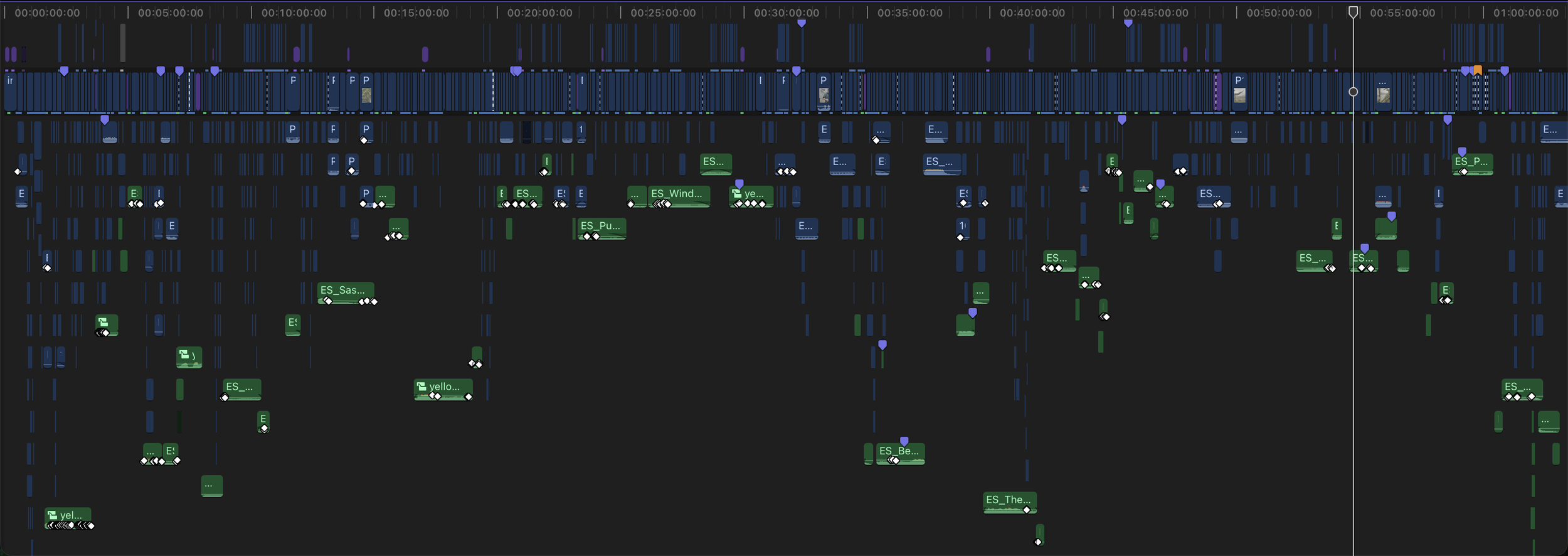
It took me six months to edit Noise Shouter. It has been the most complex, tedious and brain-dissolving edit of my life. 35+ music tracks, over 700 SFX items, 20+ hours and over 4 terabytes of raw footage and well past 4000 hours of sitting at my computer. That’s nearly 140 days. Editing was not always continuous; taking breaks and times when all I did was scroll back and forth on the timeline. Some days I couldn’t even bear to open the project; the thought of the muddled timeline, colour grades, keyframes and music was enough to make me feel sick. I re-edited sections, changed music, re-colourgraded and tinkered parts over and over again. I spent weeks going over interviews, fact-checking, and with new information about the penguins coming in weekly in the newspaper, these facts needed to be constantly updated. My mother, Christine, is an ex-journalist and current author. She spent weeks sitting at the desk with me and filtering through the interviews as well. I could not have done this part without her.
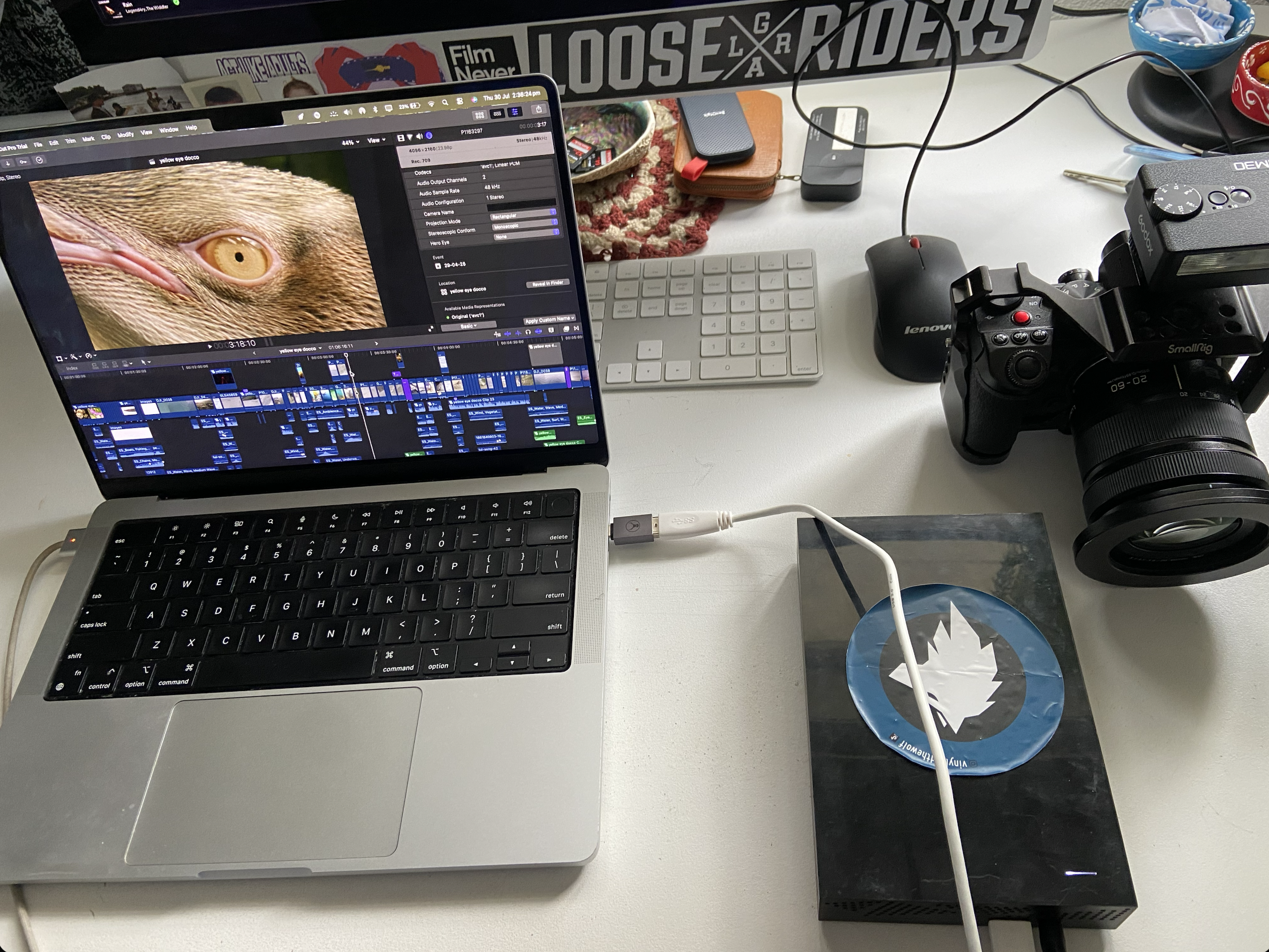
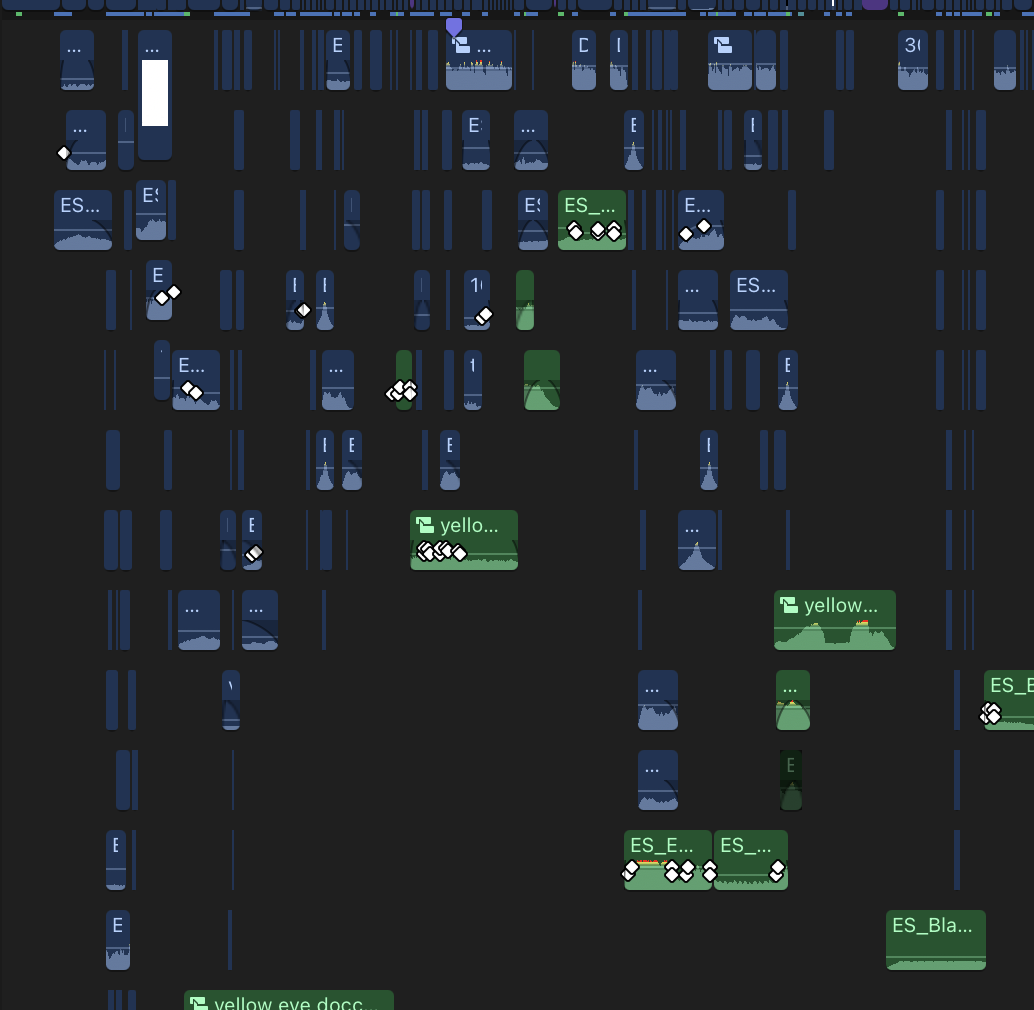
I’ve had a couple of horror stories with hard drives: corruption, data loss, terrifying noises and expensive costs. Hard drives have a lifespan, typically around 10 years or less, especially an HDD. For the next project I fixate on, I will have a proper file and backup system that is very safe against corruption or data loss.
Relatively speaking, Noise Shouter was quite a simple edit when it came to visuals. I didn’t want to include many bizarre transitions, motivated camera movements or on-screen effects, except for some simple VFX and 3D animation. But the audible edit was very complex. I mixed all the music and SFX for Noise Shouter. Some shots had 20+ sound effects layered on top of each other, or three songs cut into one seamless melody for a less than 10-second cut. I think one of the most tedious parts was keyframing audio levels in line with the narration. There’s a tiny fine line between a jarring dip in audio before the voice and a seamless fade that is invisible to the ears. It sounds straightforward, but it’s one of the first things people pointed out when I showed them a rough cut.
I edited Noise Shouter on my M1 MacBook Pro, as it has enough power to run such a large project. My iMac from 2015 can’t run the newest version of Final Cut Pro and would lag. I’m glad I chose to edit on the laptop, and I spent a lot of time editing in the Uni library and on the kitchen bench at my girlfriend’s house, so this portability was great. Noise Shouter was edited purely externally, on an 8TB Seagate external hard drive. Being an HDD, the larger the project got, the slower the drive would run. As I was finishing the docco, my hard drive was under tremendous stress, and I’d be constantly pressing my ear against it to listen for any weird wear-and-tear noises. I would carry the drive around in bubble wrap packaging and cradle it as if it were my child. I couldn’t afford any large-capacity SSDs or a RAID backup system to run it all smoother and safer. Instead, I relied on a total backup of all raw footage and elements on a second HDD and automatic lightweight Final Cut backups. These backups contain only your project structure and metadata, so if I had lost my main drive, I could reboot the project timeline and edits and relink the raw footage to this. It’s not fail-safe and could still go wrong, but it’s all I could do.

HONORABLE PRODUCTION MENTIONS
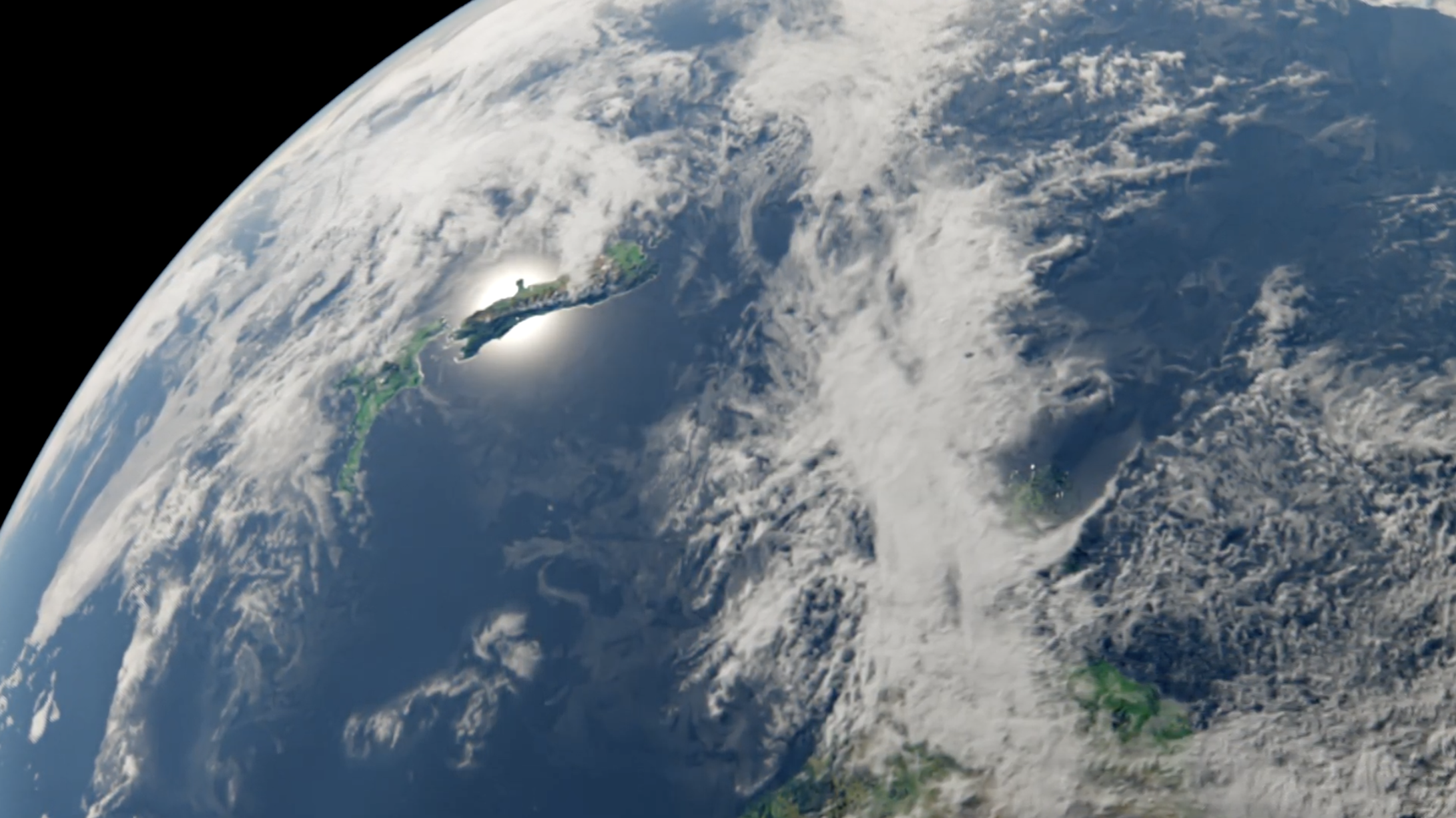
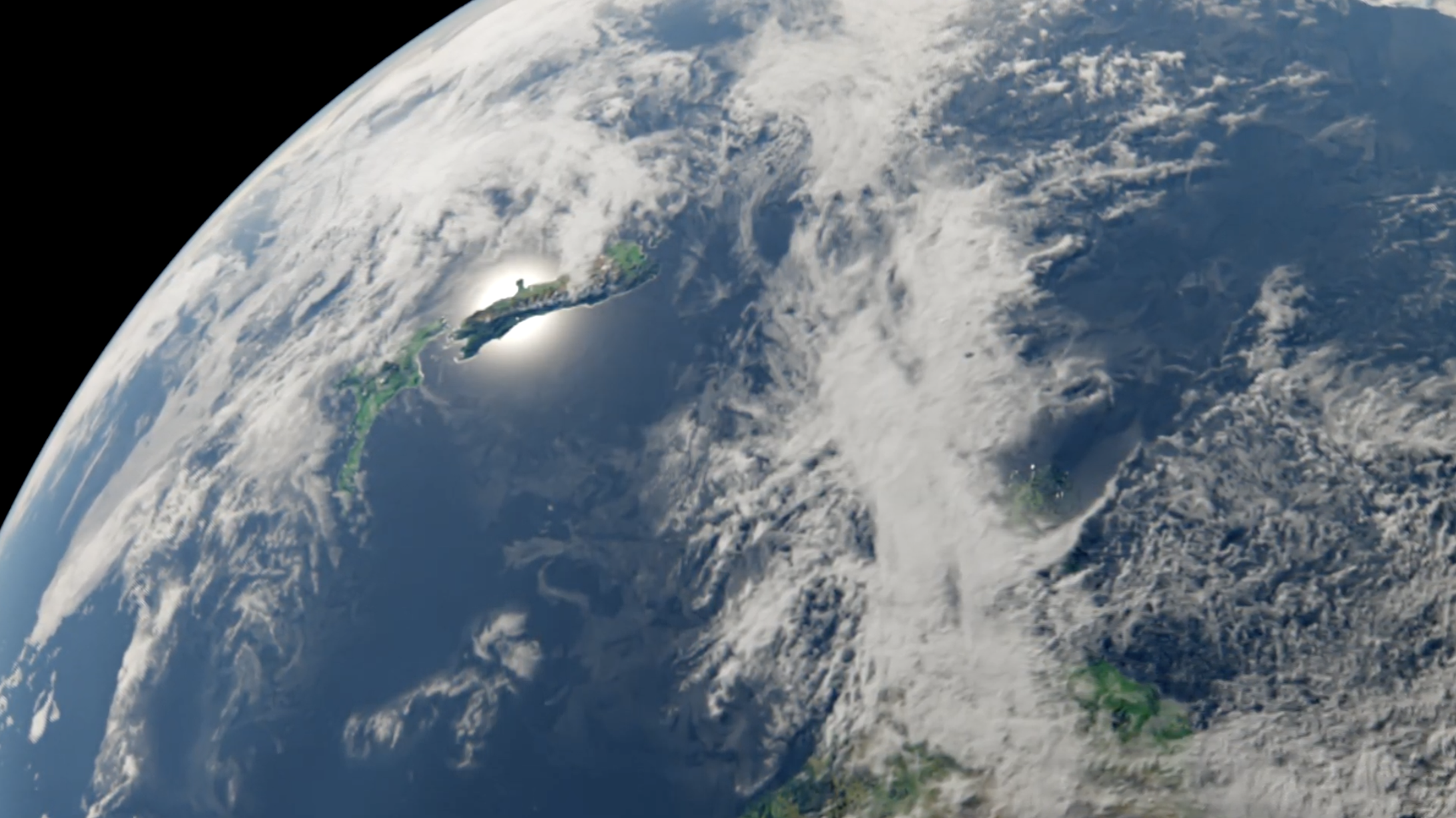
I spent a week learning 3D in Blender to create these Earth renders. I tried virtually every option available to get satellite images with high enough quality and realism for part of the introduction in Noise Shouter. I tried EOSDA LandViewer, NASA Visible Earth, USGS Earth Explorer, Copernicus Browser, LINZ Basemaps, and many more, but none of them gave me the realism I needed. I decided to bite the bullet if I wanted to dedicate some incredible quality into the documentary and make an animation from scratch in 3D.
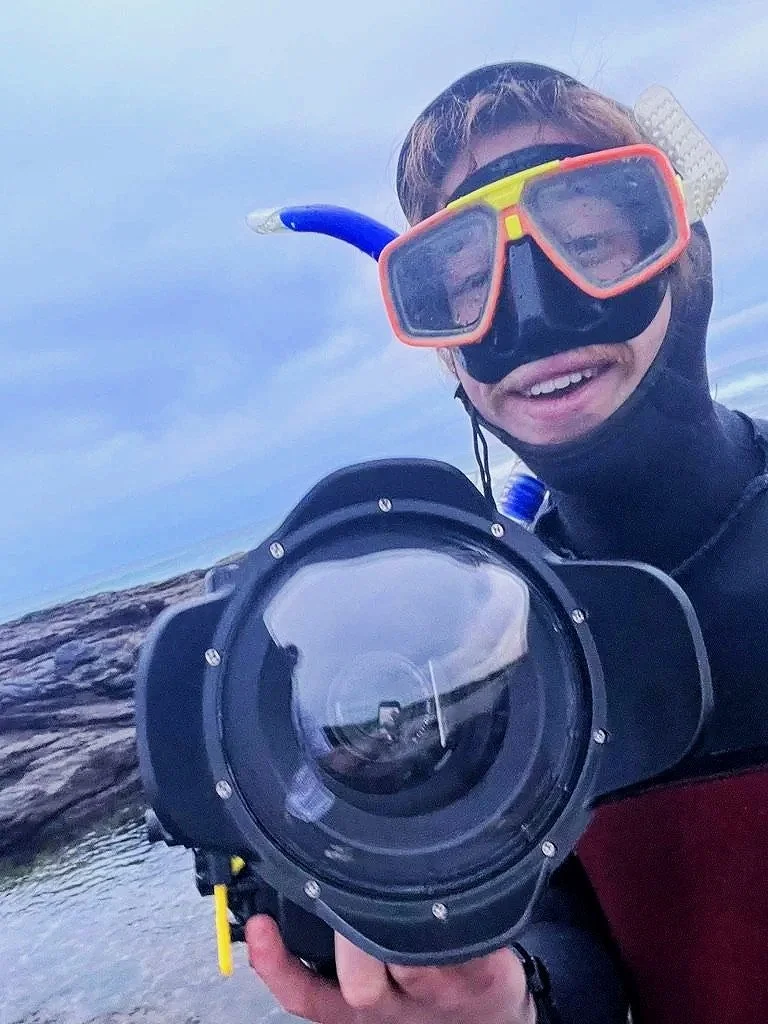
Along with the footage from Lorna and Travis, I was able to borrow my mate Leah’s Underwater housing for her Lumix GH5. Unfortunately, she only had a 40mm lens for the GH5 and converted from micro four thirds, thats an equivalent to an 80mm lens on a full-frame, which is not particularly useful when paired with a dome port on an underwater housing. Surprisingly, my S5 slotted into this housing like a glove; the buttons didn’t line up, but I could just set my focus manually and start recording before closing the door of the housing. I wasn't able to borrow this for long, but I ended up getting some great b-roll shots.
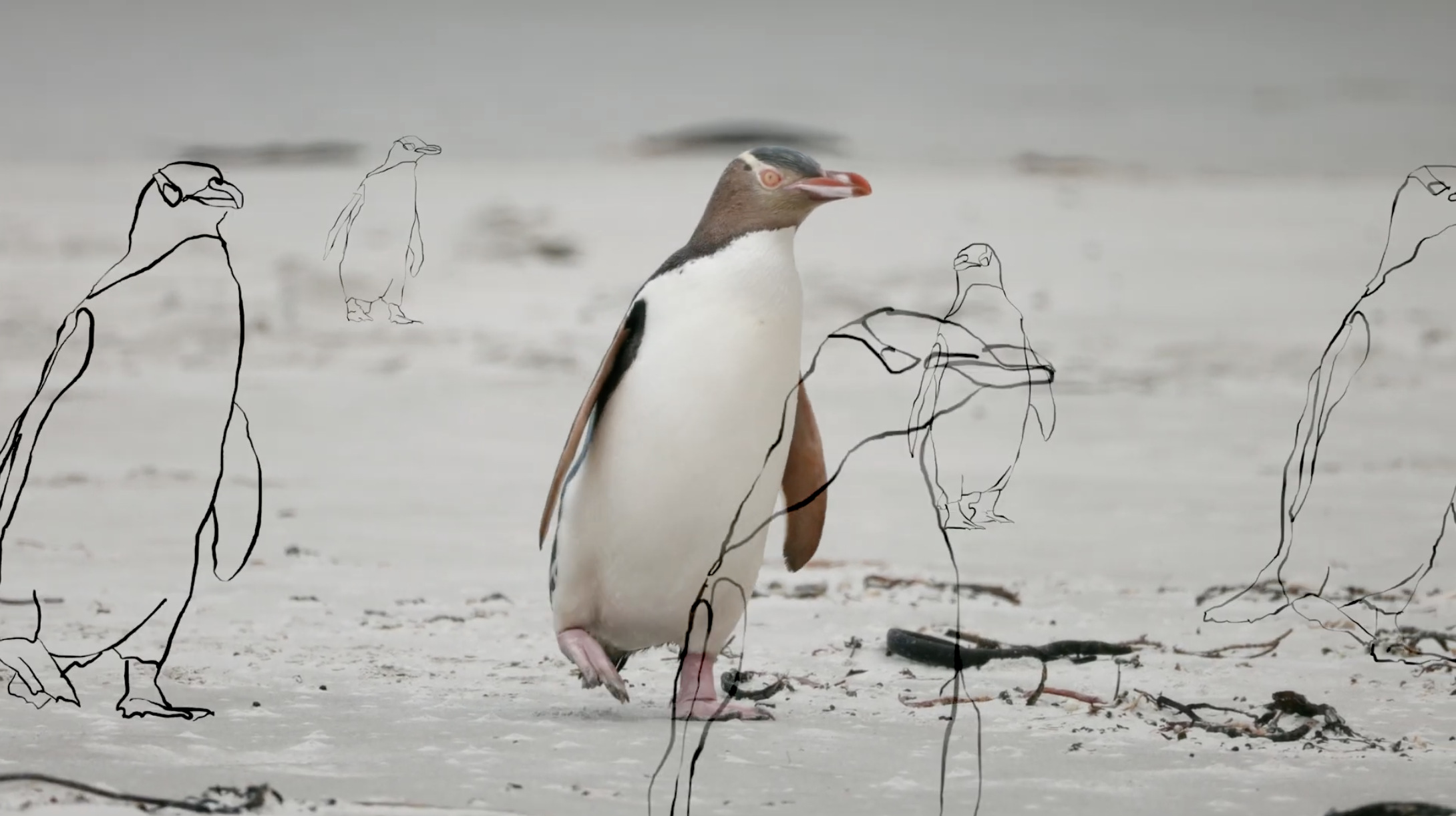
The superimposed symbolic penguins walking next to a single Hoiho was actually one of my first ideas when starting Noise Shouter. I used the 2D window in Blender and meticulously traced out every 5 or so frames from the original video. I layered them all in Final Cut and made sure each one started at a different point so they weren’t all identically walking at the same time, as they are just copies of each other. This took days as I was tracing each frame with a mouse.
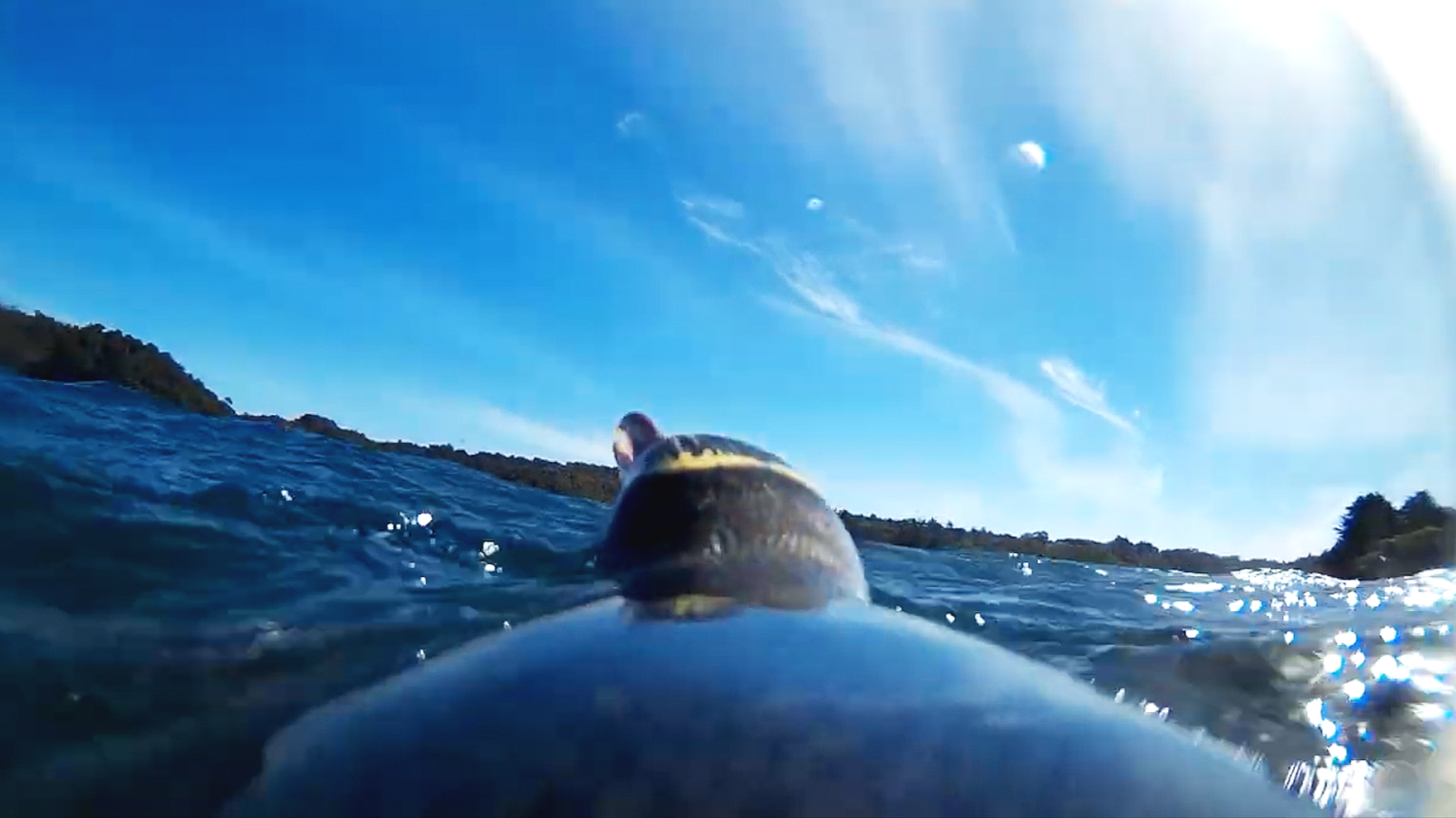
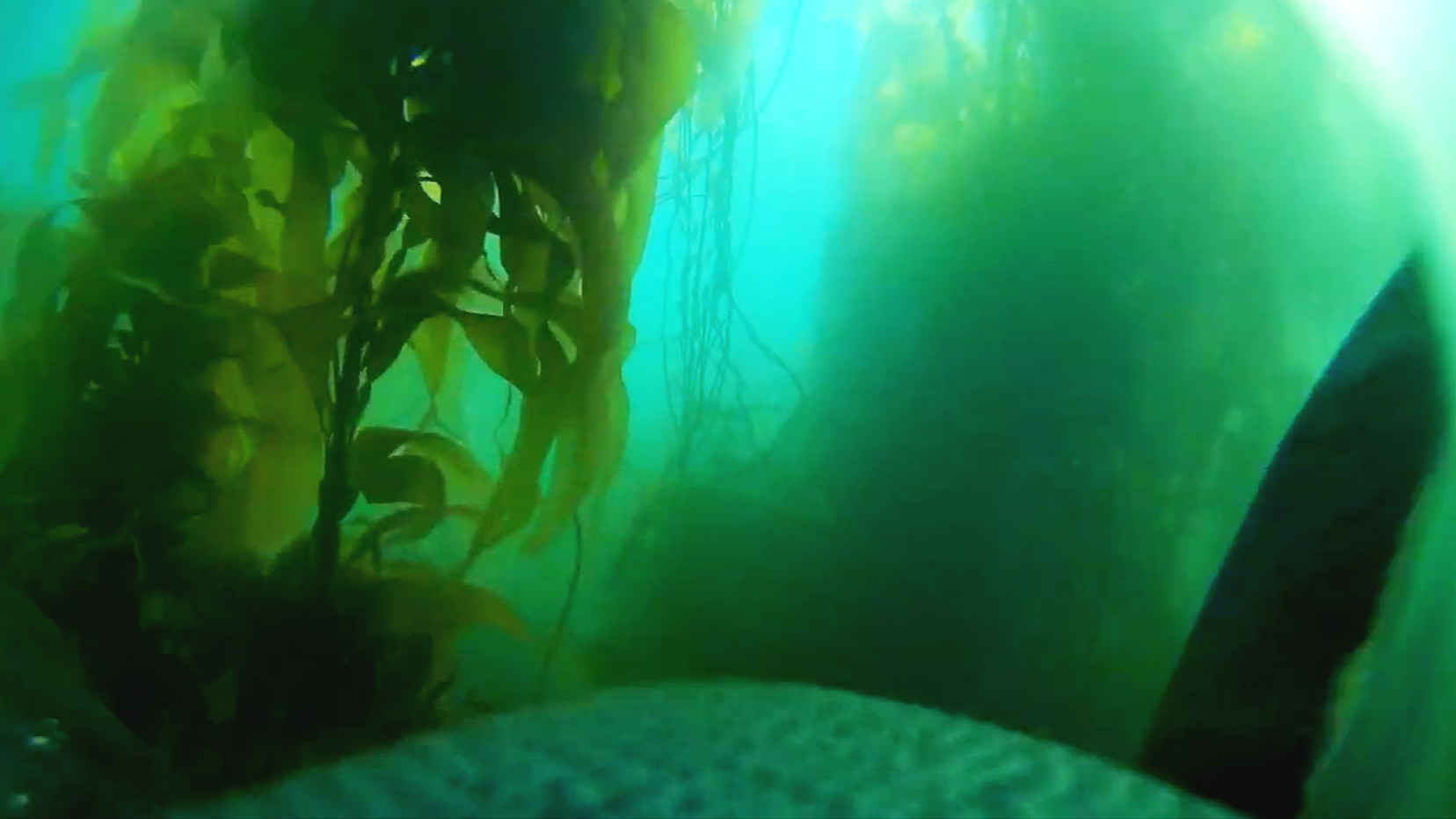
I can’t forget the PenguCAM footage from Ursula. I came across this when researching the Tawaki Trust, which Ursula co-founded, and I knew it would be a breathtaking addition to Noise Shouter.
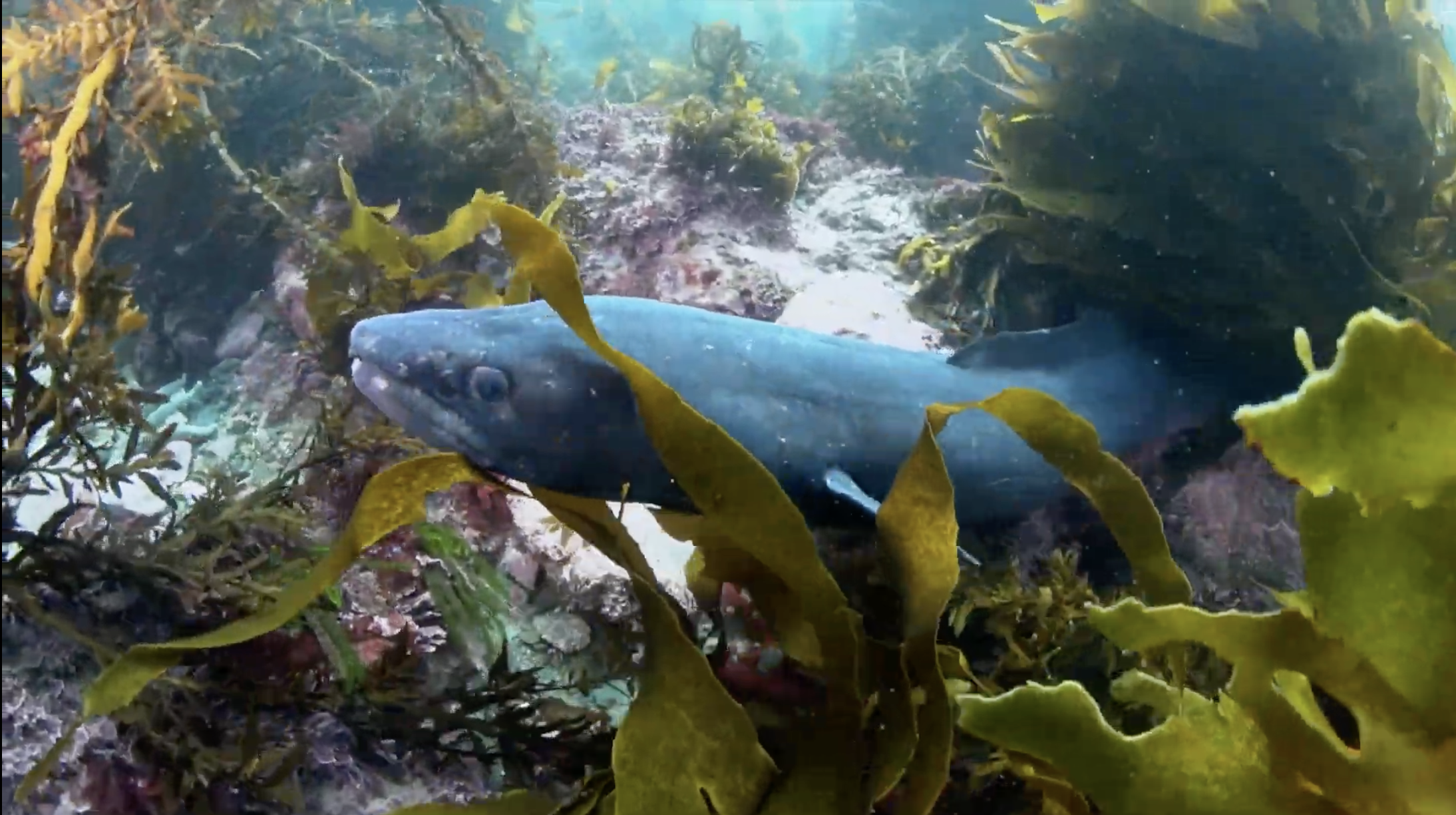
An underwater housing for my Lumix S5 was pretty unfeasible for this project; those things run almost five grand New Zealand dollars. I have a lot of underwater footage from my Gopro from years of freediving on Stewart Island, but not much for the documentary. Luckily, I found Lorna Doogan on Facebook. Lorna had shot for a bloke’s freediving tourism company on the Island, he used to rent our house out as well. Lorna was kind enough to send me a big load of beautiful underwater footage that I was able to use. Along with that, my mate Travis, who still lives on Stewart Island, sent over some great shots of Blue Cod and kelp, and I did have a few of my Gopro clips that I snuck in.
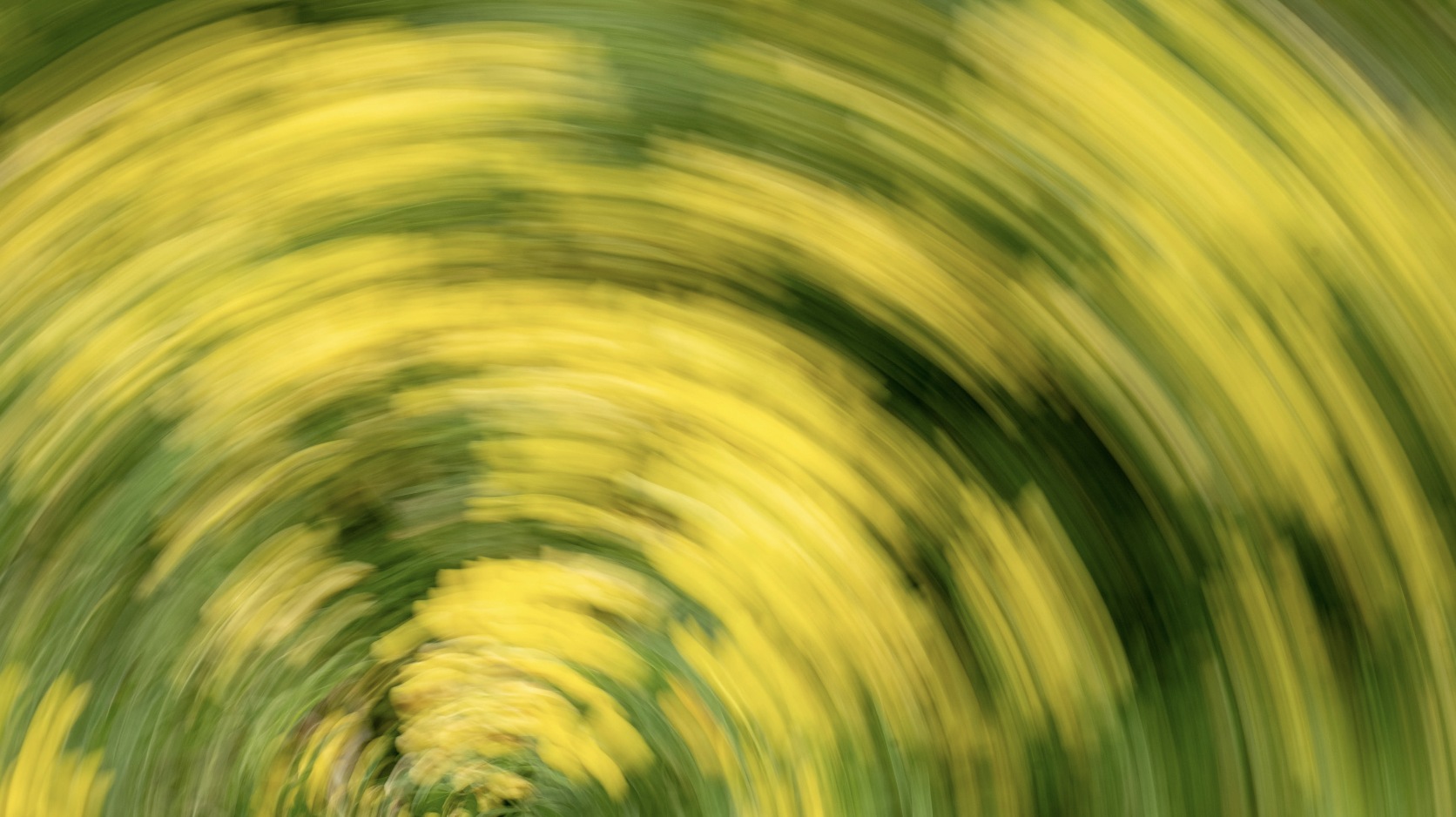
I made this montage in an afternoon with a combination of photographs I took at the beach of seaweed, limpets and bush. This is a simple exposure of about a second while I spun the camera around in a circle. I think this works well as a symbolic note towards the Hoiho’s current survival. A life on the beach that becomes out of control and chaotic.